UEG's educational platform for gastroenterology education bringing recordings, courses, guidelines, and more together in one place.
Most popular content
Rate for better recommendations!
Your feedback helps us show you more of what you like and less of what you dislike!
Log in to access this content.
Free for all myUEG account holders. Your access level is set automatically based on your occupation. Medical professionals get full access to all content. If you are a non-medical user, you can only access UEG Week content from congresses you attended.
Not sure what you can access? Learn more about account types.
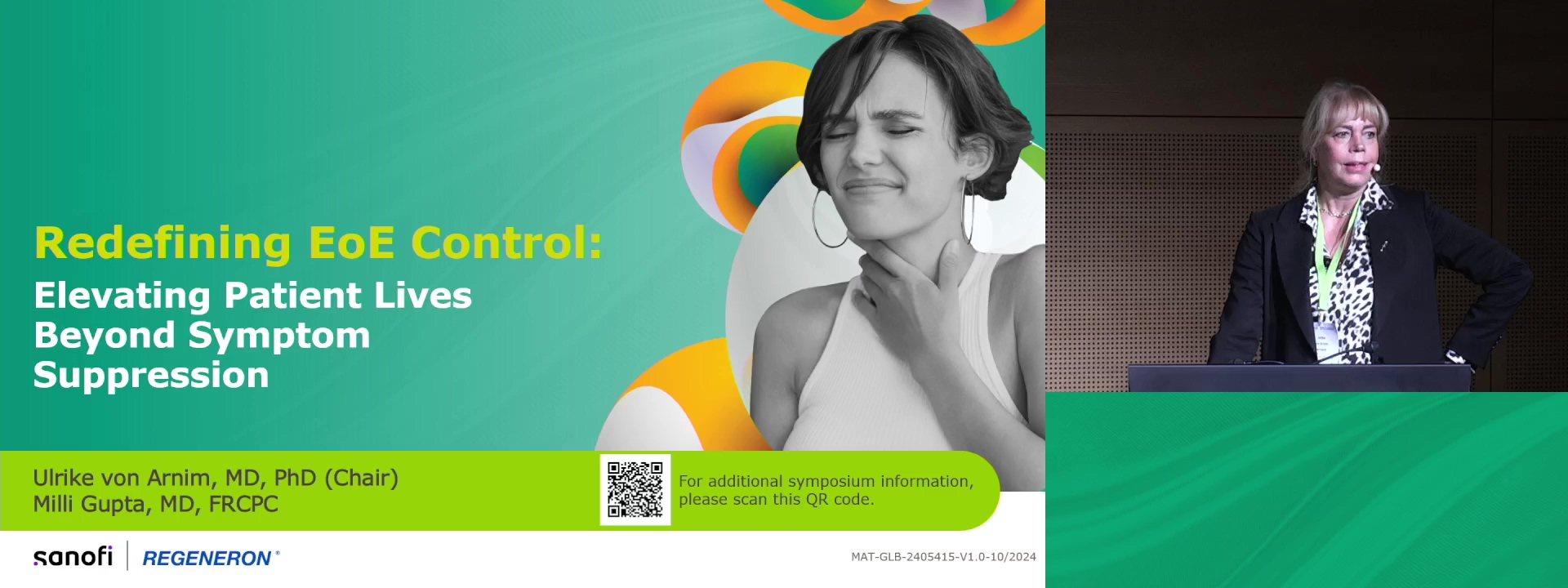
Redefining EoE Control: Elevating Patient Lives Beyond Symptom Suppression (Sanofi Regeneron) (Complete Session)
1 Calgary, Alberta, Canada, None, Canada
2 Otto-Von Guericke University, Madgeburg, Germany
Publisher
Event
Session
Citation
Published
Log in to access this content.
Free for all myUEG account holders. Your access level is set automatically based on your occupation. Medical professionals get full access to all content. If you are a non-medical user, you can only access UEG Week content from congresses you attended.
Not sure what you can access? Learn more about account types.
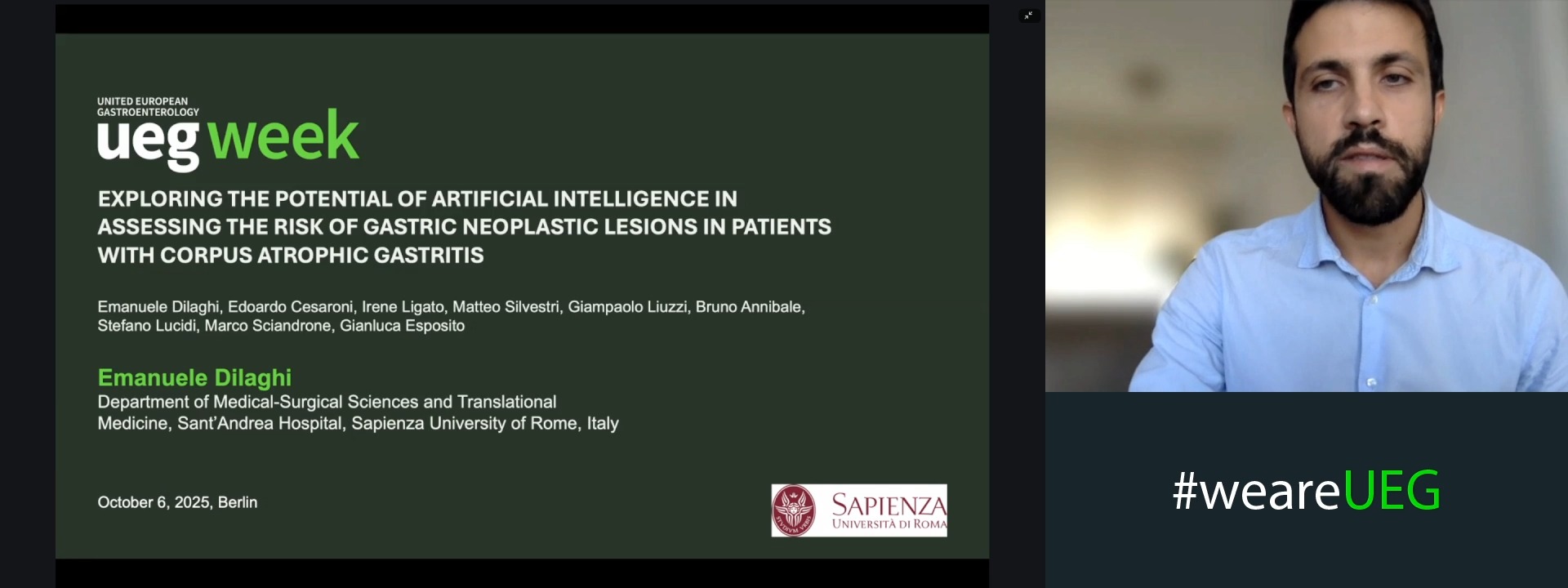
EXPLORING THE POTENTIAL OF ARTIFICIAL INTELLIGENCE IN ASSESSING THE RISK OF GASTRIC NEOPLASTIC LESIONS IN PATIENTS WITH CORPUS ATROPHIC GASTRITIS
Emanuele Dilaghi 1, Edoardo Cesaroni 2, Irene Ligato 1, Giampaolo Liuzzi 2, Bruno Annibale 1, Stefano Lucidi 2, Gianluca Esposito 1, Marco Sciandrone 2
1 Sapienza Univeristy of Rome, Department of Medical and Surgical Sciences and Translational Medicine, Rome, Italy
2 Department of Computer, Control, and Management Engineering “Antonio Ruberti” – Sapienza University of Rome, Italy, Rome, Italy
Event
Submission format
Citation
Published
Log in to access this content.
Free for all myUEG account holders. Your access level is set automatically based on your occupation. Medical professionals get full access to all content. If you are a non-medical user, you can only access UEG Week content from congresses you attended.
Not sure what you can access? Learn more about account types.
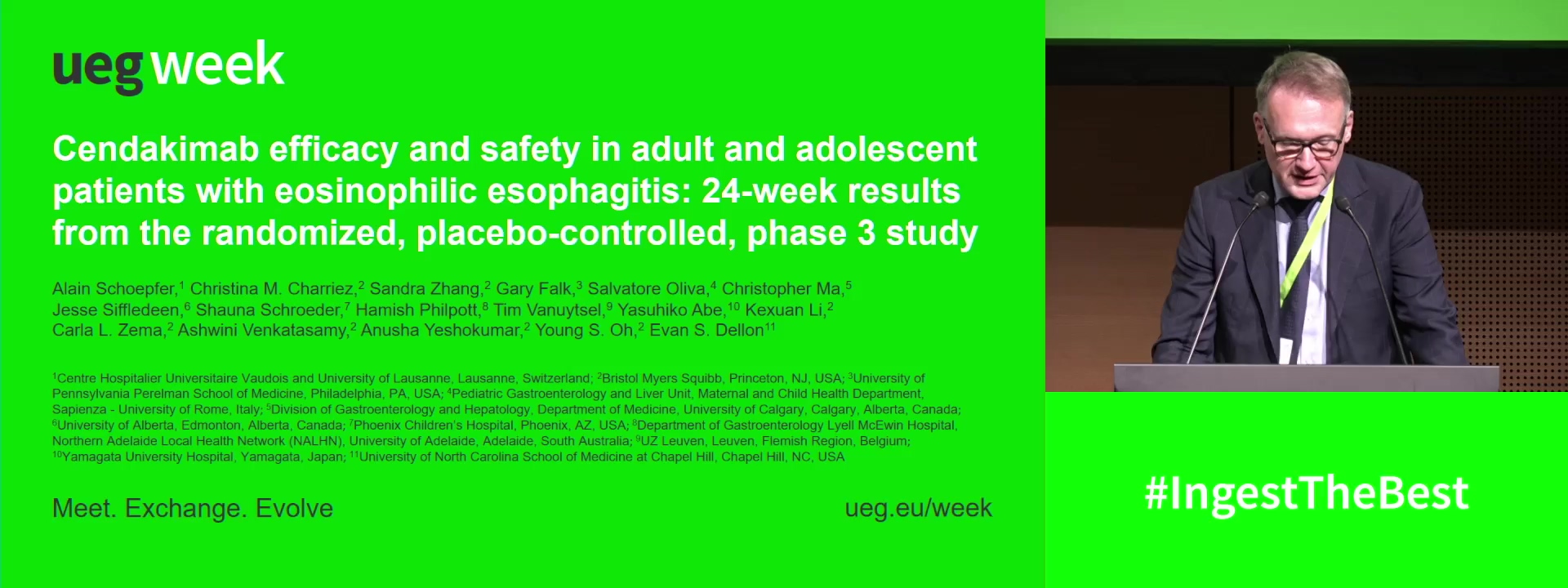
CENDAKIMAB EFFICACY AND SAFETY IN ADULT AND ADOLESCENT PATIENTS WITH EOSINOPHILIC ESOPHAGITIS: 24-WEEK RESULTS FROM THE RANDOMIZED, PLACEBO-CONTROLLED, PHASE 3 STUDY
Alain M. Schoepfer 1, Christina Charriez 2, Sandra Zhang 2, Gary Falk 3, Salvatore Oliva 4, Christopher Ma 5, Jesse Siffledeen 6, Shauna Schroeder 7, Hamish Philpott 8, Tim Vanuytsel 9, Christel Contzen 10, Yasuhiko Abe 11, Kexuan Li 2, Carla L. Zema 2, Ashwini Venkatasamy 2, Anusha Yeshokumar 2, Young S. Oh 2, Evan S. Dellon 12
1 Centre Hospitalier Universitaire Vaudois and University of Lausanne, Lausanne, Switzerland
2 Bristol Myers Squibb, Princeton, United States
3 Perelman Center for Advanced Medicine, University Of Pennsylvania, Bryn Mawr, United States
4 Azienda Policlinico Umberto I, Rome, Italy
5 University of Caglary, Calgary, Canada
6 South Edmonton Gastroenterology, Edmonton, Canada
7 Phoenix Children’s Hospital, Phoenix, United States
8 Department of Gastroenterology Lyell McEwin Hospital, Northern Adelaide Local Health Network (NALHN), University of Adelaide, Adelaide, Australia
9 UZ Leuven, Leuven, Belgium
10 AES – DRS – Synexus, Frankfurt, Germany
11 Yamagata University Hospital, Yamagata, Japan
12 University of North Carolina School of Medicine at Chapel Hill, Chapel Hill, United States
Event
Submission format
Citation
Published
Log in to access this content.
Free for all myUEG account holders. Your access level is set automatically based on your occupation. Medical professionals get full access to all content. If you are a non-medical user, you can only access UEG Week content from congresses you attended.
Not sure what you can access? Learn more about account types.
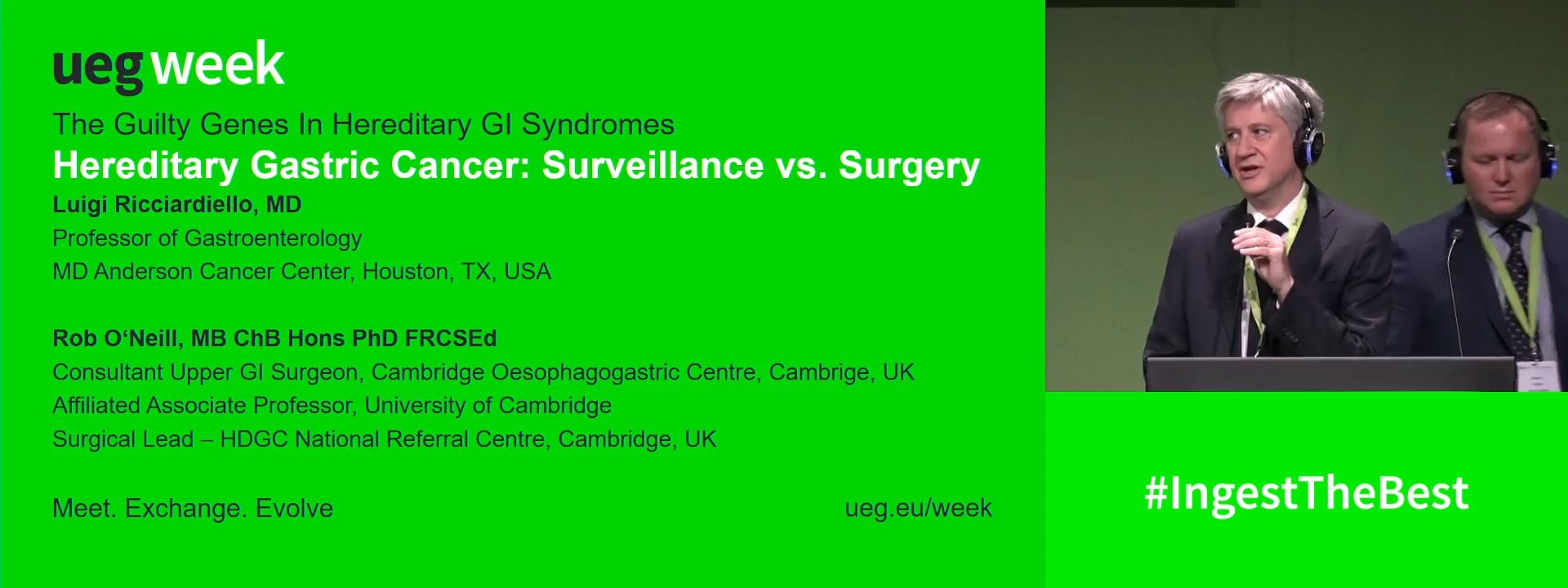
Hereditary gastric cancer: Surveillance and surgery
1 Cambridge University Hospitals NHS Foundation Trust, Cambridge, United Kingdom
2 The University of Texas, Houston, United States of America
Event
Topics
Citation
Published
Log in to access this content.
Free for all myUEG account holders. Your access level is set automatically based on your occupation. Medical professionals get full access to all content. If you are a non-medical user, you can only access UEG Week content from congresses you attended.
Not sure what you can access? Learn more about account types.
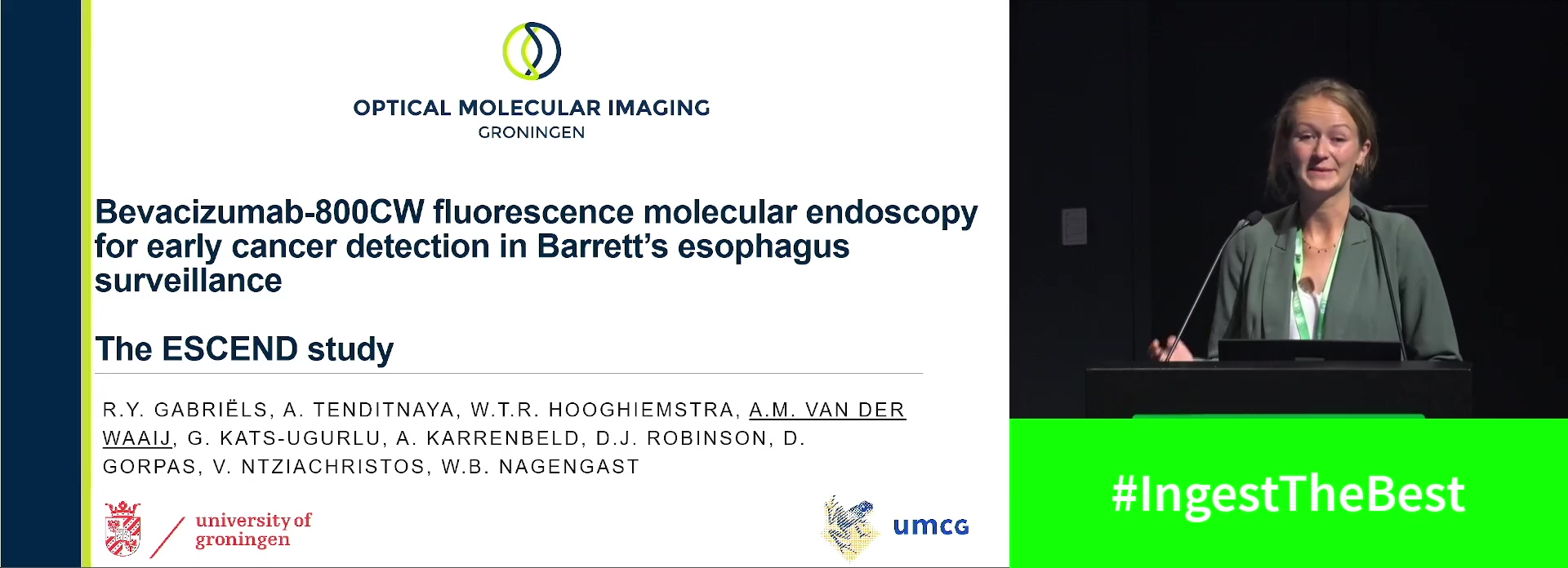
BEVACIZUMAB-800CW FLUORESCENCE MOLECULAR ENDOSCOPY IMPROVES EARLY CANCER DETECTION AND STANDARDIZATION IN BARRETT’S ESOPHAGUS SURVEILLANCE
Ruben Yannick Gabriëls 1, Anna Tenditnaya 2, Wouter Hooghiemstra 1, Anne M. van der Waaij 1, Gursah Kats-Ugurlu 1, Arend Karrenbeld 1, Dominic James Robinson 3, Dimitris Gorpas 2, Vasilis Ntziachristos 2, Wouter B. Nagengast 1
1 University Medical Center Groningen, Groningen, Netherlands
2 Helmholz Zentrum München, Neuherberg, Germany|||Technical University of Munich, Munich, Germany
3 Ersamus University Medical Center Rotterdam, Rotterdam, Netherlands
Event
Topics
Submission format
Citation
Published
Log in to access this content.
Free for all myUEG account holders. Your access level is set automatically based on your occupation. Medical professionals get full access to all content. If you are a non-medical user, you can only access UEG Week content from congresses you attended.
Not sure what you can access? Learn more about account types.
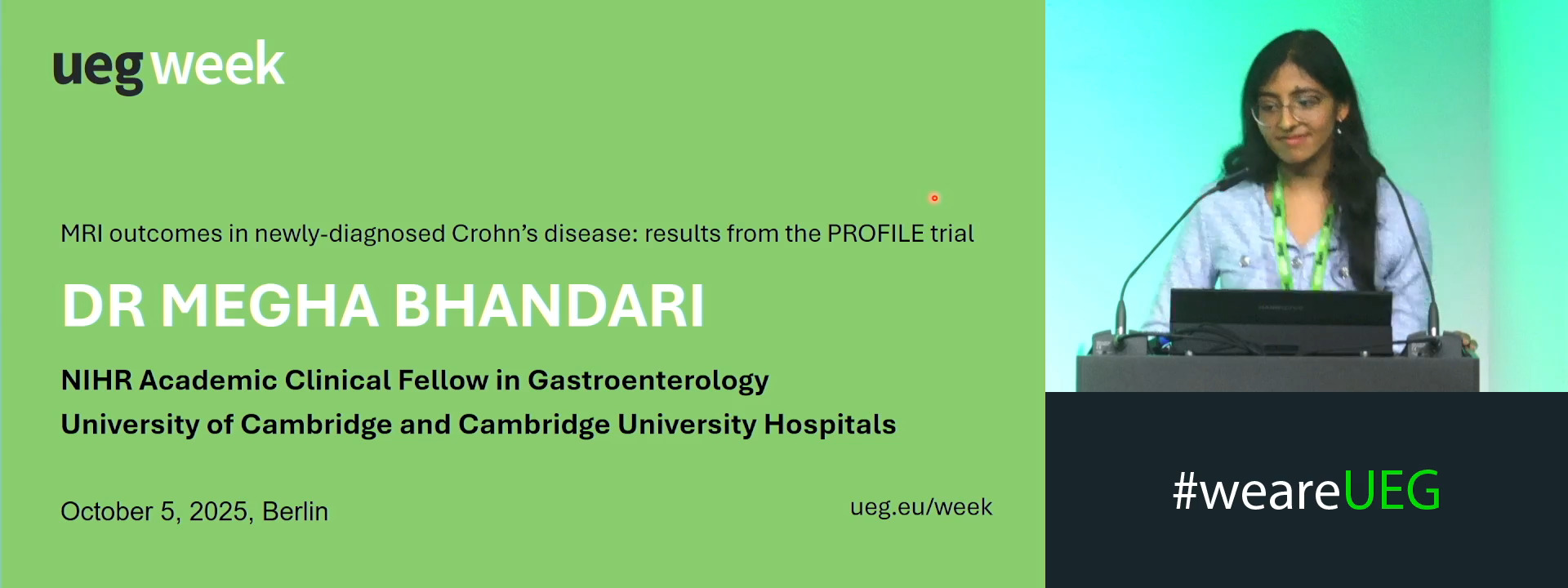
MRI / SMARIA SHOWS POOR SENSITIVITY FOR DETECTING MUCOSAL INFLAMMATION AND ULCERATION EVIDENT ON COLONOSCOPY / SES-CD IN THE PROFILE TRIAL
Megha Bhandari 1, Nurulamin Noor 2, Hania Paverd 1, Katja De Paepe 3, Katy Hickman 1, Edmund Godfrey 1, Samir Khwaja 1, James Lee 4, Tim Raine 5, Sreedhar Subramanian 5, Nick Kennedy 6, Sara Upponi 1, Miles Parkes 7
1 Cambridge University Hospital, Cambridge, United Kingdom
2 Cambridge University Hospitals, Cambridge, United Kingdom
3 Beth Israel Deaconess Medical Center and Harvard Medical School, Boston, United States
4 UCL Institute of Liver and Digestive Diseases, Royal Free Hospital, London, United Kingdom|||The Francis Crick Institute, London, United Kingdom
5 Cambridge University Hospital NHS Foundation Trust, Cambridge, United Kingdom
6 Royal Devon & Exeter Hospital, Exeter, United Kingdom
7 Inflammatory Bowel Disease Research Group, Addenbrooke's Hospital, Cambridge, UK, Cambridge, United Kingdom
Event
Topics
Submission format
Citation
Published
Log in to access this content.
Free for all myUEG account holders. Your access level is set automatically based on your occupation. Medical professionals get full access to all content. If you are a non-medical user, you can only access UEG Week content from congresses you attended.
Not sure what you can access? Learn more about account types.
BEYOND THE SCOPE: UNMASKING APPENDICITIS FOLLOWING COLONOSCOPY
1 Makassed General Hospital, Beirut, Lebanon
2 Beirut Arab University, Beirut, Lebanon
Conference
Topics
Submission format
Session