UEG's educational platform for gastroenterology education bringing recordings, courses, guidelines, and more together in one place.
Trending on Gutflix
Rate for better recommendations!
Your feedback helps us show you more of what you like and less of what you dislike!
Log in to continue.
This content is part of Gutflix. Log in with your myUEG account, or create one free, to watch it.
Not sure what you can access? Learn more about account types.
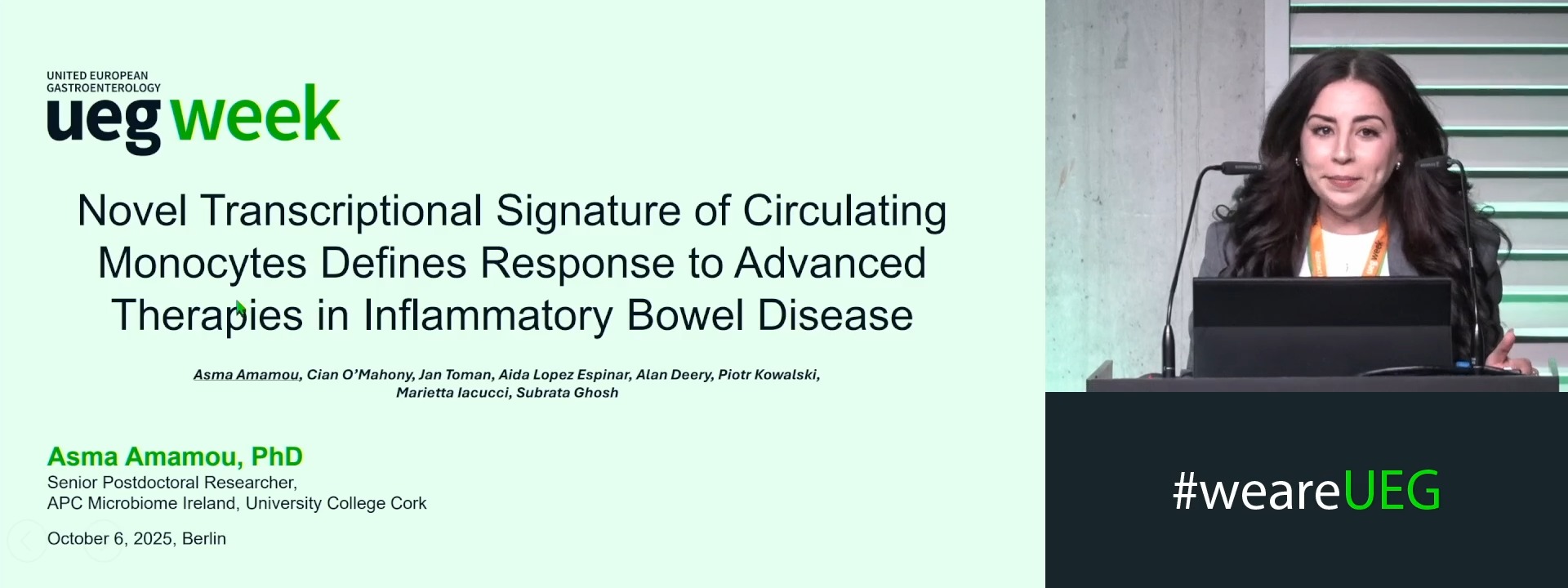
NOVEL TRANSCRIPTIONAL SIGNATURE OF CIRCULATING MONOCYTES DEFINES RESPONSE TO ADVANCED THERAPIES IN INFLAMMATORY BOWEL DISEASE
Asma Amamou 1, Cian O'Mahony 1, Jan Toman 1, Aida Lopez Espinar 2, Alan Deery 1, Piotr Kowalski 3, Marietta Iacucci 1, Subrata Ghosh 1
Affiliations
1 APC Microbiome Ireland, College of Medicine and Health, University College Cork, Cork, Ireland
2 School of Pharmacy, University College Cork, Cork, Ireland
3 APC Microbiome Ireland, College of Medicine and Health, University College Cork, Cork, Ireland|||School of Pharmacy, University College Cork, Cork, Ireland
Log in to continue.
This content is part of Gutflix. Log in with your myUEG account, or create one free, to watch it.
Not sure what you can access? Learn more about account types.
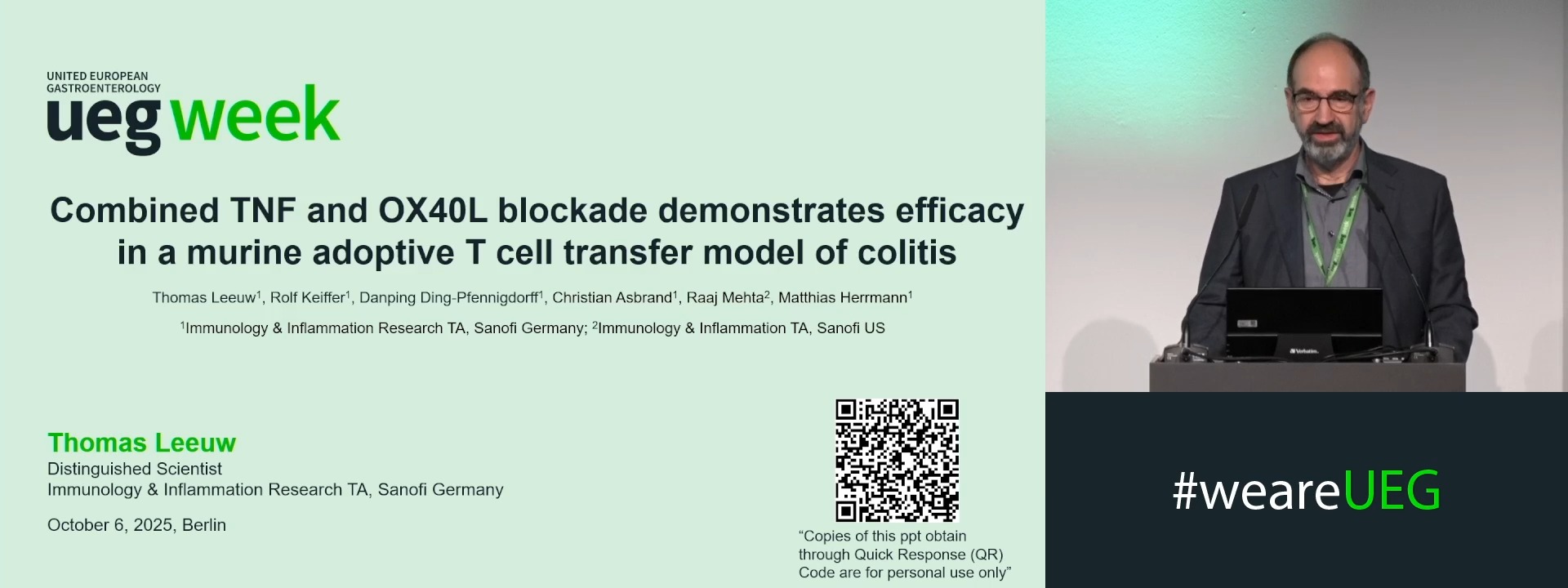
COMBINED TNF AND OX40L BLOCKADE DEMONSTRATES EFFICACY IN A MURINE ADOPTIVE T CELL TRANSFER MODEL OF COLITIS
Thomas Leeuw 1, Rolf Keiffer 1, Danping Ding-Pfennigdorff 1, Christian Asbrand 1, Raaj Mehta 2, Matthias Herrmann 1
Affiliations
1 Immunology & Inflammation Research TA, Sanofi Germany, Frankfurt, Germany
2 Immunology & Inflammation TA, Sanofi US, Cambridge, United States
Log in to continue.
This content is part of Gutflix. Log in with your myUEG account, or create one free, to watch it.
Not sure what you can access? Learn more about account types.
Personalising treatment: Tailoring to precision
Affiliations
1 Université libre de Bruxelles, Bruxelles, Belgium
Log in to continue.
This content is part of Gutflix. Log in with your myUEG account, or create one free, to watch it.
Not sure what you can access? Learn more about account types.
Advancing IBD precision medicine: The next frontier
Affiliations
1 University Hospitals Leuven and KU Leuven, Translational Research in Gastrointestinal Disorders - IB, Leuven, Belgium
Log in to continue.
This content is part of Gutflix. Log in with your myUEG account, or create one free, to watch it.
Not sure what you can access? Learn more about account types.
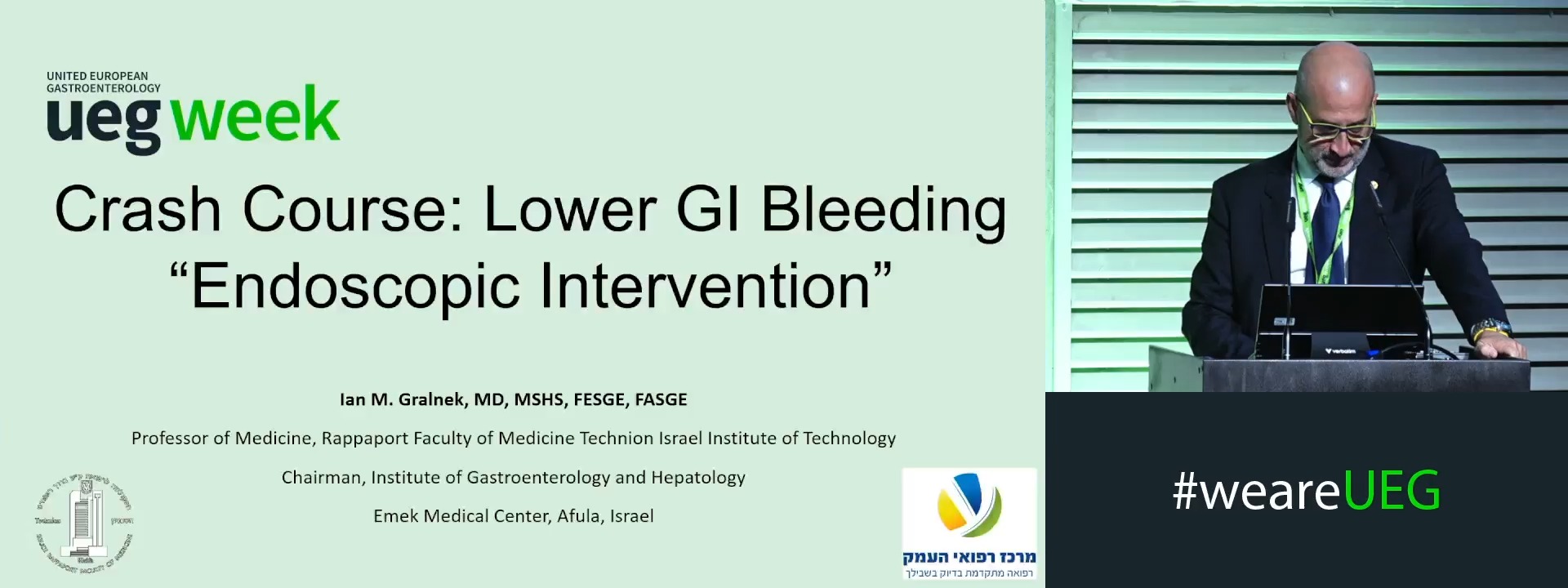
Endoscopic intervention
Affiliations
1 Ha'Emek Medical Center, Haifa, Israel
Log in to continue.
This content is part of Gutflix. Log in with your myUEG account, or create one free, to watch it.
Not sure what you can access? Learn more about account types.
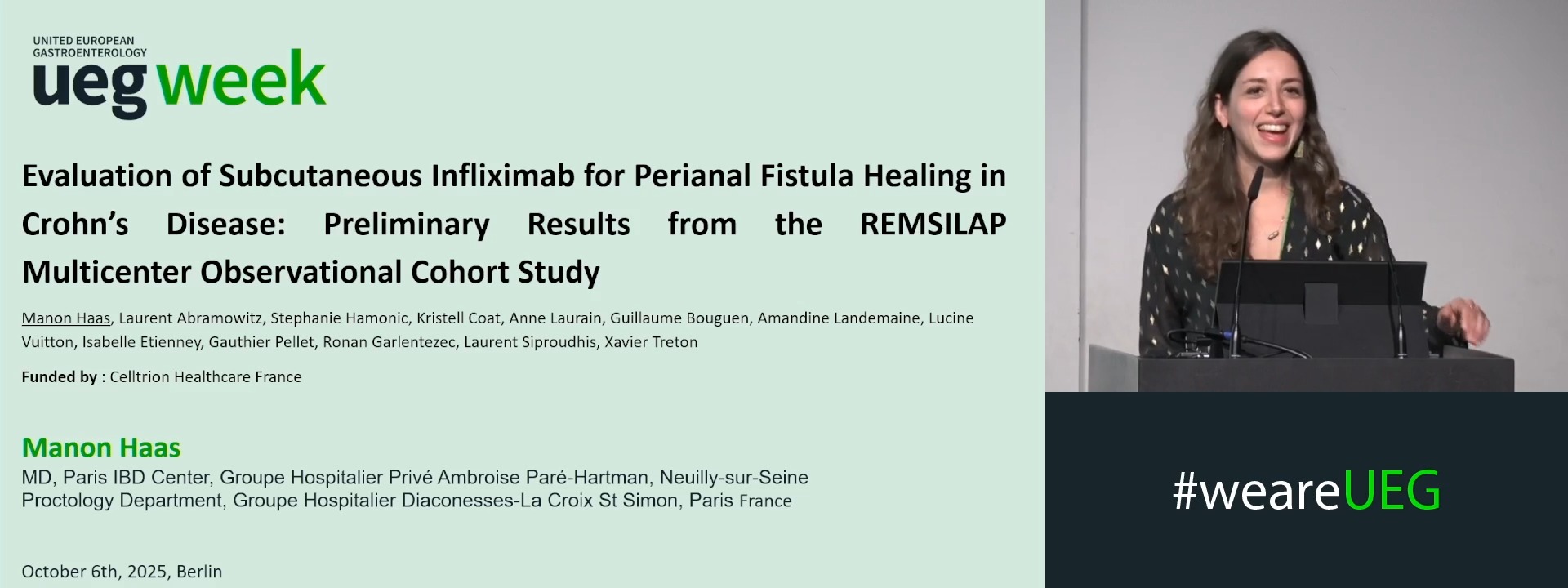
EVALUATION OF SUBCUTANEOUS INFLIXIMAB FOR PERIANAL FISTULA HEALING IN CROHN’S DISEASE: PRELIMINARY RESULTS FROM THE REMSILAP MULTICENTER OBSERVATIONAL COHORT STUDY
Manon Haas 1, Laurent Abramowitz 2, Stephanie Hamonic 3, Amandine Landemaine 3, Guillaume Bouguen 3, Anne Laurain 2, Lucine Vuitton 4, Isabelle Etienney 5, Gauthier Pellet 6, Kristell Coat 3, Ronan Garlantezec 3, Laurent Siproudhis 3, Xavier Treton 1
Affiliations
1 Institut des MICI - Clinique Ambroise Paré Hartmann, Neuilly sur Seine, France
2 CHU Bichat, Paris, France
3 CHU Pontchaillou, Rennes, France
4 Besançon university hospital gastroenterology, Courbevoie, France
5 Diaconesses-Croix St Simon Hospital, Paris, France
6 CHU Bordeaux, Bordeaux, France
Log in to continue.
This content is part of Gutflix. Log in with your myUEG account, or create one free, to watch it.
Not sure what you can access? Learn more about account types.
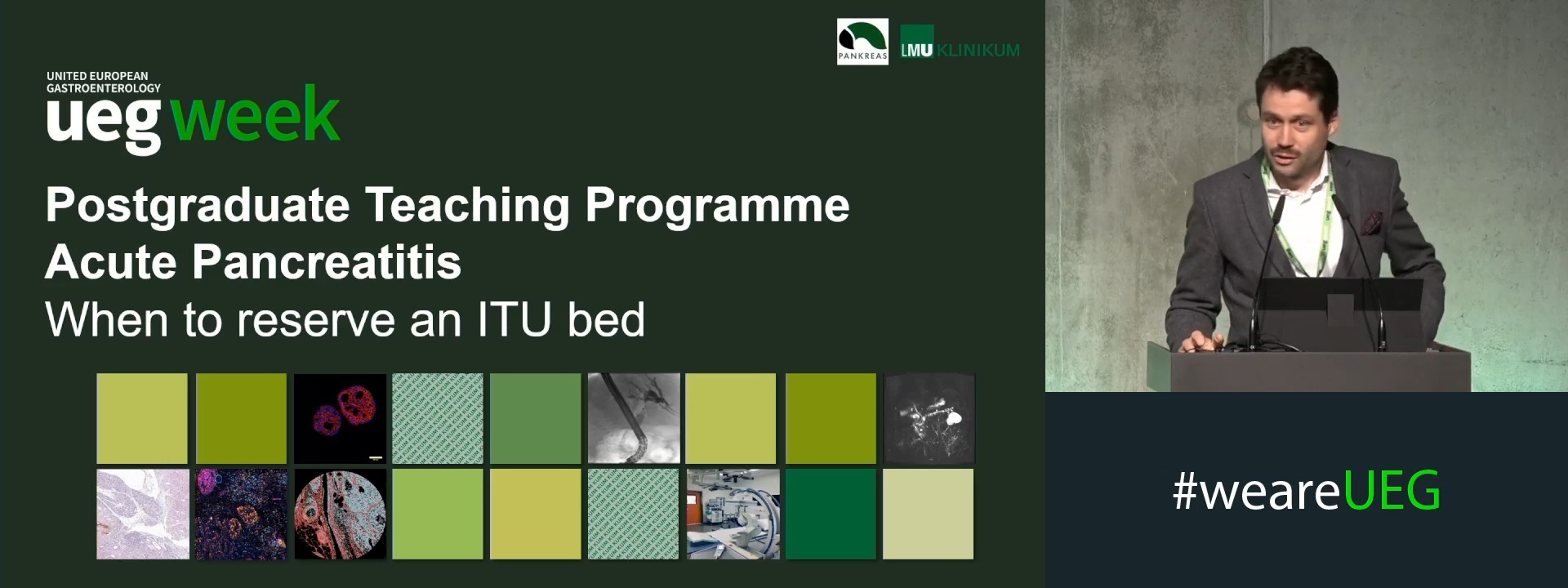
Acute pancreatitis: When to reserve an ITU bed?
Affiliations
1 University Hospital LMU Munich, München, Germany