UEG's content platform for gastroenterology education bringing recordings, courses, guidelines, and more together in one place.
Trending on Gutflix
Rate for better recommendations!
Your feedback helps us show you more of what you like and less of what you dislike!
Log in to continue.
This content is part of Gutflix. Log in with your myUEG account, or create one free, to watch it.
Not sure what you can access? Learn more about account types.
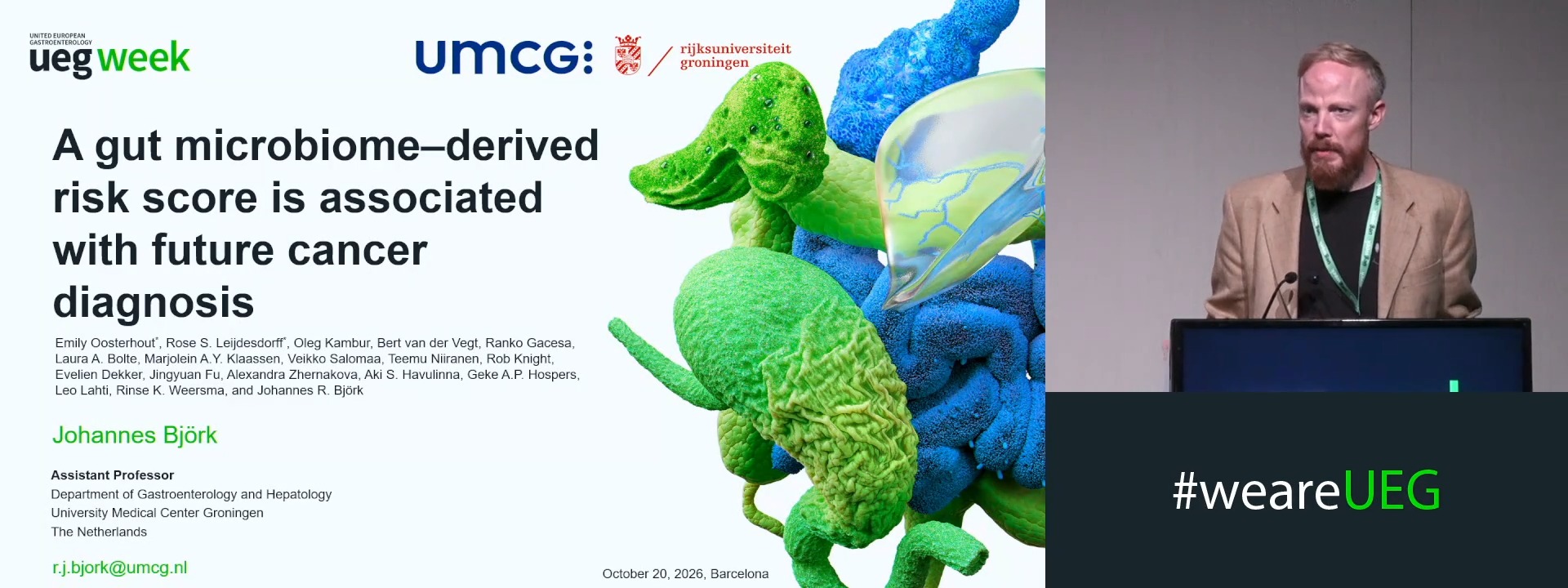
A GUT MICROBIOME-DERIVED RISK SCORE IS ASSOCIATED WITH FUTURE CANCER DIAGNOSIS IN A DUTCH POPULATION-BASED COHORT
Johannes R. Björk 1, Emily Oosterhout 1, Rose Leijdesdorff 1,2, Ranko Gacesa 1, Laura A. Bolte 1, Marjolein Anthonia Ymkje Klaassen 1, Geke A. P. Hospers 1, Rinse K. Weersma 1
Affiliations
1 University Medical Center Groningen, Groningen, Netherlands
2 Amsterdam University Medical Center, Amsterdam, Netherlands
Log in to continue.
This content is part of Gutflix. Log in with your myUEG account, or create one free, to watch it.
Not sure what you can access? Learn more about account types.
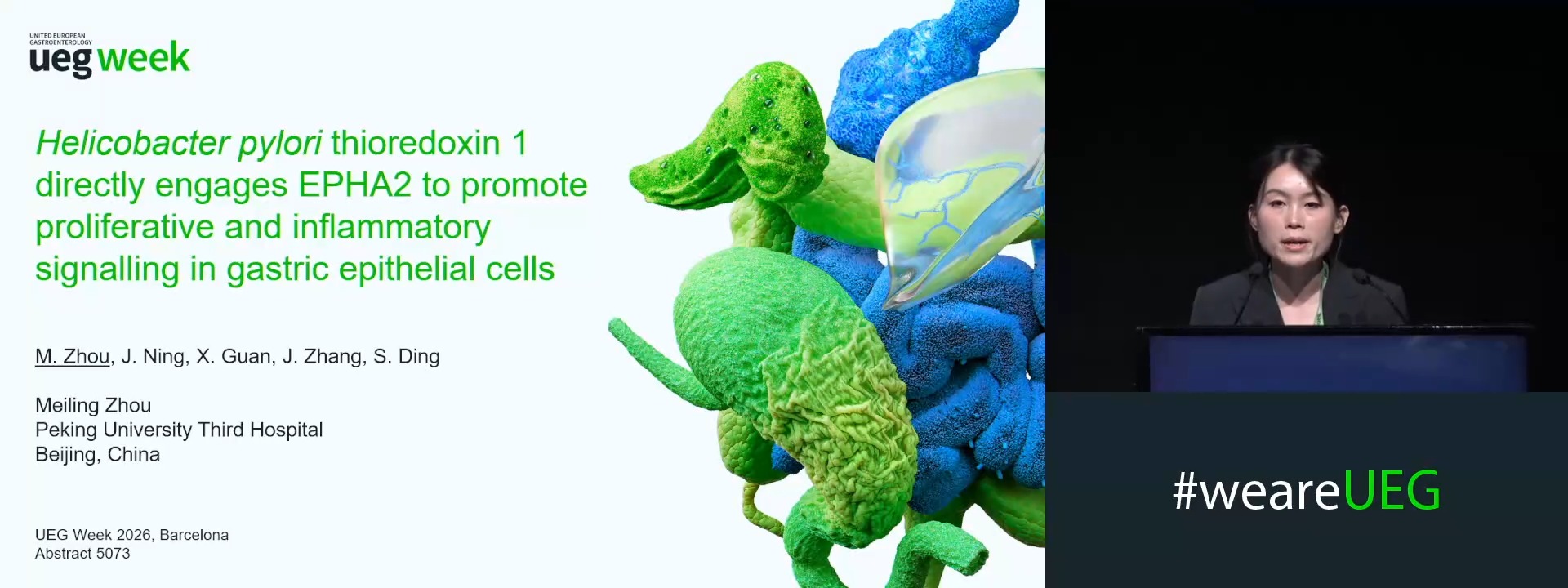
HELICOBACTER PYLORI THIOREDOXIN 1 DIRECTLY ENGAGES EPHA2 TO PROMOTE PROLIFERATIVE AND INFLAMMATORY SIGNALLING IN GASTRIC EPITHELIAL CELLS
Affiliations
1 Peking University Third Hospital, Beijing, China
Log in to continue.
This content is part of Gutflix. Log in with your myUEG account, or create one free, to watch it.
Not sure what you can access? Learn more about account types.
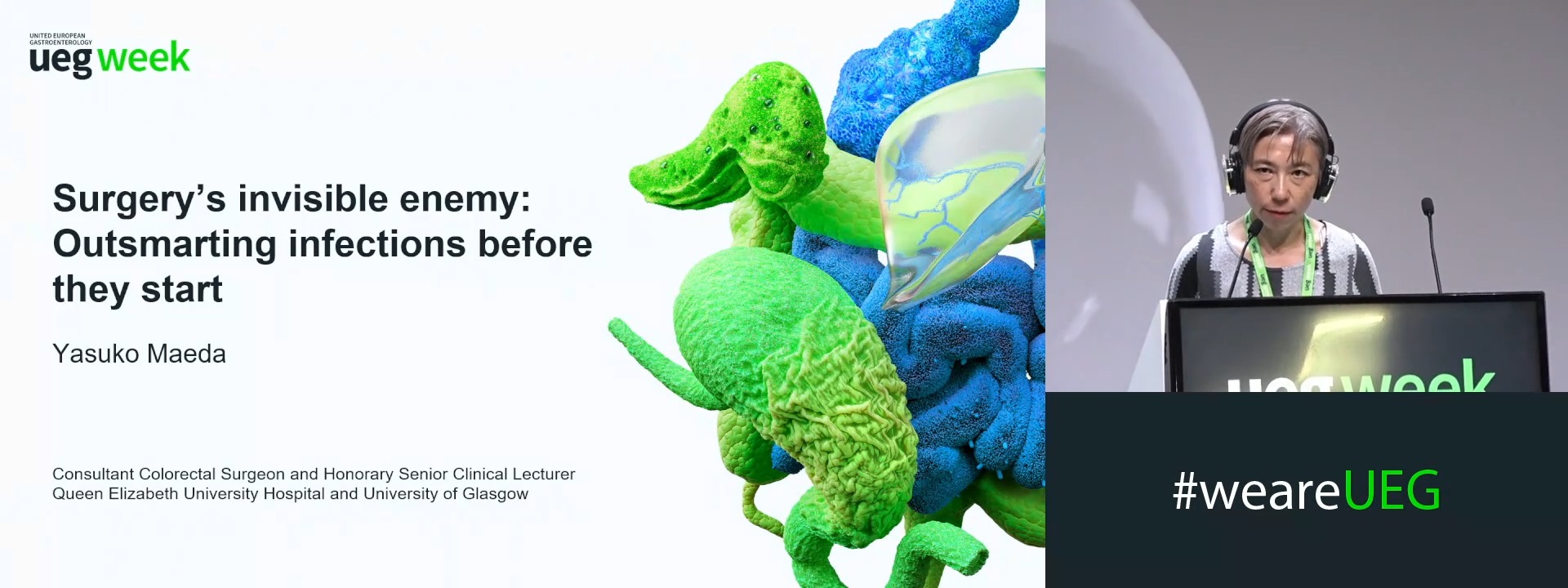
Surgery’s invisible enemy: Outsmarting infections before they start
Affiliations
1 Queen Elizabeth University Hospital, Glasgow, United Kingdom
Log in to continue.
This content is part of Gutflix. Log in with your myUEG account, or create one free, to watch it.
Not sure what you can access? Learn more about account types.
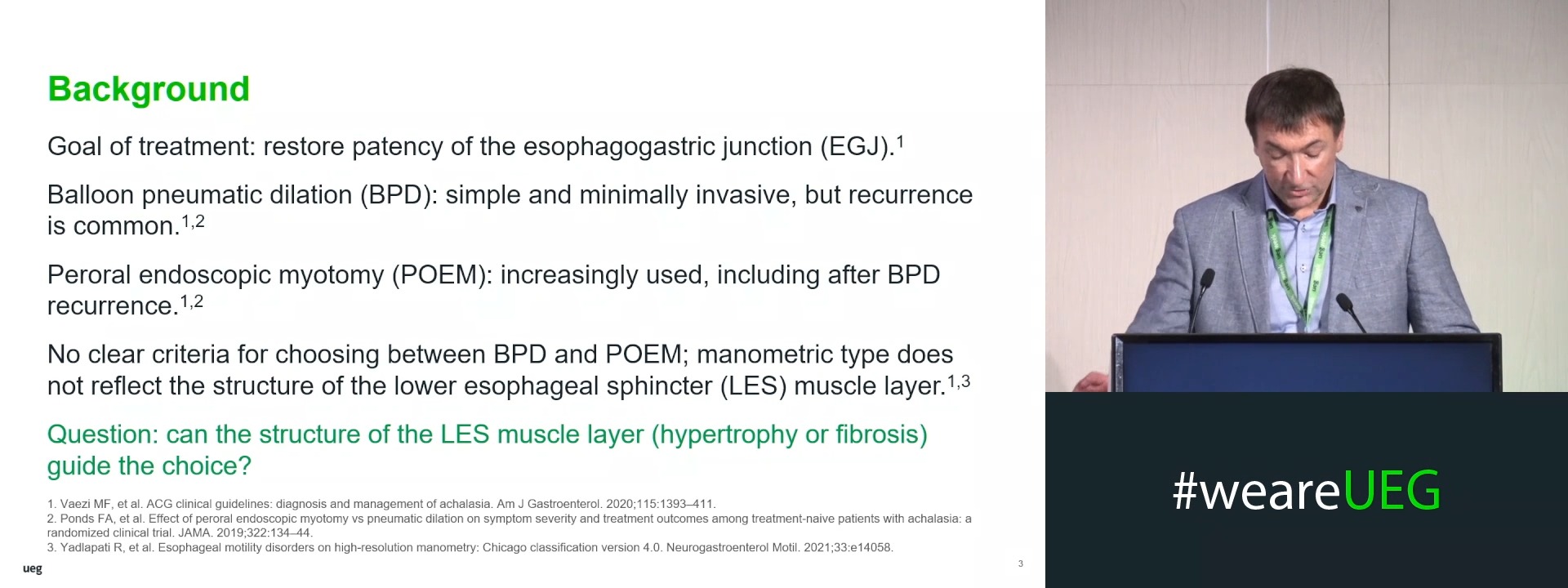
A DIFFERENTIATED APPROACH TO SELECTING THE ENDOSCOPIC SURGICAL TECHNIQUE FOR THE TREATMENT OF ESOPHAGEAL ACHALASIA
Affiliations
1 SI “Institute of Gastroenterology of the National Academy of Medical Sciences of Ukraine”, Dnipro, Ukraine
Log in to continue.
This content is part of Gutflix. Log in with your myUEG account, or create one free, to watch it.
Not sure what you can access? Learn more about account types.
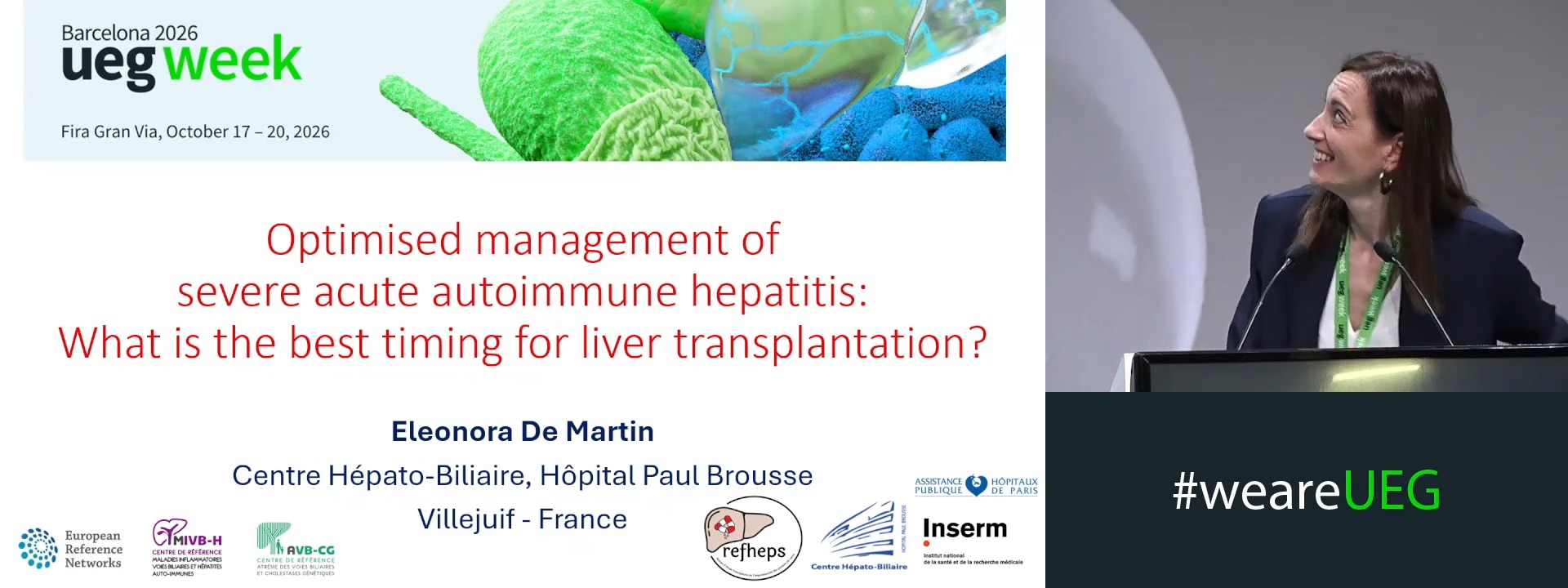
Optimised management of severe acute autoimmune hepatitis: What is the best timing for liver transplantation?
Affiliations
1 Centre Hépato-Biliaire Paul Brousse, Villejuif, France
Log in to continue.
This content is part of Gutflix. Log in with your myUEG account, or create one free, to watch it.
Not sure what you can access? Learn more about account types.
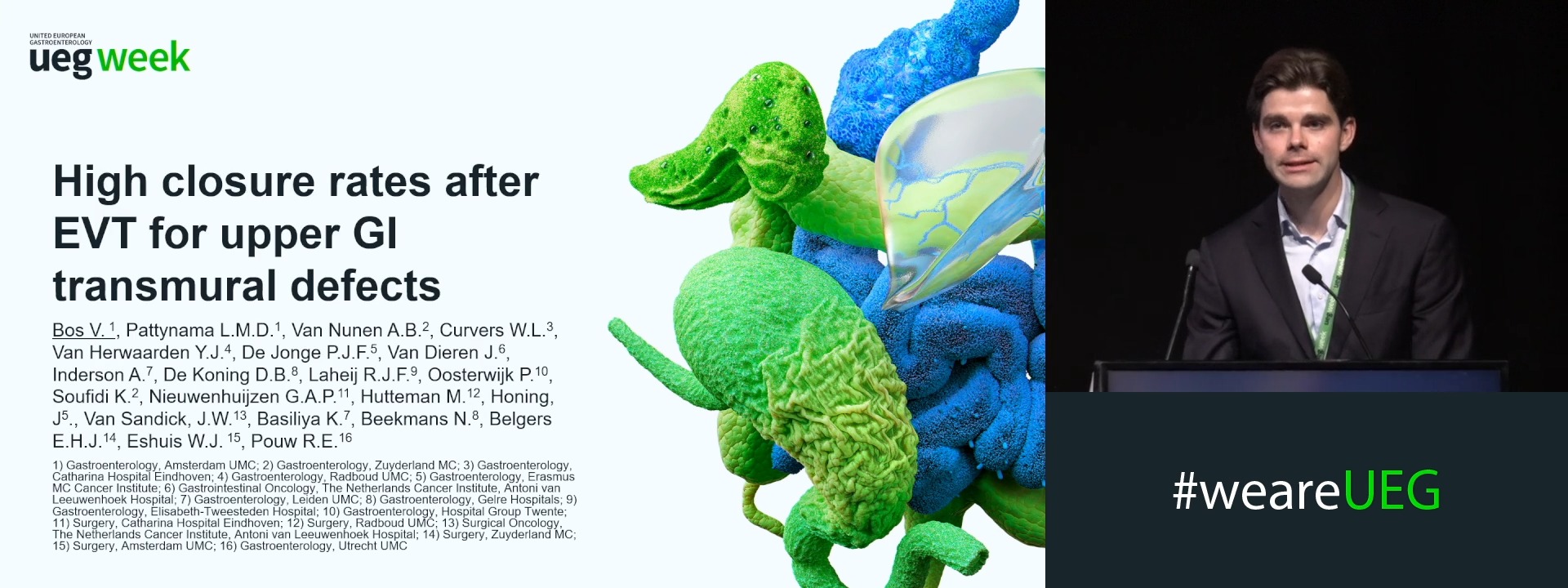
HIGH SUCCESS RATES AFTER ENDOSCOPIC VACUUM THERAPY FOR UPPER GI TRANSMURAL DEFECTS: FIRST RESULTS FROM THE DUTCH PROSPECTIVE EVT REGISTRY
Vincent Bos 1, Lisanne Pattynama 1, Annick van Nunen 2, Wouter L. Curvers 3, Yasmijn van Herwaarden 4, Pieter Jan de Jonge 5, Jolanda van Dieren 6, Akin Inderson 7, Daan De Koning 8, Robert Laheij 9, peter oosterwijk 10, K. Soufidi 2, Grard A. P. Nieuwenhuijzen 3, Merlijn Hutteman 4, Johanna van Sandick 6, Kirill Basiliya 7, Nina Beekmans 8, Eric Belgers 2, Wietse J. Eshuis 1, Roos E. Pouw 11
Affiliations
1 Amsterdam UMC, Amsterdam, Netherlands
2 Zuyderland Medical Center, Sittard-Geleen, Netherlands
3 Catharina Hospital, Eindhoven, Netherlands
4 Radboud University Medical Center, Nijmegen, Netherlands
5 Erasmus MC, Rotterdam, Netherlands
6 the Netherlands Cancer Institute, Antoni van Leeuwenhoek Hospital, Amsterdam, Netherlands
7 Leiden University Medical Center, Leiden, Netherlands
8 Gelre Hospitals, Apeldoorn, Netherlands
9 Elisabeth-Tweesteden Hospital, Tilburg, Netherlands
10 Hospital Group Twente, Almelo, Netherlands
11 UMC Utrecht, Utrecht, Netherlands