UEG's educational platform for gastroenterology education bringing recordings, courses, guidelines, and more together in one place.
Trending on Gutflix
Rate for better recommendations!
Your feedback helps us show you more of what you like and less of what you dislike!
Log in to continue.
This content is part of Gutflix. Log in with your myUEG account, or create one free, to watch it.
Not sure what you can access? Learn more about account types.
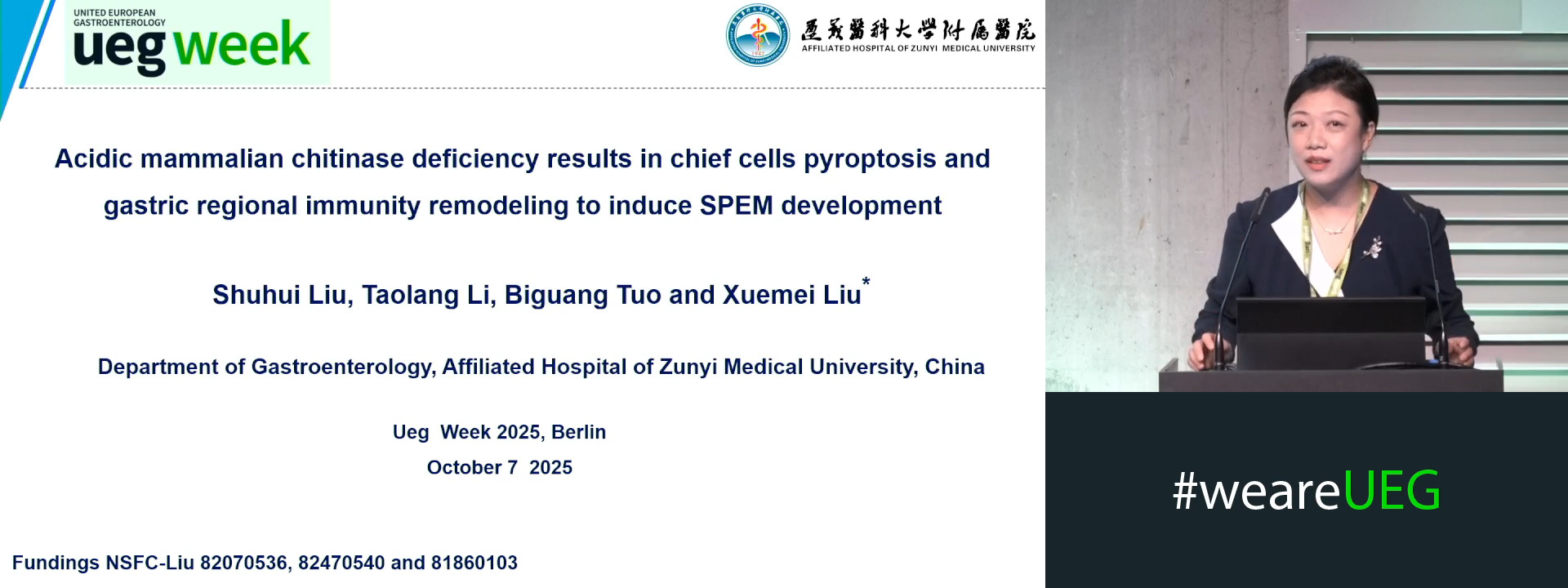
ACIDIC MAMMALIAN CHITINASE DEFICIENCY RESULTS IN CHIEF CELLS PYROPTOSIS AND GASTRIC REGIONAL IMMUNITY REMODELING IS THE NEW CELLULAR ORIGIN OF SPEM
Affiliations
1 Affiliated Hospital of Zunyi Medical University, Zunyi, China

Log in to continue.
This content is part of Gutflix. Log in with your myUEG account, or create one free, to watch it.
Not sure what you can access? Learn more about account types.
Exploiting the immune response in GI cancer: Next chapter
Affiliations
1 CHU de Nantes IMAD, Nantes, France
Log in to continue.
This content is part of Gutflix. Log in with your myUEG account, or create one free, to watch it.
Not sure what you can access? Learn more about account types.
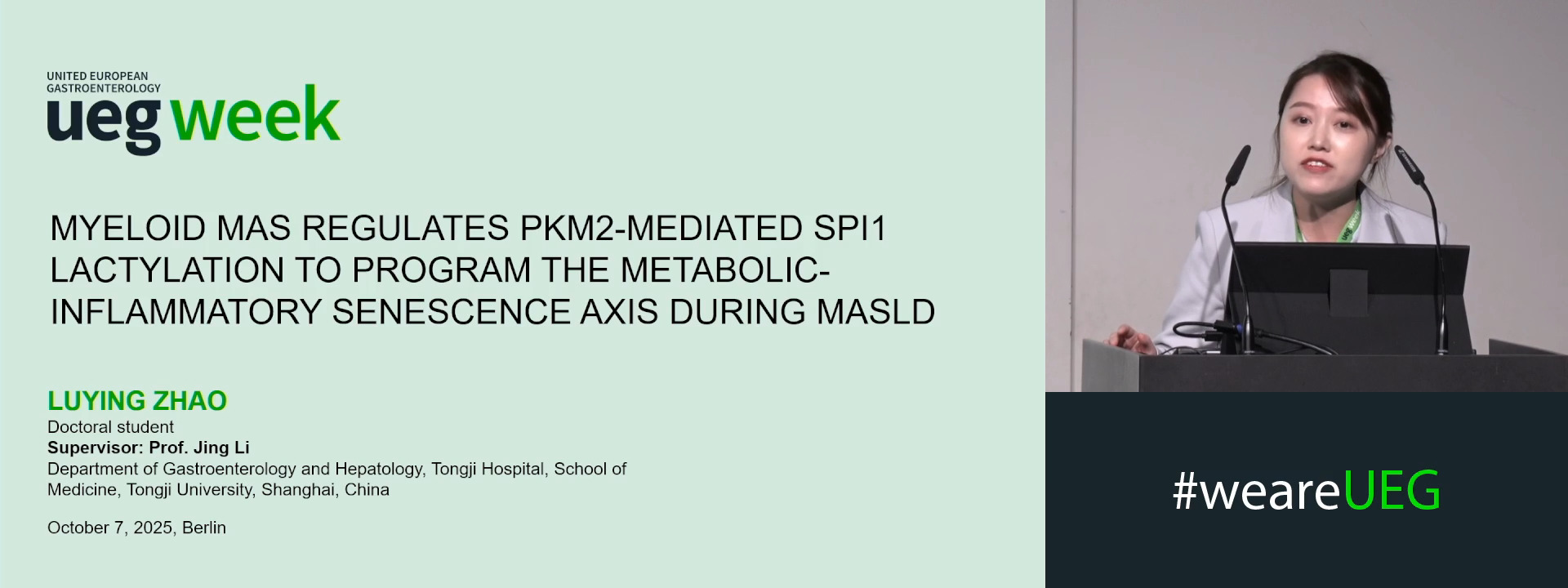
MYELOID MAS REGULATES PKM2-MEDIATED SPI1 LACTYLATION TO PROGRAM THE METABOLIC-INFLAMMATORY SENESCENCE AXIS OF MONONUCLEAR PHAGOCYTE SYSTEM DURING THE METABOLIC DYSFUNCTION-ASSOCIATED STEATOTIC LIVER DISEASE (MASLD)
Affiliations
1 Tongji Hospital, Tongji University School of Medicine, Shanghai, China

Log in to continue.
This content is part of Gutflix. Log in with your myUEG account, or create one free, to watch it.
Not sure what you can access? Learn more about account types.
GLPs: What should gastroenterologists know about them?
Affiliations
1 University of Kansas School of Medicine Dept. of Gastroenterology, Leawood, United States of America
Log in to continue.
This content is part of Gutflix. Log in with your myUEG account, or create one free, to watch it.
Not sure what you can access? Learn more about account types.
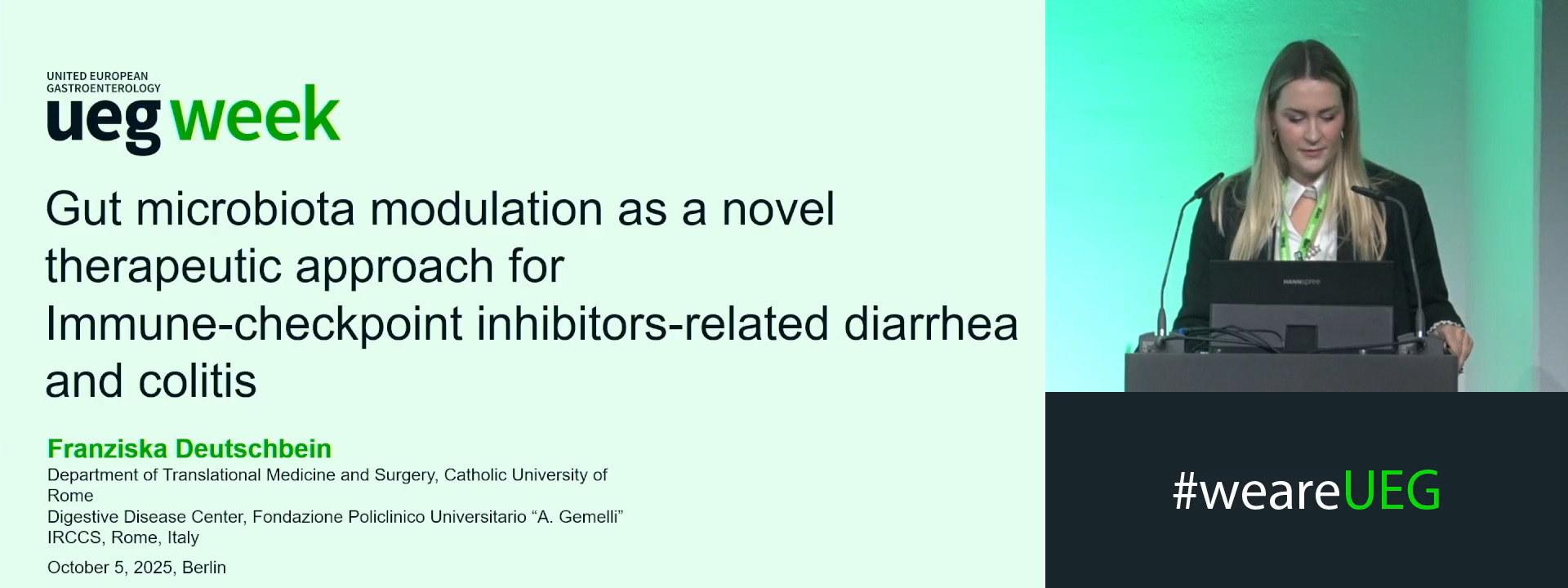
GUT MICROBIOTA MODULATION AS A NOVEL THERAPEUTIC APPROACH FOR IMMUNE-CHECKPOINT INHIBITORS-RELATED DIARRHEA AND COLITIS
Serena Porcari 1, Franziska Deutschbein 1, William Fusco 1, Andrea Severino 1, Debora Rondinella 1, Irene Venturini 1, Antonio Di Sabatino 2, Marco Vincenzo Lenti 2, Ettore D'Argento 1, Emilio Bria 1, Giovanni Schinzari 1, Eleonora Palluzzi 1, Olga Martelli 1, Mariagrazia Distefano 1, Carolina Maria Sassu 1, Serena Maria Boccia 1, Laura Vertechy 1, Ida Paris 1, Roberto Iacovelli 1, Chiara Ciccarese 1, Francesca Romana Ponziani 1, Claudia Marchetti 3, Giampaolo Tortora 1, Antonio Gasbarrini 1, Giovanni Cammarota 1, Gianluca Ianiro 1
Affiliations
1 Fondazione Policlinico Universitario 'A.Gemelli' - IRCCS, Roma, Italy
2 IRCCS Policlinico S. Matteo, Pavia, Italy
3 Fondazione Policlinico Universitario 'A.Gemelli' - IRCCS, Roma, Italy|||Università Cattolica del Sacro cuore, Roma, Italy
Log in to continue.
This content is part of Gutflix. Log in with your myUEG account, or create one free, to watch it.
Not sure what you can access? Learn more about account types.
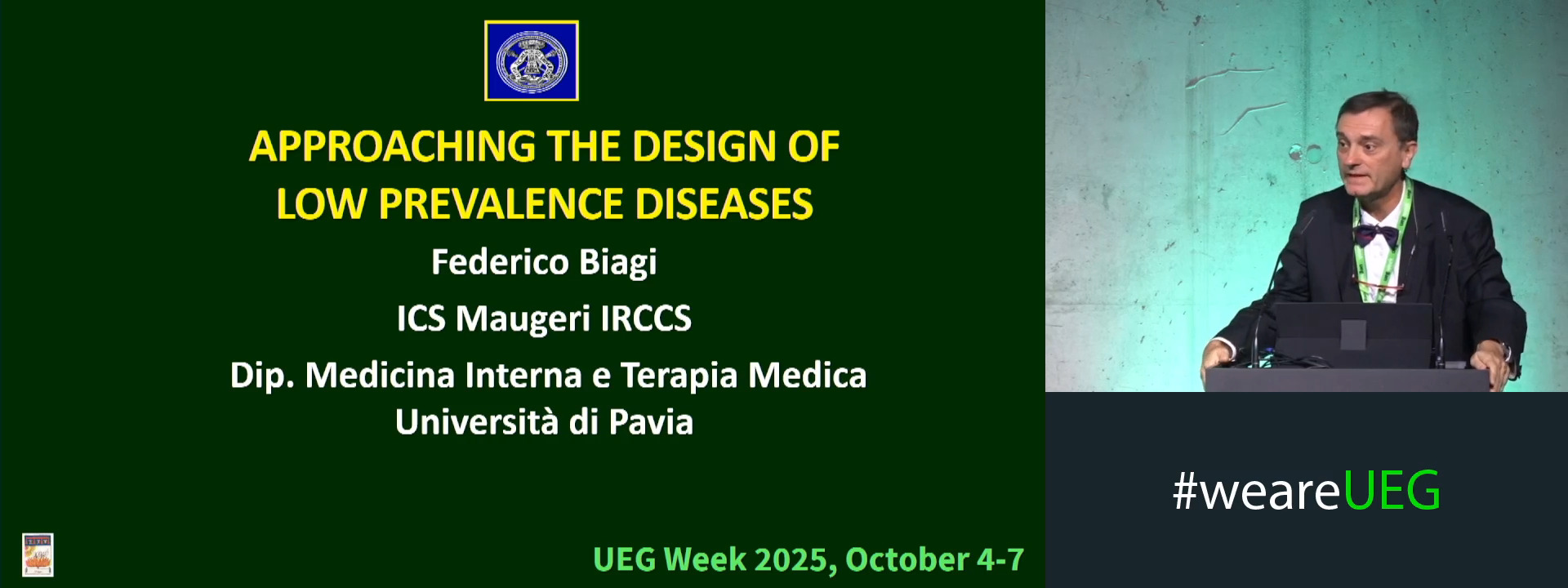
Approaching the design of low prevalence diseases
Affiliations
1 University of Pavia, Pavia, Italy