UEG's educational platform for gastroenterology education bringing recordings, courses, guidelines, and more together in one place.
Trending on Gutflix
Rate for better recommendations!
Your feedback helps us show you more of what you like and less of what you dislike!
Log in to continue.
This content is part of Gutflix. Log in with your myUEG account, or create one free, to watch it.
Not sure what you can access? Learn more about account types.
From Adiposity to Hepatic Health: Exploring the Pleiotropic Clinical Impact of Semaglutide (Novo Nordisk) (Complete Session)
Affiliations
1 Transplant Hepatology Arizona Liver Health Phoenix, AZ, None, United States of America
2 Clínica Universidad de Navarra, Pamplona, Spain
Log in to continue.
This content is part of Gutflix. Log in with your myUEG account, or create one free, to watch it.
Not sure what you can access? Learn more about account types.
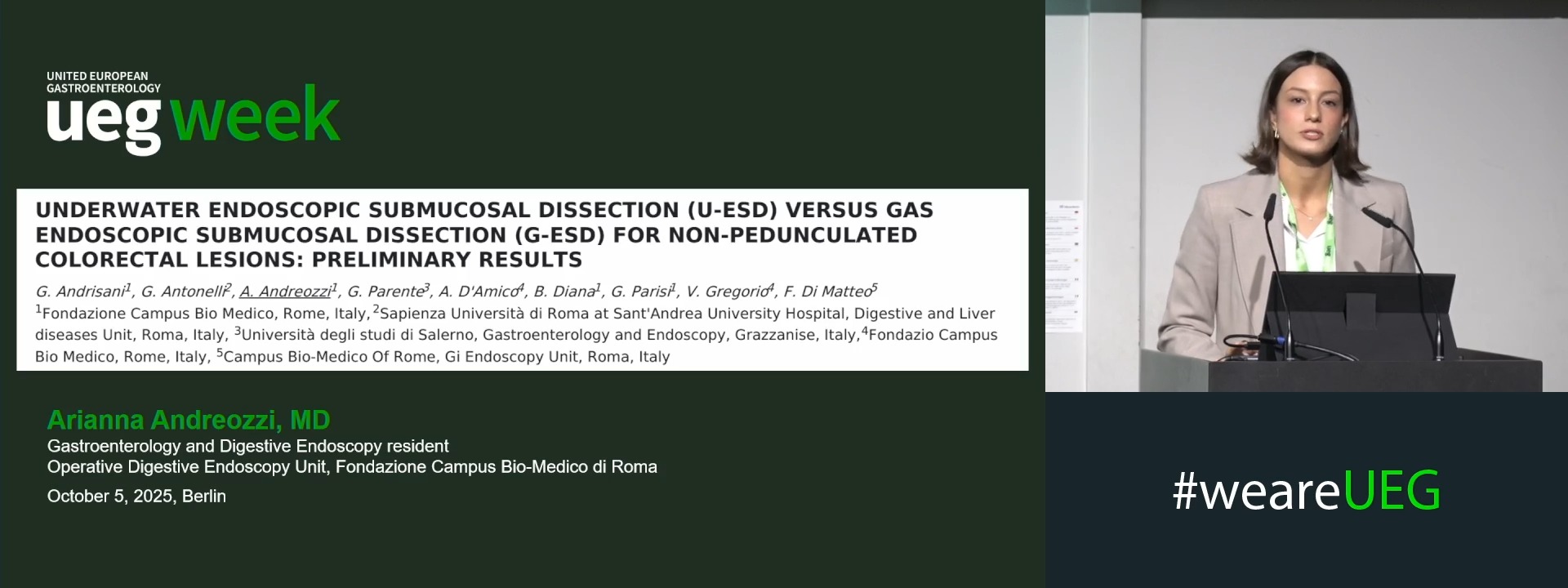
UNDERWATER ENDOSCOPIC SUBMUCOSAL DISSECTION (U-ESD) VERSUS GAS ENDOSCOPIC SUBMUCOSAL DISSECTION (G-ESD) FOR NON-PEDUNCULATED COLORECTAL LESIONS: PRELIMINARY RESULTS
Gianluca Andrisani 1, Giulio Antonelli 2, Arianna Andreozzi 1, Giovanni Parente 3, Andrea D'Amico 4, Benito Diana 1, Giulia Parisi 1, Virginia Gregorio 4, Francesco Di Matteo 5
Affiliations
1 Fondazione Campus Bio Medico, Rome, Italy
2 Sapienza Università di Roma at Sant'Andrea University Hospital, Roma, Italy
3 Università degli Studi di Salerno, Grazzanise, Italy
4 Fondazio Campus Bio Medico, Rome, Italy
5 Campus Bio-Medico of Rome, Roma, Italy
Log in to continue.
This content is part of Gutflix. Log in with your myUEG account, or create one free, to watch it.
Not sure what you can access? Learn more about account types.
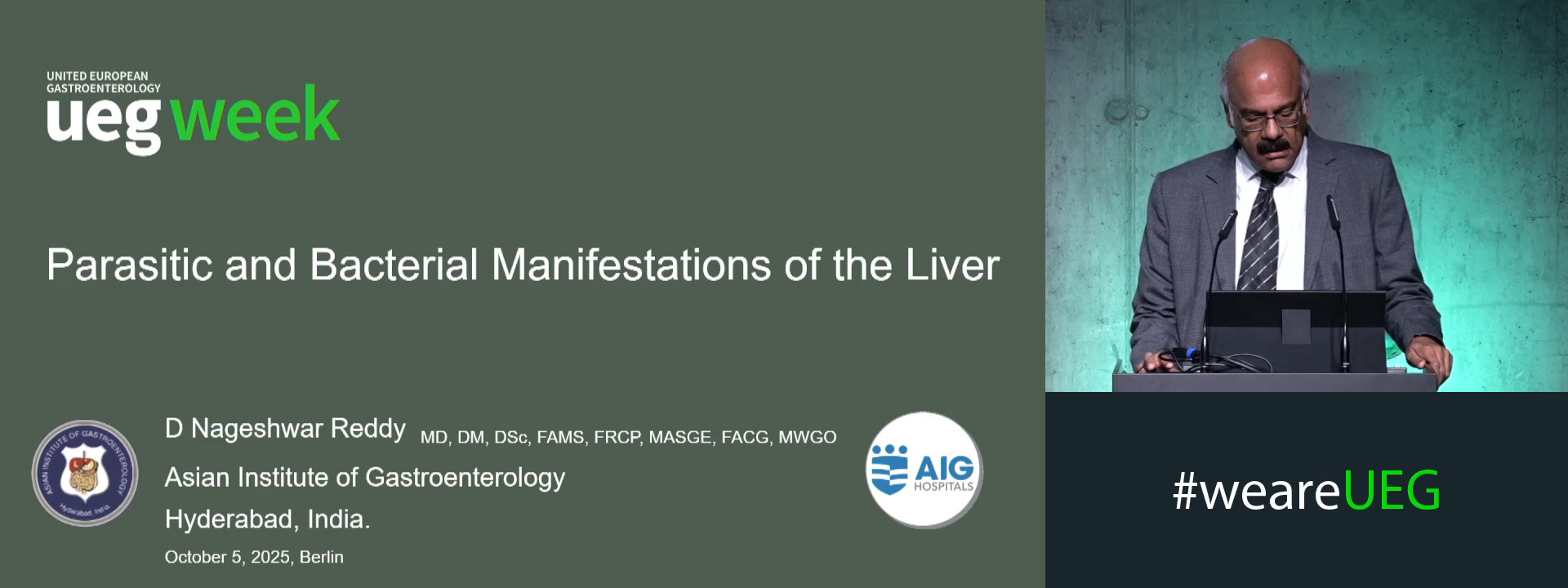
Bacterial and parasitic manifestations of the liver
Affiliations
1 Asian Institute Of Gastroenterology, Gachibowli, India
Log in to continue.
This content is part of Gutflix. Log in with your myUEG account, or create one free, to watch it.
Not sure what you can access? Learn more about account types.
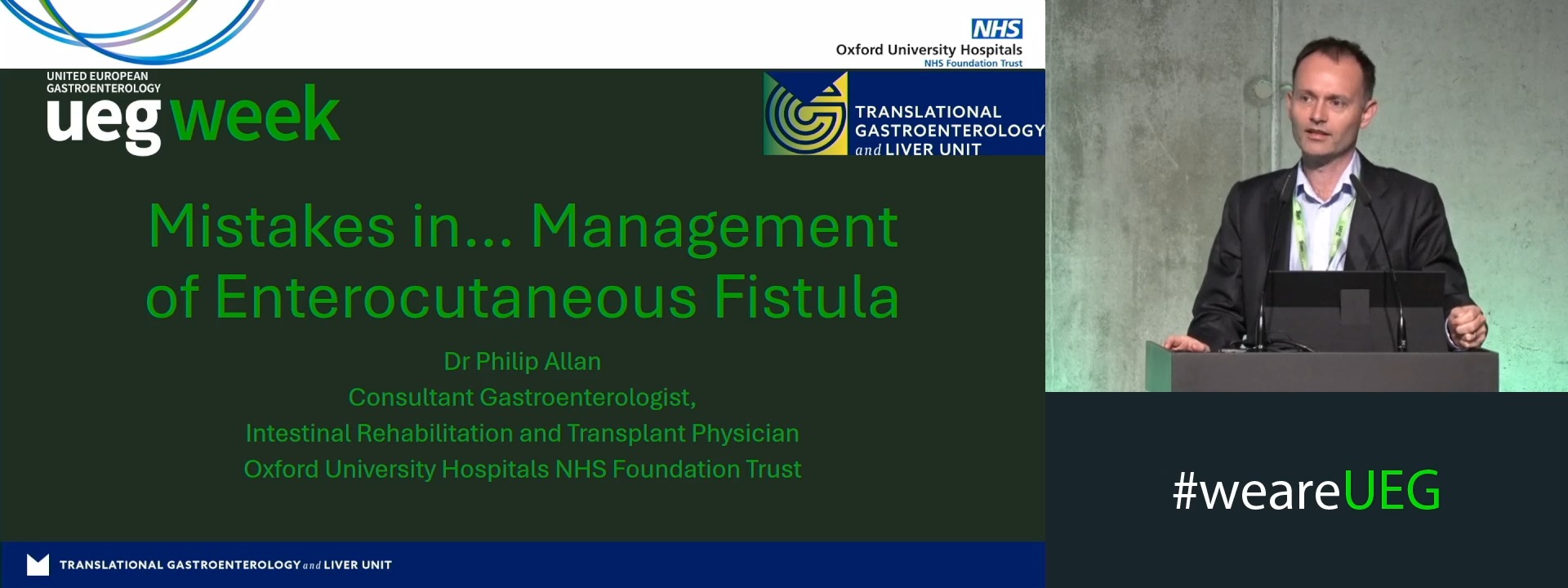
The management of enterocutaneous fistulae
Affiliations
1 Oxford University Hospitals Nhs Ft, Oxford, United Kingdom
Log in to continue.
This content is part of Gutflix. Log in with your myUEG account, or create one free, to watch it.
Not sure what you can access? Learn more about account types.
Refractory ascites: Can we break a vicious cycle?
Affiliations
1 Translational Hepatology - University Clinic Frankfurt, Frankfurt, Germany
Log in to continue.
This content is part of Gutflix. Log in with your myUEG account, or create one free, to watch it.
Not sure what you can access? Learn more about account types.
Diverticulitis: When not to be worried?
Affiliations
1 Univertsity of Oslo, Oslo, Norway
Log in to continue.
This content is part of Gutflix. Log in with your myUEG account, or create one free, to watch it.
Not sure what you can access? Learn more about account types.
Management of mesenteric ischemia
Affiliations
1 University Hospital Basel, Basel, Switzerland