UEG's educational platform for gastroenterology education bringing recordings, courses, guidelines, and more together in one place.
Most popular content
Rate for better recommendations!
Your feedback helps us show you more of what you like and less of what you dislike!
Log in to continue.
This content is part of Gutflix. Log in with your myUEG account, or create one free, to watch it.
Not sure what you can access? Learn more about account types.
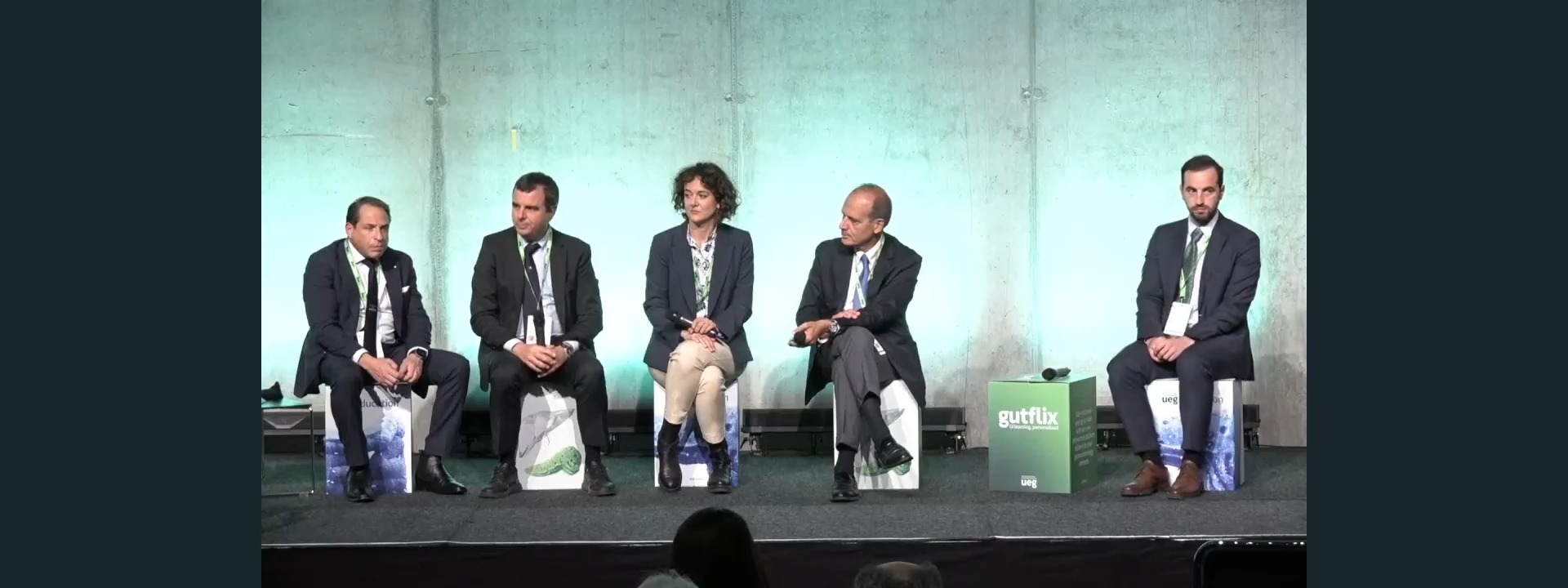
Panel discussion: Into the depths! Guiding minimally-invasive management of small-bowel pathology
Log in to continue.
This content is part of Gutflix. Log in with your myUEG account, or create one free, to watch it.
Not sure what you can access? Learn more about account types.
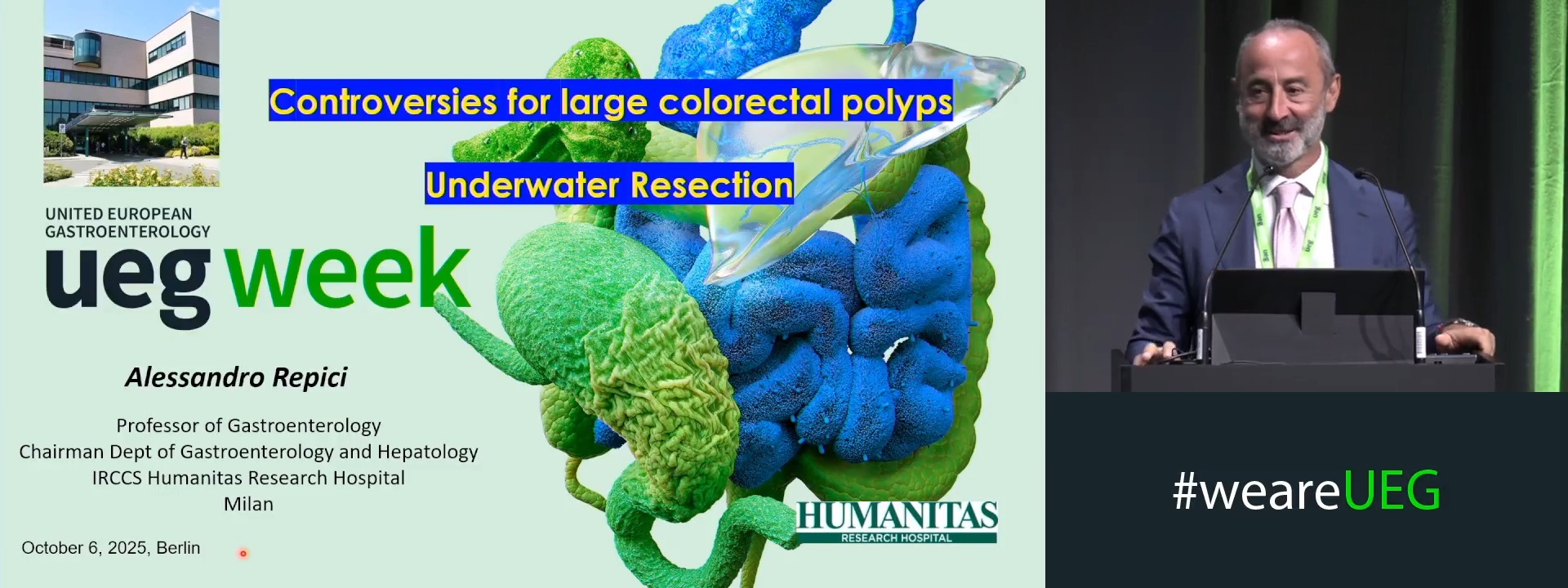
I do cold resection
Affiliations
1 Ist. Clinico Humanitas Rozzano Dept. of Gastroenterology, Milano, Italy
Log in to continue.
This content is part of Gutflix. Log in with your myUEG account, or create one free, to watch it.
Not sure what you can access? Learn more about account types.
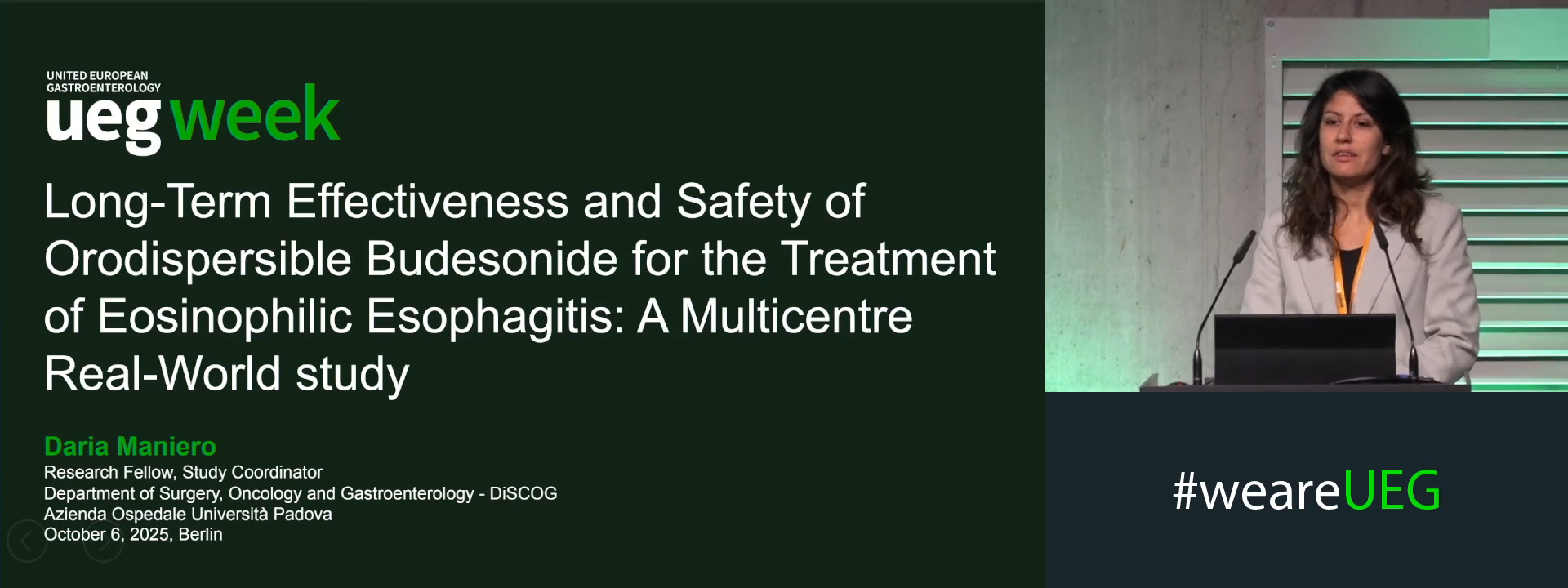
LONG-TERM EFFECTIVENESS AND SAFETY OF ORODISPERSIBLE BUDESONIDE FOR THE TREATMENT OF EOSINOPHILIC ESOPHAGITIS: A MULTICENTRE REAL-WORLD STUDY
Daria Maniero 1, Greta Lorenzon 2, Matteo Ghisa 3, Erica Bonazzi 1, Luisa Bertin 4, Amir Mari 5, Carlo Maria Rossi 6, Antonio Di Sabatino 6, Marco Vincenzo Lenti 7, Emanuele Dilaghi 8, Bruno Annibale 9, Alberto Barchi 10, Edoardo Vespa 11, Rosa Lovero 12, Elisa Marabotto 13, ANDREA PASTA 14, Paola Iovino 15, Elvira Di Feo 16, Marina Coletta 17, Giorgia Giorgini 18, Emanuele Bendia 19, Federico Caldart 20, Marco Caminati 21, Roberto Penagini 22, Pierfrancesco Visaggi 23, Edoardo Vincenzo Savarino 24
Affiliations
1 University of Padua, Padova, Italy
2 University of Padua, Padua, Italy
3 Azienda Ospedale Università Padova, Padova, Italy
4 University of Padua, Venice, Italy
5 Nazareth Hospital EMMS, Nazareth, Israel
6 Fondazione IRCCS Policlinico San Matteo, University of Pavia, Pavia, Italy
7 Fondazione IRCCS Policlinico San Matteo, University of Pavia, Alessandria, Italy
8 Digestive and Liver Disease Unit of Sant'Andrea Hospital-Sapienza University of Rome, Rome, Italy
9 University Hospital S. Andrea, Rome, Rome, Italy
10 Vita Salute San Raffaele Hospital, Modena, Italy
11 IRCCS Ospedale San Raffaele, Milano, Italy
12 National Institute of Gastroenterology, IRCCS De Bellis, Castellana Grotte, Italy
13 OSP Policlinico San Martino, Genova, Italy
14 University of Genoa, Genoa, Italy
15 University of Salerno, Salerno (Sa), Italy
16 University of Salerno, Salerno, Italy
17 Università degli Studi di Milano Dept. of Gastroenterology, Milan, Italy
18 Ospedali Riuniti di Ancona, Ancona, Italy
19 Ospedali Riuniti di Ancona Department of Gastroenterology, Ancona, Italy
20 Verona University Hospital - University of Verona, Verona, Italy
21 University of Verona and Integrated Verona University Hospital, Verona, Italy
22 Università degli Studi di Milano, Milan, Italy
23 Gastroenterology Unit, University of Pisa, Pisa, Italy
24 University of Padua, Division of Gastroenterology, Padua, Italy
Log in to continue.
This content is part of Gutflix. Log in with your myUEG account, or create one free, to watch it.
Not sure what you can access? Learn more about account types.
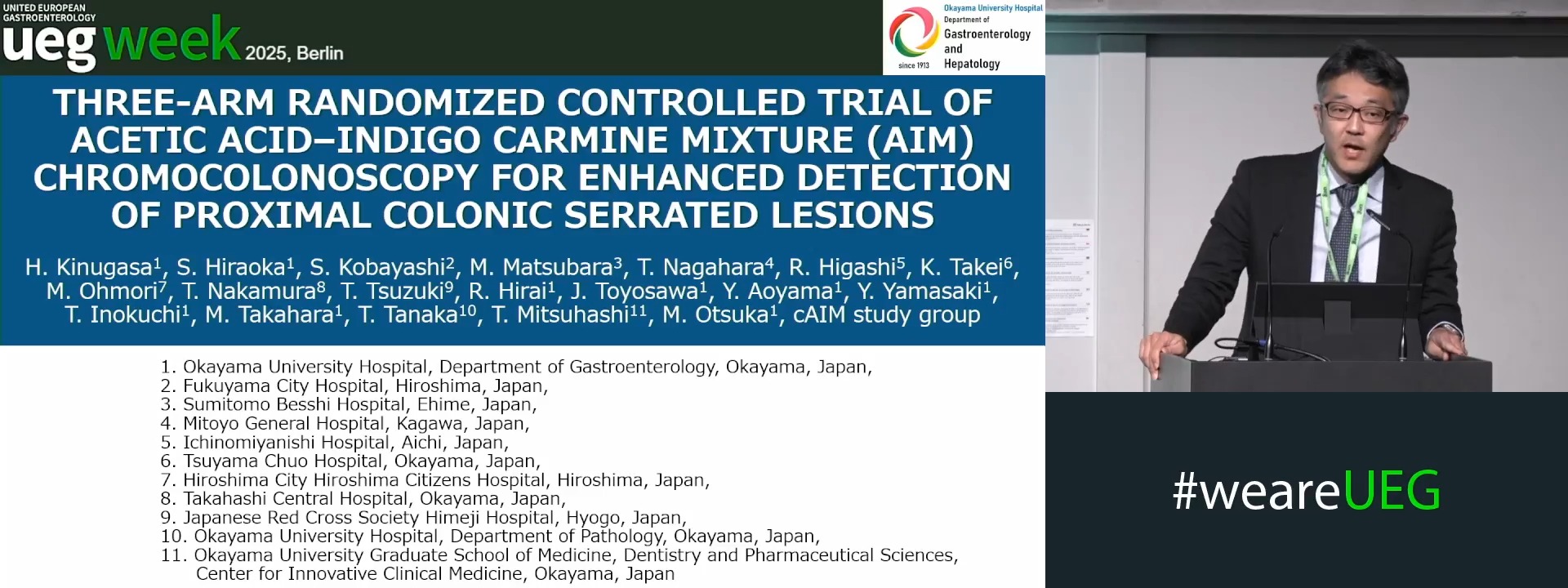
THREE-ARM RANDOMIZED CONTROLLED TRIAL OF ACETIC ACID–INDIGO CARMINE MIXTURE (AIM) CHROMOCOLONOSCOPY FOR ENHANCED DETECTION OF PROXIMAL COLONIC SERRATED LESIONS
Hideaki Kinugasa 1, Sakiko Hiraoka 1, Sayo Kobayashi 2, Minoru Matsubara 3, Teruya Nagahara 4, Reiji Higashi 5, Kensuke Takei 6, Masayasu Ohmori 7, Takashi Nakamura 8, Takao Tsuzuki 9, Ryosuke Hirai 1, Junki Toyosawa 1, Yuki Aoyama 1, Yasushi Yamasaki 1, Toshihiro Inokuchi 1, Masahiro Takahara 1, Takehiro Tanaka 1, Toshiharu Mitsuhashi 10, Motoyuki Otsuka 1
Affiliations
1 Okayama University Hospital, Okayama, Japan
2 Fukuyama City Hospital, Hiroshima, Japan
3 Sumitomo Besshi Hospital, Ehime, Japan
4 Mitoyo General Hospital, Kagawa, Japan
5 Ichinomiyanishi Hospital, Aichi, Japan
6 Tsuyama Chuo Hospital, Okayama, Japan
7 Hiroshima City Hiroshima Citizens Hospital, Hiroshima, Japan
8 Takahashi Central Hospital, Okayama, Japan
9 Japanese Red Cross Society Himeji Hospital, Hyogo, Japan
10 Okayama University Graduate School of Medicine, Dentistry and Pharmaceutical Sciences, Okayama, Japan
Log in to continue.
This content is part of Gutflix. Log in with your myUEG account, or create one free, to watch it.
Not sure what you can access? Learn more about account types.
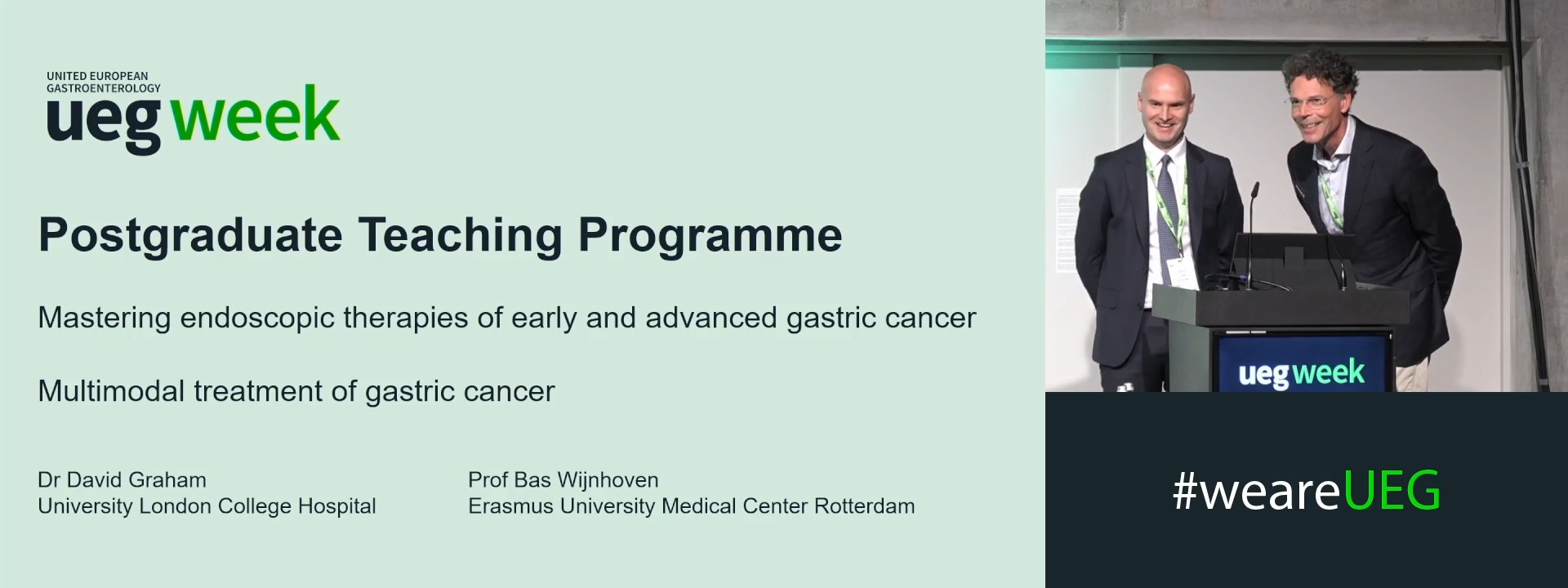
Integrative care of gastric cancer: From endoscopic therapies to surgery and chemo/raditherapy
Affiliations
1 University College London Hospital, London, United Kingdom
2 Erasmus MC Rotterdam Dept. of Surgery, Rotterdam, Netherlands