UEG Week Recordings UEG Week Posters Online courses Guidelines Mistakes in... Podcasts Webinars
Visit ueg.eu Create myUEG account Log In

Filters:

UEG Presentation
Share via Email Share on Facebook Share on X Share on LinkedIn Share on Bluesky
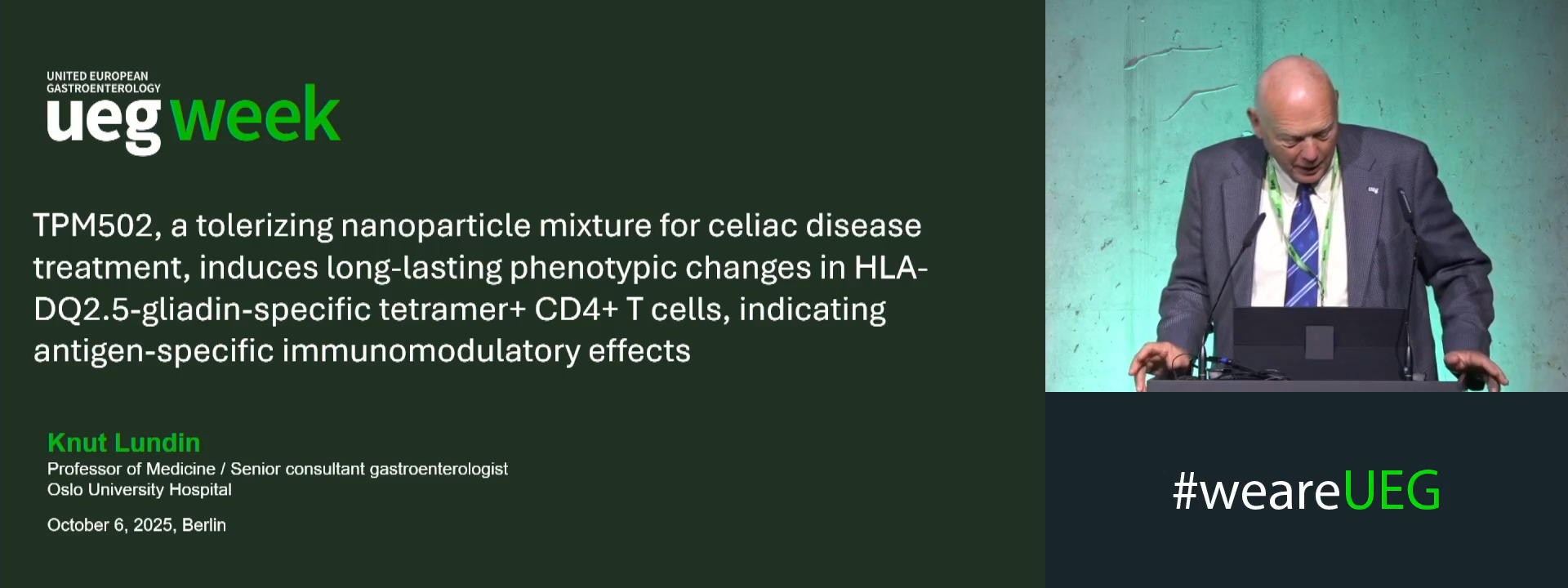
TPM502, A TOLERIZING NANOPARTICLE MIXTURE FOR CELIAC DISEASE TREATMENT, INDUCES LONG-LASTING PHENOTYPIC CHANGES IN HLA-DQ2.5-GLIADIN-SPECIFIC TETRAMER+ CD4+ T CELLS, INDICATING ANTIGEN-SPECIFIC IMMUNOMODULATORY EFFECTS

Log in to access this content.

Free for all myUEG account holders. Your access level is set automatically based on your occupation. Medical professionals get full access to all content. If you are a non-medical user, you can only access UEG Week content from congresses you attended.

Log In Create a free account

Not sure what you can access? Learn more about account types.

Introduction

TPM502 is a mixture of three distinct nanoparticles, each coupled with one celiac disease (CeD)-relevant gluten peptide, representing immunodominant and deamidated CD4+ T cell epitopes. TPM502 targets liver sinusoidal endothelial cells, which are unconventional antigen-presenting cells capable of inducing antigen-specific tolerance.

Aims & Methods

TCeD21 (NCT00565136) was a phase 2a double-blind, randomized, placebo-controlled study in HLA-DQ2.5-positive adults with confirmed CeD on a gluten-free diet. Patients achieving a predefined IL-2 response to a single dose (6 g) gluten challenge (GC1) were randomized into four cohorts to receive two intravenous infusions with escalating doses of TPM502 or placebo on day (D) 1 and D15. The GC was repeated 7 days after the second TPM502 dose (GC2). Peripheral blood mononuclear cells collected from each patient at predefined timepoints were analyzed by high-dimensional (30-color) flow cytometry, before and after HLA-DQ2.5-gliadin-specific tetramer (tet) enrichment, using surface staining for various phenotypic markers. The study aimed to characterize the phenotypes of gluten-specific T cells in CeD patients before and after TPM502 treatment to assess its immunomodulatory effects.

Results

Samples from 36 patients completing the study (12 placebo, 24 TPM502) were analyzed across five timepoints. In the placebo group, tet+ CD45RA-CD62L-CD4+ T (Ttet) cells increased after both GCs. By contrast, the TPM502 cohorts exhibited elevated Ttet cell numbers before GC2 (D22) but showed limited expansion afterward (D29), suggesting that TPM502 treatment may prevent further activation-induced expansion. Moreover, the frequency of activated Ttetcells—indicated by activation markers CD38, ICOS, and OX40—significantly decreased across all TPM502 dose levels after GC2 compared to the placebo group (fold change D22 vs D29, all p < 0.0001 by Kruskal-Wallis test). Notably, the diminished gluten response of Ttet cells post-treatment was accompanied by enhanced expression of co-inhibitory receptors TIGIT and PD-1 (D-21 vs D29, p < 0.0001), along with reduced CD127 expression (p < 0.01), indicative of decreased cell survival. These phenotypic changes, consistent with T cell exhaustion or anergy, persisted until study end and were visibly distinct from those in the placebo group, as illustrated by the heatmap of delta log-transformed flow cytometry data of Ttet cells across timepoints, clustered hierarchically. Gliadin-specific CD4+ regulatory T cells (CD25+CD127- Ttet) and CD39+ Ttet cells increased post-treatment at the highest TPM502 dose, suggesting the induction of regulatory states in these T cells. Moreover, pre-enriched samples showed reduced activation of αEβ7+ γδ+ and CD8+ Tcells after GC2 at the highest TPM502 dose, suggesting potential bystander effects.

Conclusion

Data from the first longitudinal tetramer-based flow cytometry analysis in CeD patients provide evidence that TPM502 induces antigen-specific tolerance through T-cell immunomodulation. These results corroborate other pharmacodynamic outcomes generated in this study, including a significant and dose-dependent reduction in ex vivo IL-2 and IFN-γ secretion by gluten-specific T cells after treatment. In addition to a good safety and tolerability profile of TPM502, this nanoparticle-mediated induction of antigen-specific tolerance may provide a novel therapeutic avenue to treat celiac disease.

TPM502, A TOLERIZING NANOPARTICLE MIXTURE FOR CELIAC DISEASE TREATMENT, INDUCES LONG-LASTING PHENOTYPIC CHANGES IN HLA-DQ2.5-GLIADIN-SPECIFIC TETRAMER+ CD4+ T CELLS, INDICATING ANTIGEN-SPECIFIC IMMUNOMODULATORY EFFECTS

Louise Fremgaard Risnes 1, Shu-Hung Wang 2, Knut E.A. Lundin 3, Ludvig M. Sollid 4, Naomi B. Klarenbeek 5, Anouk C. Meijs 5, Per Martin Hellström 6, Mika Scheinin 7, Rasmus Goll 8, A. James M. Daveson 9, Scott Schoeman 10, Erno A. Van Schaick 11, Veronica Asnaghi 2, Sabine Fleischer 2, Cristina de Min 2

1 University of Oslo and Oslo University Hospital, Oslo, Norway

2 Topas Therapeutics GmbH, Hamburg, Germany

3 Norwegian Coeliac Disease Research Centre, University of Oslo and Oslo University Hospital, Oslo, Norway

4 University of Oslo Inst. of Immunology Centre for Immune Regulation, Oslo, Norway

5 Centre for Human Drug Research, Leiden, Netherlands

6 Uppsala University, Uppsala, Sweden

7 Clinical Research Services Turku – CRST, Turku, Finland

8 University Hospital of North Norway, Tromsø, Norway

9 The Wesley Hospital, Auchenflower, Australia

10 Royal Adelaide Hospital, Adelaide, Australia

11 Calvagone SAS, Chazay d'Azergues, France

Event

UEG Week Berlin 2025

Topics

Digestive Oncology Immunology Mechanisms & Personalised Medicine Small Intestine & Nutrition

Submission format

Abstract

Session

Molecular medicine: Understanding the mechanism allows therapy

Citation

United European Gastroenterology Journal 2025; 13 (Supplement 8)

Published

2025
UEG Presentation
Share via Email Share on Facebook Share on X Share on LinkedIn Share on Bluesky
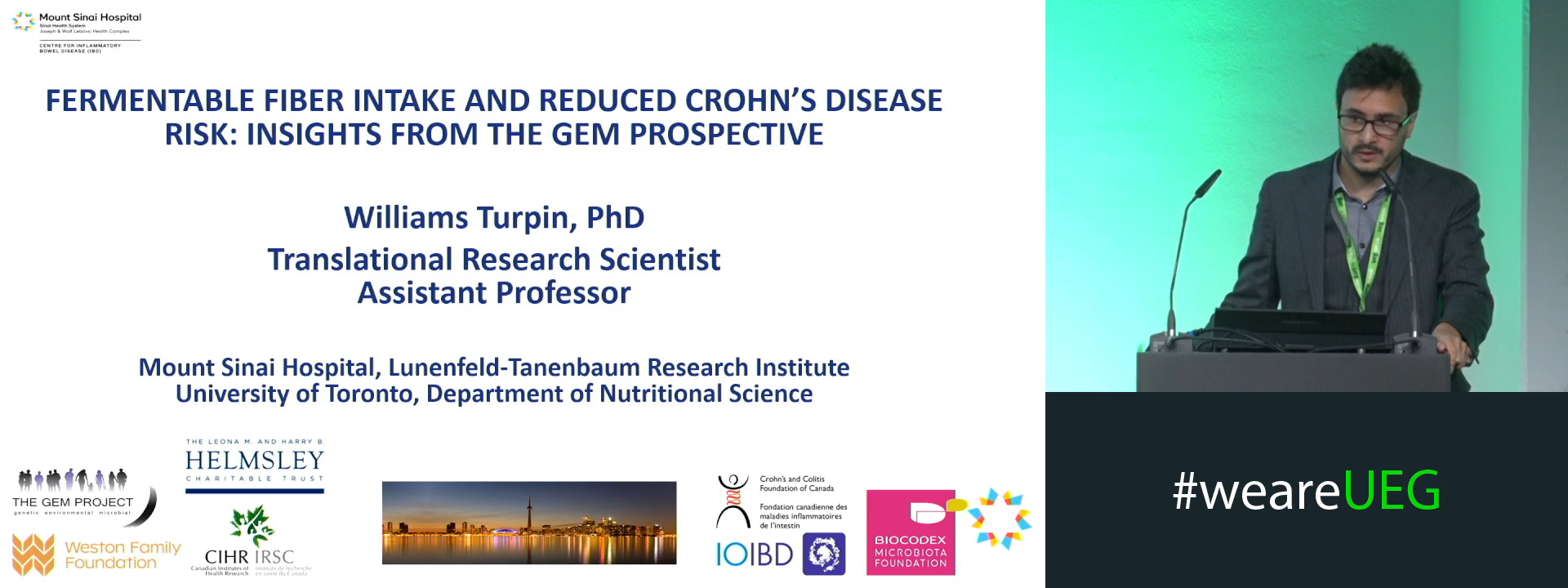
FERMENTABLE FIBER INTAKE AND REDUCED CROHN’S DISEASE RISK: INSIGHTS FROM THE GEM PROSPECTIVE COHORT

Log in to access this content.

Free for all myUEG account holders. Your access level is set automatically based on your occupation. Medical professionals get full access to all content. If you are a non-medical user, you can only access UEG Week content from congresses you attended.

Log In Create a free account

Not sure what you can access? Learn more about account types.

Introduction

The cause of Crohn’s Disease (CD) remains unclear; however evidence suggests that dietary factors play a key role. With a rising incidence and no definitive cure, identifying modifiable risk factors is critical in preventing CD development. We aimed to study the association between fermentable dietary fibre intake and the future development of CD in an at-risk population.

Aims & Methods

Participants were recruited as part of the Crohn’s and Colitis Canada GEM study, a prospective cohort study of healthy first-degree relatives of patients with CD. At enrolment, a validated food frequency questionnaire was administered. Pectin, β-glucan, inulin, fructooligosaccharides (FOS), and arabinoxylan intake were quantified, and values energy-adjusted. Survival analysis was used to test the association between intake of fibre subtypes and risk of CD development. Generalized estimating equation tested the association between fibre intake and baseline impaired intestinal permeability (fractional urinary excretion of lactulose to mannitol ratio (LMR) >0.025); subclinical gut inflammation (faecal calprotectin (FCP) >250 μg/g); and faecal microbiome composition via 16s rRNA sequencing.

Results

76 of the 2,659 participants developed CD with a median follow-up of 8.9 years (IQR=5.7-12.3). Median age at recruitment was 17 years (IQR=12-25). 47% were male. Higher intake of inulin (HR = 0.78; 95% CI=0.61–0.99; p=0.04) and β-glucan (HR = 0.78; 95% CI=0.61–0.99; p=0.04) were associated with a reduced risk of CD development. No fibre subtype was associated with a higher risk of CD development. Lower intake of pectin, inulin, FOS and β-glucan was associated with impaired intestinal permeability (0.005<p<0.04). Lower inulin intake was associated with high FCP levels (p = 0.046). Higher pectin intake was associated with increased alpha diversity of faecal microbiome (p = 0.028). Higher inulin, FOS and pectin intake was associated with a shift in microbial taxa previously shown to be protective against CD onset in the GEM cohort; a reduction in Ruminococcus torques and an increase in NK4A214 group (phylum Firmicutes) presence (3.25×10⁻¹⁰<q<0.04).

Conclusion

This study demonstrates that dietary intake of fermentable fibre subtypes is associated with a reduced risk of CD development as well as with pleiotropic changes in CD risk biomarkers including microbiome, intestinal permeability, and subclinical inflammation. This suggests that the potential benefit of fermentable fibres on CD risk may involve changes in barrier function, and microbiome composition and function. Targeted interventions based on these findings could prove effective in preventing the onset of CD.

FERMENTABLE FIBER INTAKE AND REDUCED CROHN’S DISEASE RISK: INSIGHTS FROM THE GEM PROSPECTIVE COHORT

Mingyue Xue 1, Catherine Mcshane 2, Kim Jeongseok 2, Haim Leibovitzh 3, Jingcheng Shao 2, Qilong Li 2, Karen Madsen 4, Reihane Khorasaniha 2, Anne Griffiths 5, Thomas D Walters 5, Allan Hillary Steinhart 1, Mark S. Silverberg 2, Levinus Dieleman 6, Hien Huynh 6, Remo Panaccione 7, Paul Beck 7, Guy Aumais 8, Iwona Wrobel 7, Alain Bitton 9, John K. Marshall 10, Charles N. Bernstein 11, Jeffrey Hyams 12, Paul Moayyedi 13, Sun-Ho Lee 2, Heather Armstrong 6, Ken Croitoru 14, Williams Turpin 2

1 Mount Sinai Hospital Dept. of Medicine, Toronto, Canada

2 Mount Sinai Hospital, Toronto, Canada

3 Mount-Sinai Hospital, Toronto, Toronto, Canada

4 University of Alberta, Alberta, Canada

5 Hospital for Sick Children, Toronto, Canada

6 University of Alberta Division of Gastroenterology Dept. of Medicine, Edmonton, Canada

7 University of Calgary, Calgary, Canada

8 University of Montreal / Maisonneuve Hospital, Montreal, QC, Canada

9 Royal Victoria Hospital Dept. of Gastroenterology, Montreal, Canada

10 McMaster University, Burlington, Canada

11 University of Manitoba, Winnipeg, Canada

12 CT Children's, Hartford, United States

13 McMaster University Dept. of Medicine Dept. of Gastroenterology - McMaster University Dept. of Medic, Hamilton, Canada

14 Mt Sinai Hospital, Toronto, Canada

Event

UEG Week Berlin 2025

Topics

IBD Mechanisms & Personalised Medicine Small Intestine & Nutrition Radiology & Imaging

Submission format

Abstract

Session

IBD: What about the environment?

Citation

United European Gastroenterology Journal 2025; 13 (Supplement 8)

Published

2025
UEG Presentation
Share via Email Share on Facebook Share on X Share on LinkedIn Share on Bluesky
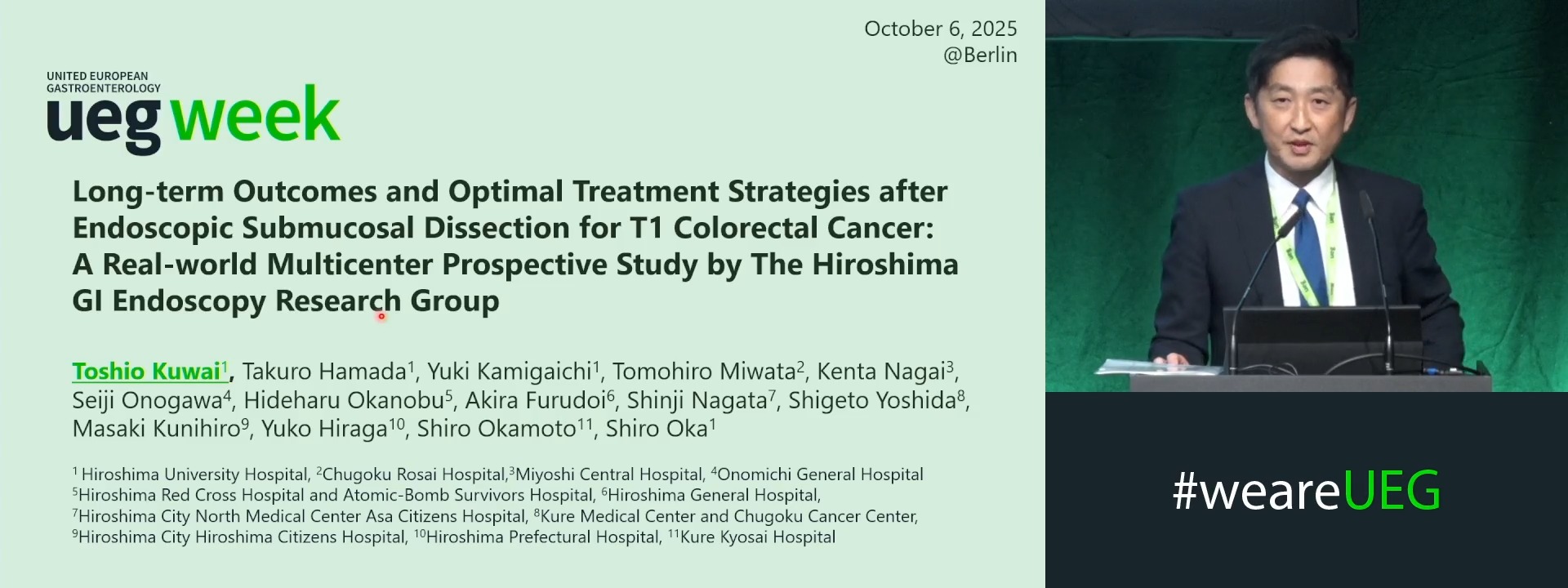
LONG-TERM OUTCOMES AND OPTIMAL TREATMENT STRATEGIES AFTER ENDOSCOPIC SUBMUCOSAL DISSECTION FOR T1 COLORECTAL CANCER: A REAL-WORLD MULTICENTER PROSPECTIVE STUDY BY THE HIROSHIMA GI ENDOSCOPY RESEARCH GROUP

Log in to access this content.

Free for all myUEG account holders. Your access level is set automatically based on your occupation. Medical professionals get full access to all content. If you are a non-medical user, you can only access UEG Week content from congresses you attended.

Log In Create a free account

Not sure what you can access? Learn more about account types.

Introduction

Prospective evidence of the long-term efficacy of endoscopic submucosal dissection (ESD) for T1 colorectal cancer (CRC) is insufficient.

Aims & Methods

We aimed to evaluate long-term ESD outcomes for T1 CRC, focusing on the risk stratification criteria and necessity of additional surgery.
This large-scale, multicenter, prospective cohort study was conducted by Hiroshima GI Endoscopy Research Group. All consecutive patients who underwent colorectal ESD between January 2014 and December 2018 were included, and those with pathologically confirmed T1 CRC were analyzed. Patients were classified into low-risk and high-risk groups based on histopathological risk factors for lymph node metastasis in JSCCR guidelines. High-risk patients were categorized into those who underwent additional surgery (surgery group) and those who were followed up without surgery (follow-up group).

Results

Among 2357 patients who underwent ESD for 2478 early colorectal neoplasms, 431 were diagnosed with T1 CRC. Ten recurrences (2.6%) and five T1 CRC-associated deaths (1.3%) occurred in the high-risk group, with none in the low-risk group. Five-year cumulative overall and local recurrence rates were significantly higher in the follow-up versus surgery group (7.7% and 1.9%; P=0.019 versus 6.4% and 0%; P<0.001), with no local recurrence in the surgery group. Five-year overall survival was significantly worse in the follow-up group (79.5% and 95.2%; P<0.001), while no significant difference was found in 5-y disease-specific survival (98.5% and 98.5%; P=0.447).

CharacteristicsTotal (n=383)Low-risk (n=102)High-risk (n=281)P valueHigh-risk (n=281)P value
Follow-up (n=74)Surgery (n=207)
Followed-up period, mean± SD, months65.6±15.364.3±14.666.1±15.50.32863.8±21.866.9±12.50.139
Mortality, n (%)46 (12.0)11 (10.8)35 (12.5)0.65721 (28.4)14 (6.8)<0.001
Mortality associated with T1 CRC, n (%)5 (1.3)0 (0)5 (1.8)0.1752 (2.7)3 (1.5)0.484
Recurrence, n (%)10 (2.6)0 (0)10 (3.6)0.0126 (8.1)4 (1.9)0.014
Local recurrence5 (1.3)0 (0)5 (1.8)0.1755 (6.8)0 (0)<0.001
Distant recurrence6 (1.6)0 (0)6 (2.1)0.1372 (2.7)4 (1.9)0.694
5-year OS, %91.191.291.10.85479.795.2<0.001
5-year DSS, %98.910098.50.17798.498.50.42

Conclusion

No recurrence or mortality occurred in the low-risk group, suggesting that intensive surveillance may be unnecessary for these patients after curative ESD. Additional surgery could prevent local recurrence for high-risk T1 CRC, supporting a risk-based treatment approach.

LONG-TERM OUTCOMES AND OPTIMAL TREATMENT STRATEGIES AFTER ENDOSCOPIC SUBMUCOSAL DISSECTION FOR T1 COLORECTAL CANCER: A REAL-WORLD MULTICENTER PROSPECTIVE STUDY BY THE HIROSHIMA GI ENDOSCOPY RESEARCH GROUP

Toshio Kuwai 1, Takuro Hamada 1, Yuki Kamigaichi 1, Koki Nakamura 2, Tomohiro Miwata 3, Seiji Onogawa 4, Hideharu Okanobu 5, Akira Furudoi 6, Shinji Nagata 7, Shigeto Yoshida 8, Masaki Kunihiro 9, Yuko Hiraga 10, Shiro Okamoto 11, Shiro Oka 1

1 Hiroshima University Hospital, Hiroshima, Japan

2 Miyoshi Central Hospital, Miyoshi, Japan

3 Chugoku Rosai Hospital, Kure, Japan

4 Onomichi General Hospital, Onomichi, Japan

5 Hiroshima Red Cross Hospital and Atomic-Bomb Survivors Hospital, Hiroshima, Japan

6 JA Hiroshima General Hospital, Hatsukaichi, Japan

7 Hiroshima City Asa Citizens Hospital, Hiroshima, Japan

8 NHO Kure Medical Center, Kure, Japan

9 Hiroshima City Hiroshima Citizens Hospital, Hiroshima, Japan

10 Hiroshima Prefectural Hospital, Hiroshima, Japan

11 Kure Kyosai Hospital, Kure, Japan

Event

UEG Week Berlin 2025

Topics

Colorectal Digestive Oncology Endoscopy

Submission format

Abstract

Session

It's all about the right technique: Colorectal lesions

Citation

United European Gastroenterology Journal 2025; 13 (Supplement 8)

Published

2025
UEG Presentation
Share via Email Share on Facebook Share on X Share on LinkedIn Share on Bluesky
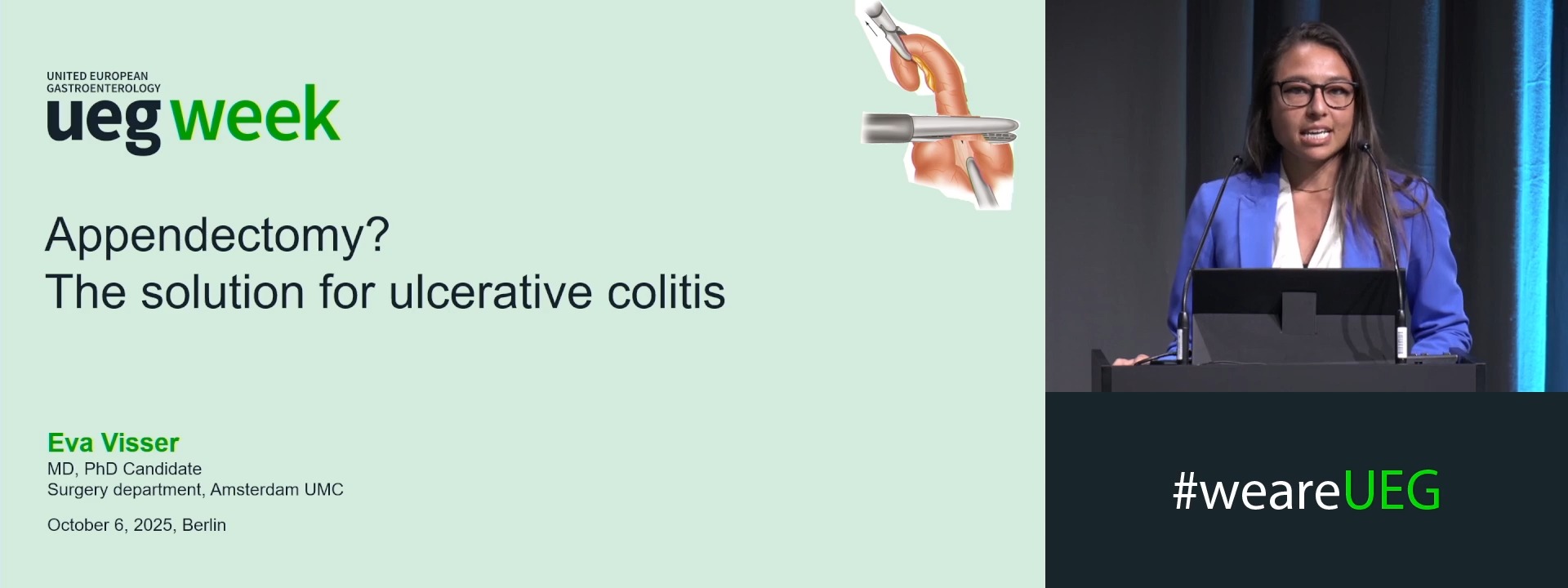
Appendectomy? The solution for ulcerative colitis

Log in to access this content.

Free for all myUEG account holders. Your access level is set automatically based on your occupation. Medical professionals get full access to all content. If you are a non-medical user, you can only access UEG Week content from congresses you attended.

Log In Create a free account

Not sure what you can access? Learn more about account types.

Appendectomy? The solution for ulcerative colitis

Eva Visser 1

1 Amsterdam University Medical Centre, Amsterdam, Netherlands

Event

UEG Week Berlin 2025

Topics

IBD Mechanisms & Personalised Medicine Paediatrics Surgery

Session

What's new in ulcerative colitis 2025?

Citation

United European Gastroenterology Journal 2025; 13 (Supplement 8)

Published

2025
UEG Presentation
Share via Email Share on Facebook Share on X Share on LinkedIn Share on Bluesky
How to fight fake news in medicine?

Log in to access this content.

Free for all myUEG account holders. Your access level is set automatically based on your occupation. Medical professionals get full access to all content. If you are a non-medical user, you can only access UEG Week content from congresses you attended.

Log In Create a free account

Not sure what you can access? Learn more about account types.

How to fight fake news in medicine?

Wendi LeBrett 1

1 David Geffen School of Medicine, Los Angeles, United States of America

Event

UEG Week Berlin 2025

Topics

Immunology

Session

Opening Plenary

Citation

United European Gastroenterology Journal 2025; 13 (Supplement 8)

Published

2025
UEG Presentation
Share via Email Share on Facebook Share on X Share on LinkedIn Share on Bluesky
Transglutaminase inhibition in CeD

Log in to access this content.

Free for all myUEG account holders. Your access level is set automatically based on your occupation. Medical professionals get full access to all content. If you are a non-medical user, you can only access UEG Week content from congresses you attended.

Log In Create a free account

Not sure what you can access? Learn more about account types.

Transglutaminase inhibition in CeD

Detlef Schuppan 1

1 Medical University Mainz - Institute of Translational Immunology, Medical University Mainz ; Mainz/D, Mainz, Germany

Event

UEG Week Berlin 2025

Topics

Immunology Nurses Small Intestine & Nutrition

Session

What's new in coeliac disease in 2025?

Citation

United European Gastroenterology Journal 2025; 13 (Supplement 8)

Published

2025
UEG Presentation
Share via Email Share on Facebook Share on X Share on LinkedIn Share on Bluesky
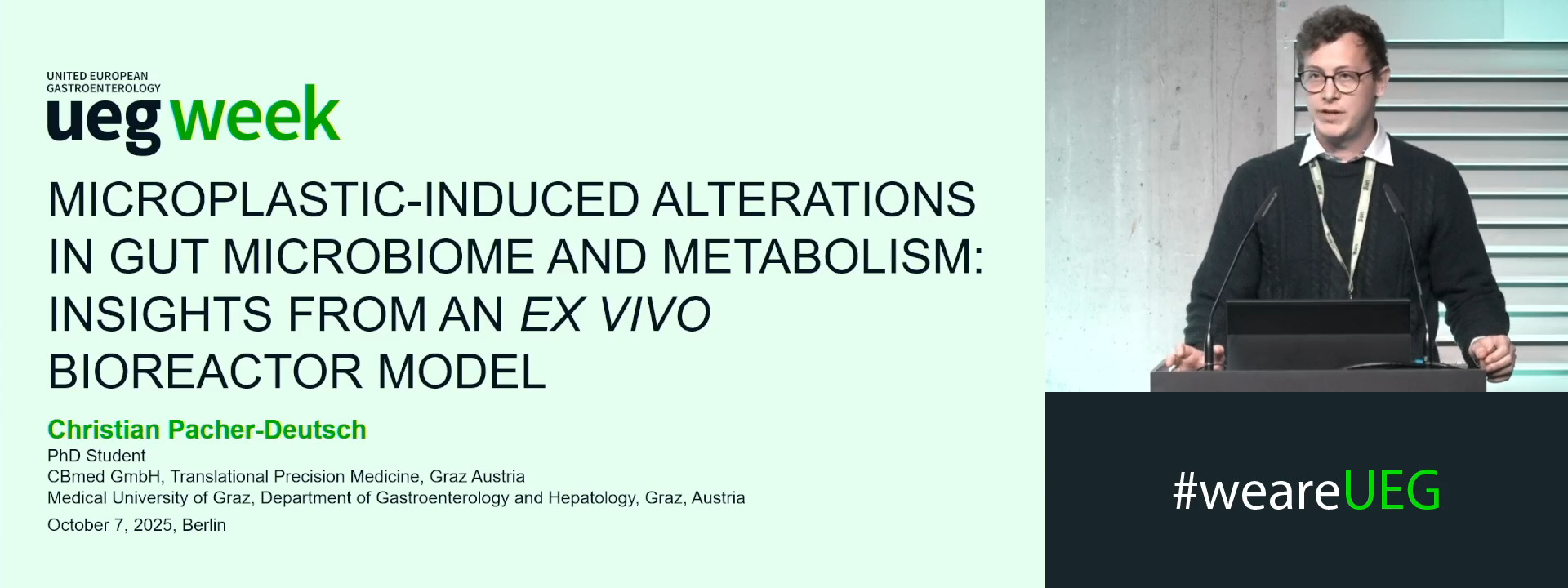
MICROPLASTIC-INDUCED ALTERATIONS IN GUT MICROBIOME AND METABOLISM: INSIGHTS FROM AN EX VIVO BIOREACTOR MODEL​​​​​​​​

Log in to access this content.

Free for all myUEG account holders. Your access level is set automatically based on your occupation. Medical professionals get full access to all content. If you are a non-medical user, you can only access UEG Week content from congresses you attended.

Log In Create a free account

Not sure what you can access? Learn more about account types.

Introduction

Microplastic particles (MPs), defined as plastic fragments smaller than 5 mm, are pervasive pollutants that accumulate in ecosystems and the human food chain (1). Literature points at various health risks, including the induction of carcinogenesis (2). Emerging evidence from animal models (3) suggests that MPs may influence the gut microbiome, but the impact on the human gut microbiome remains poorly understood.

Aims & Methods

This study aimed to evaluate how various MP types influence gut microbial composition and metabolism using an ex vivo bioreactor model, with a focus on exploring potential carcinogenic effects arising from MP–microbiome interactions.
Stool samples from healthy donors were used to inoculate bioreactor cultures, which were maintained under anaerobic conditions for five days with daily nutrient feeding. These cultures were exposed to five common MP types—polystyrene (PS), polypropylene (PP), low-density polyethylene (LDPE), poly(methyl methacrylate) (PMMA), and polyethylene terephthalate (PET)—at concentrations mimicking both estimated human exposure (4) and higher doses to assess dose-dependence. Cell viability and total bacterial counts, as well as culture pH, were measured throughout the experiment. To further explore potential microbiome and metabolic alterations, 16S rRNA gene sequencing and targeted metabolomics were performed.

Results

MP exposure did not lead to significant changes in total or viable bacterial cell counts. However, MP-treated cultures exhibited a consistent and significant decrease in pH compared to controls, suggesting changes in microbial metabolic activity. Microbiome sequencing revealed plastic-type-dependent alterations in microbial composition, with certain bacterial taxa increasing or decreasing in abundance depending on the MP type. These shifts occurred across multiple genera within diverse families, including Lachnospiraceae, Oscillospiraceae, Enterobacteriaceae, and Ruminococcaceae, with the majority of changes occurring withing the phylum Bacillota. These compositional changes were accompanied by shifts in the metabolomic profiles, some of which correlated with the observed pH changes. Several plastic types induced changes in valeric acid levels, while individual MP types were associated with alterations in distinct metabolites such as uracil, lactic acid, and acetic acid.

Conclusion

This study demonstrates that MPs can affect gut microbial activity and metabolism without significantly altering overall bacterial abundance in the short term. The variation in microbiome response across plastic types highlights the complexity of MP-microbiome interactions. Changes in faecal pH are known to be associated with various gastrointestinal diseases (5). Interestingly, some of the MP-induced changes in microbial composition resembled patterns linked to diseases such as depression and colorectal cancer. In contrast, other changes showed patterns that differed from those typically associated with conditions like Parkinson’s disease and irritable bowel syndrome, highlighting the complexity of these associations and the dependency on the context. The bioreactor model provided a controlled environment for identifying direct MP-microbiome interactions; however, in humans, additional factors like diet, immune response, and individual microbiome variations play a role in determining long-term effects. Exposure duration may also play a critical role in shaping the extent and nature of microbiome alterations (6), underscoring the need for further research into the effects of chronic MP exposure and associated health risks.

References

(1) Mamun, A. A., Prasetya, T. A. E., Dewi, I. R., & Ahmad, M. (2023). Microplastics in human food chains: Food becoming a threat to health safety. The Science of the total environment, 858(Pt 1), 159834. https://doi.org/10.1016/j.scitotenv.2022.159834
(2) Kumar, R., Manna, C., Padha, S., Verma, A., Sharma, P., Dhar, A., Ghosh, A., & Bhattacharya, P. (2022). Micro(nano)plastics pollution and human health: How plastics can induce carcinogenesis to humans?. Chemosphere, 298, 134267. https://doi.org/10.1016/j.chemosphere.2022.134267
(3) Hirt, N., & Body-Malapel, M. (2020). Immunotoxicity and intestinal effects of nano- and microplastics: a review of the literature. Particle and fibre toxicology, 17(1), 57. https://doi.org/10.1186/s12989-020-00387-7
(4) Senathirajah, K., Attwood, S., Bhagwat, G., Carbery, M., Wilson, S., & Palanisami, T. (2021). Estimation of the mass of microplastics ingested - A pivotal first step towards human health risk assessment. Journal of hazardous materials, 404(Pt B), 124004. https://doi.org/10.1016/j.jhazmat.2020.124004
(5) Yamamura, R., Inoue, K. Y., Nishino, K., & Yamasaki, S. (2023). Intestinal and fecal pH in human health. Frontiers in Microbiomes, 2, 1192316.
(6) Yin, L., Yang, M., Teng, A., Ni, C., Wang, P., & Tang, S. (2025). Unraveling Microplastic Effects on Gut Microbiota across Various Animals Using Machine Learning. ACS nano, 19(1), 369–380. https://doi.org/10.1021/acsnano.4c07885

MICROPLASTIC-INDUCED ALTERATIONS IN GUT MICROBIOME AND METABOLISM: INSIGHTS FROM AN EX VIVO BIOREACTOR MODEL​​​​​​​​

Christian Pacher-Deutsch 1, Kristina Žukauskaitė 1, Cigdem Akar 2, Maximilian Nepel 2, Lukas Kogler 3, Hansjörg Habisch 2, Serena Ducoli 4, Stefania Federici 4, Tobias Madl 5, Verena Pichler 6, Angela Horvath 1, Vanessa Stadlbauer 7

1 Center for Biomarker Research in Medicine (CBmed), Graz, Austria|||Medical University of Graz, Graz, Austria

2 Medical University of Graz, Graz, Austria

3 Center for Biomarker Research in Medicine (CBmed), Graz, Austria|||University of Vienna, Vienna, Austria|||Medical University of Vienna, Vienna, Austria

4 University of Brescia, Brescia, Italy

5 Medical University of Graz, Graz, Austria|||BioTechMed-Graz, Graz, Austria

6 Center for Biomarker Research in Medicine (CBmed), Graz, Austria|||University of Vienna, Vienna, Austria

7 Center for Biomarker Research in Medicine (CBmed), Graz, Austria|||Medical University of Graz, Graz, Austria|||BioTechMed-Graz, Graz, Austria

Event

UEG Week Berlin 2025

Topics

Gut Microbiota Colorectal

Submission format

Abstract

Session

The gut ecosystem: From pathogenesis to treatment

Citation

United European Gastroenterology Journal 2025; 13 (Supplement 8)

Published

2025

The global reference point for the digestive health community

Platform Publisher

United European Gastroenterology

Wickenburggasse 1 1080 Vienna, Austria

Contact us

support@ueg.eu

ueg.eu

T: +43 1 997 1639

Legal

Terms & Conditions

Imprint

Privacy Policy

Explore

My Bookmarks

My recommendations

My fields of interest

© 2026 United European Gastroenterology

Change fields of interest

These fields are selected based on the interests in your myUEG profile.
Click the item to unselect it. You can select multiple items.