UEG's educational platform for gastroenterology education bringing recordings, courses, guidelines, and more together in one place.
Most popular content
Rate for better recommendations!
Your feedback helps us show you more of what you like and less of what you dislike!
Log in to continue.
This content is part of Gutflix. Log in with your myUEG account, or create one free, to watch it.
Not sure what you can access? Learn more about account types.
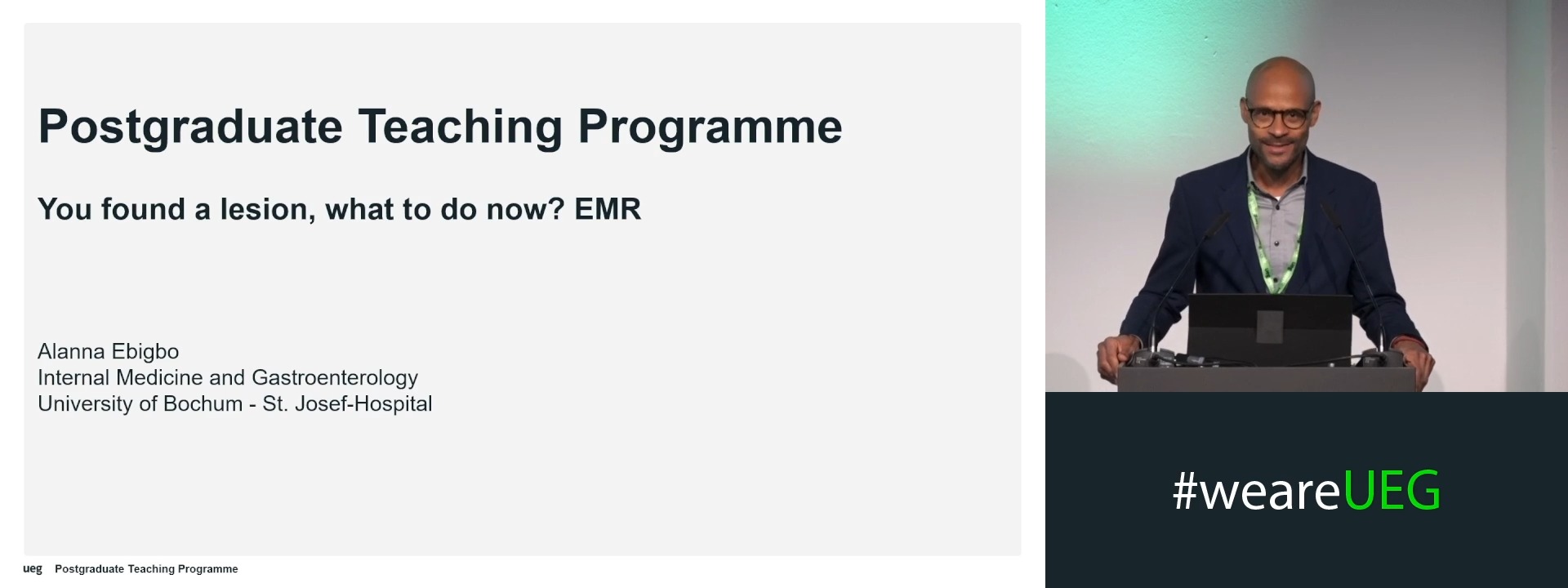
You found a lesion, what to do now? EMR vs. ESD
Affiliations
1 Katholieke Universiteit Leuven, Leuven, Belgium
2 Klinikum Augsburg, Augsburg, Germany
Log in to continue.
This content is part of Gutflix. Log in with your myUEG account, or create one free, to watch it.
Not sure what you can access? Learn more about account types.
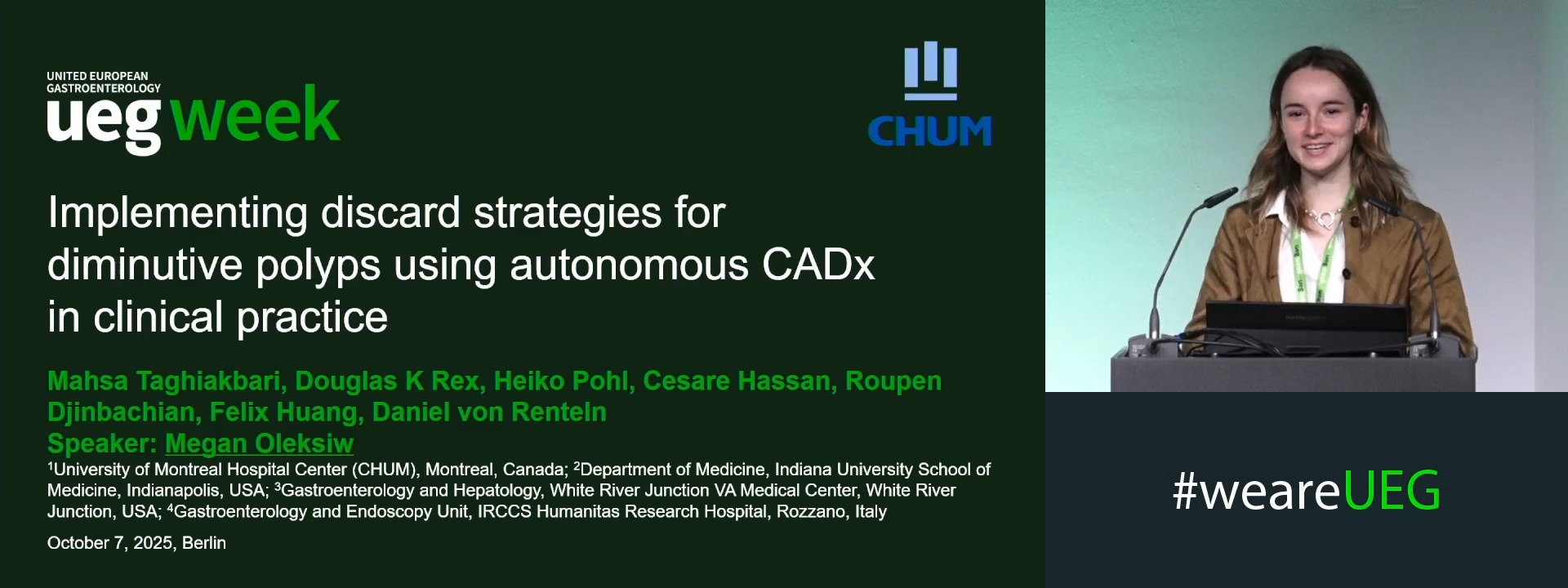
IMPLEMENTING DISCARD STRATEGIES FOR DIMINUTIVE POLYPS USING CADX IN CLINICAL PRACTICE
Mahsa Taghiakbari 1, Douglas Kevin Rex 2, Heiko Pohl 3, Cesare Hassan 4, Roupen Djinbachian 1, Felix Huang 5, Daniel von Renteln 1
Affiliations
1 University of Montreal Hospital Center (CHUM), Montreal, Canada
2 Indiana University School of Medicine, Indianapolis, United States
3 White River Junction VA Medical Center, New Hampshire, United States
4 IRCCS Humanitas University, Pieve Emanuele MI, Italy
5 University of Montreal, Montreal, Canada
Log in to continue.
This content is part of Gutflix. Log in with your myUEG account, or create one free, to watch it.
Not sure what you can access? Learn more about account types.
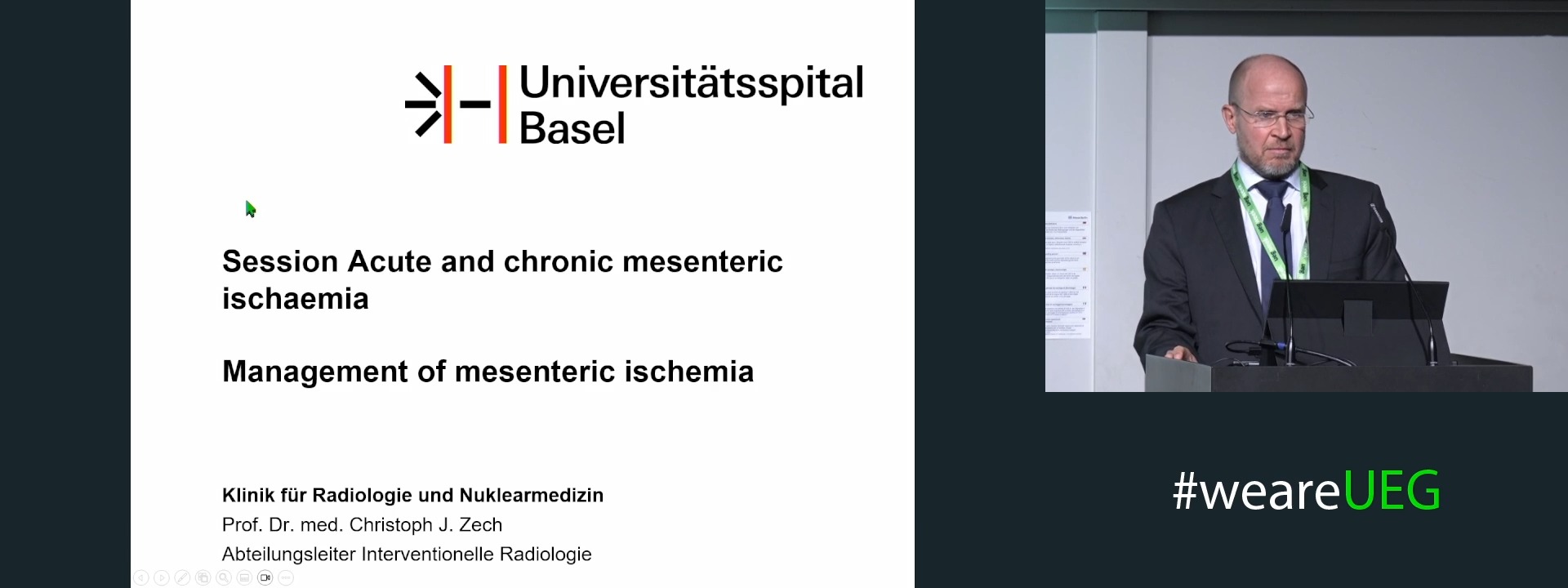
Management of mesenteric ischemia
Affiliations
1 University Hospital Basel, Basel, Switzerland
Log in to continue.
This content is part of Gutflix. Log in with your myUEG account, or create one free, to watch it.
Not sure what you can access? Learn more about account types.
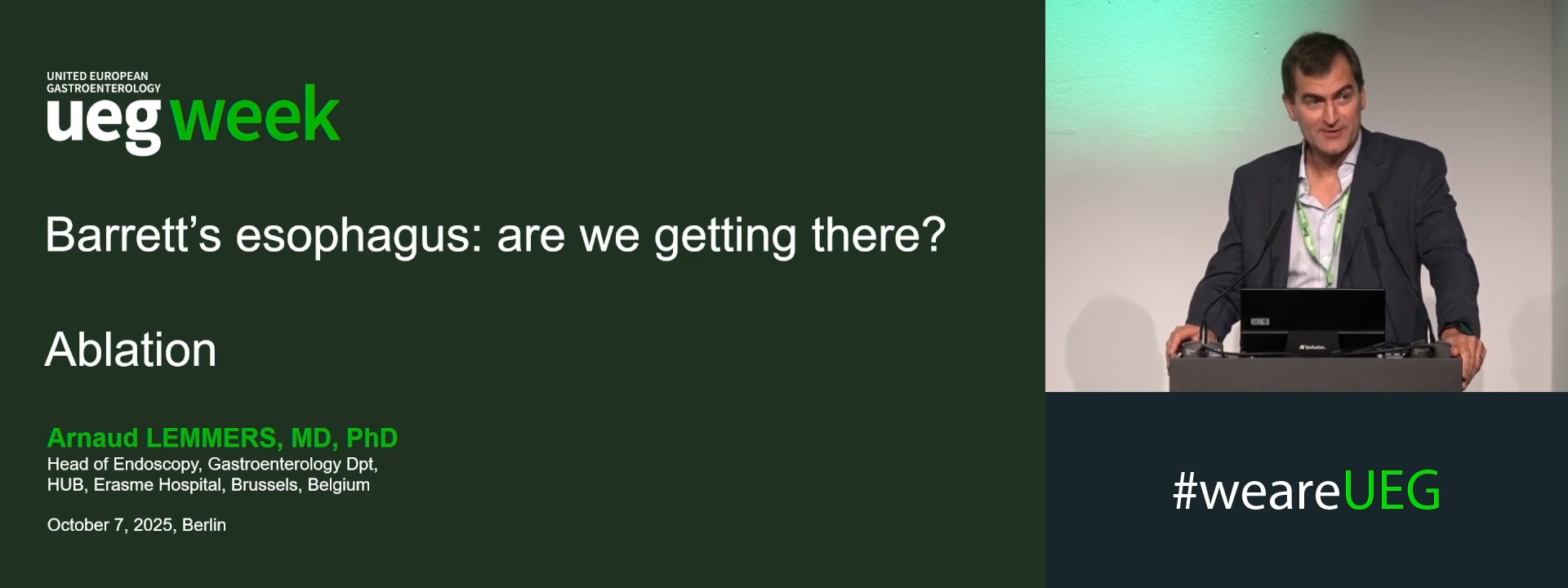
Ablation
Affiliations
1 Hôpital Univ. Erasme (Gastro), Bruxelles, Belgium
Log in to continue.
This content is part of Gutflix. Log in with your myUEG account, or create one free, to watch it.
Not sure what you can access? Learn more about account types.
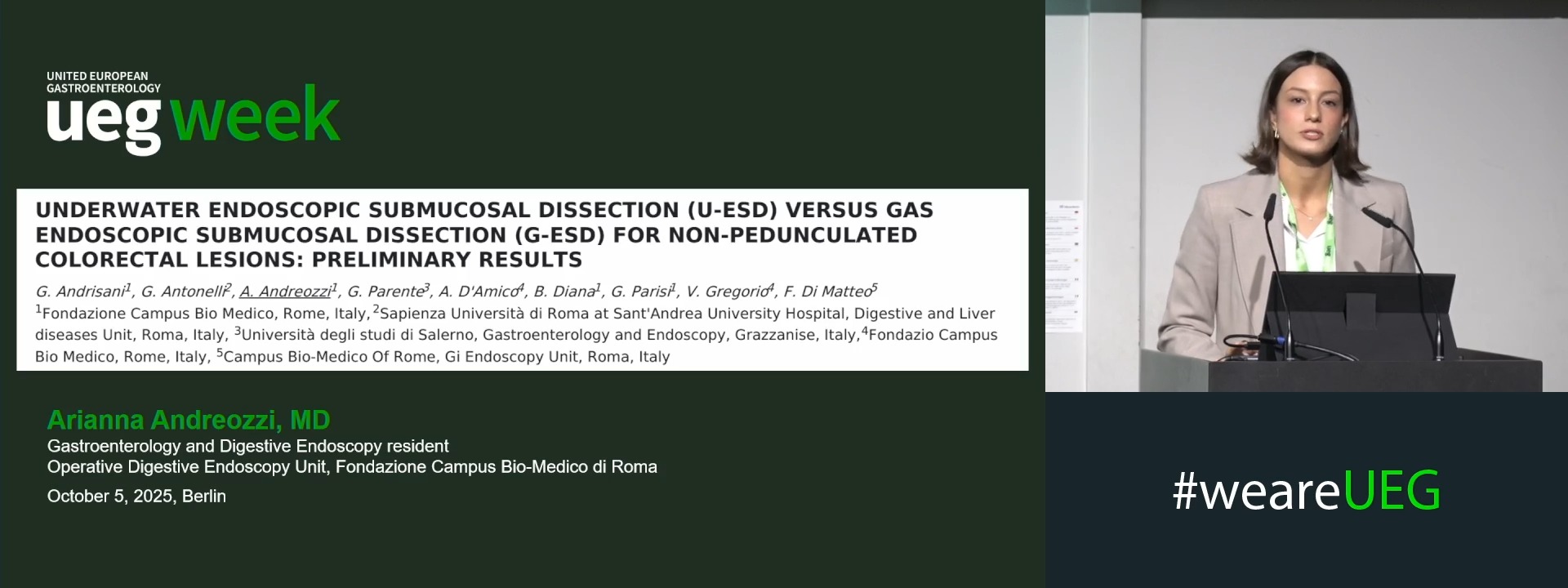
UNDERWATER ENDOSCOPIC SUBMUCOSAL DISSECTION (U-ESD) VERSUS GAS ENDOSCOPIC SUBMUCOSAL DISSECTION (G-ESD) FOR NON-PEDUNCULATED COLORECTAL LESIONS: PRELIMINARY RESULTS
Gianluca Andrisani 1, Giulio Antonelli 2, Arianna Andreozzi 1, Giovanni Parente 3, Andrea D'Amico 4, Benito Diana 1, Giulia Parisi 1, Virginia Gregorio 4, Francesco Di Matteo 5
Affiliations
1 Fondazione Campus Bio Medico, Rome, Italy
2 Sapienza Università di Roma at Sant'Andrea University Hospital, Roma, Italy
3 Università degli Studi di Salerno, Grazzanise, Italy
4 Fondazio Campus Bio Medico, Rome, Italy
5 Campus Bio-Medico of Rome, Roma, Italy
Log in to continue.
This content is part of Gutflix. Log in with your myUEG account, or create one free, to watch it.
Not sure what you can access? Learn more about account types.
Summary: Acute and chronic mesenteric ischemia
Affiliations
1 Eramus University Medical Centre, Rotterdam, Netherlands
2 University Hospital Basel, Basel, Switzerland
Log in to continue.
This content is part of Gutflix. Log in with your myUEG account, or create one free, to watch it.
Not sure what you can access? Learn more about account types.