UEG's content platform for gastroenterology education bringing recordings, courses, guidelines, and more together in one place.
Trending on Gutflix
Rate for better recommendations!
Your feedback helps us show you more of what you like and less of what you dislike!
Log in to continue.
This content is part of Gutflix. Log in with your myUEG account, or create one free, to watch it.
Not sure what you can access? Learn more about account types.
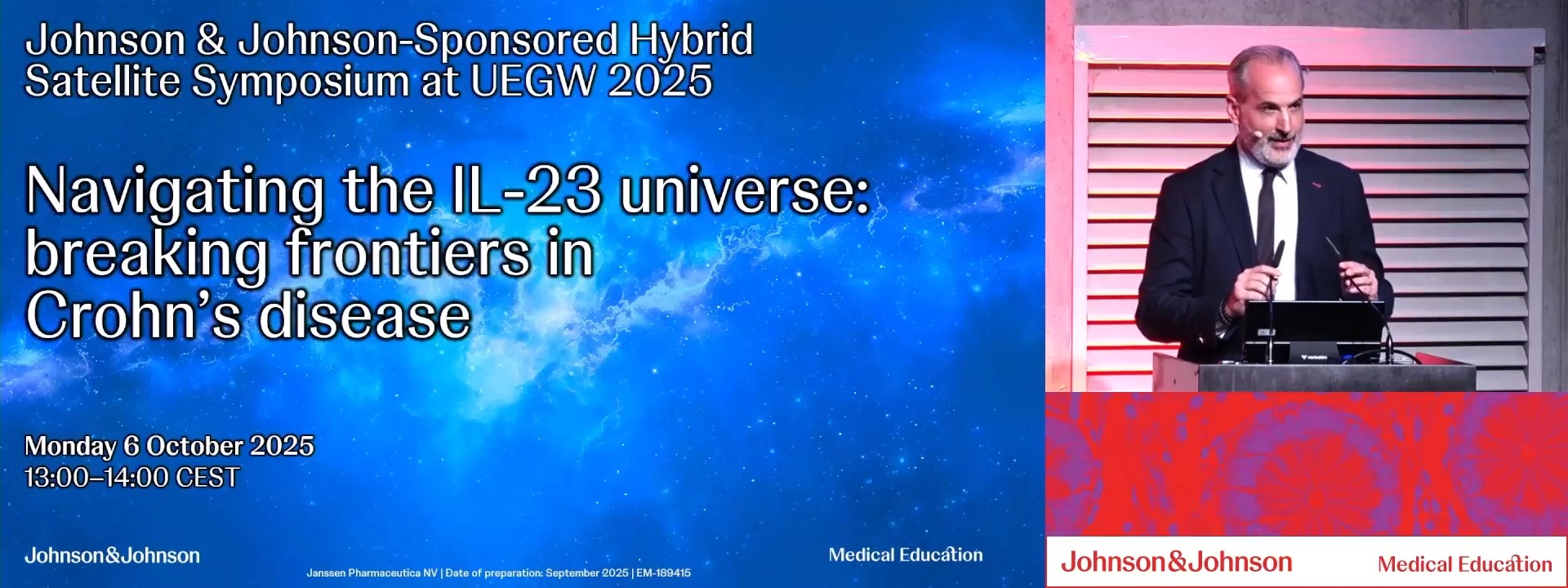
Navigating the IL-23 universe: breaking frontiers in Crohn’s disease (Johnson and Johnson) (Complete Session)
Alessandro Armuzzi 1, Laurent Peyrin-Biroulet 2, David T. Rubin 3, Yamile Zabana 4, Sebastian Zeissig 5
Affiliations
1 IRCCS Humanitas Research Hospital, Rozzano, Italy
2 Inserm NGERE and University of Lorraine, Vandœuvre-lès-Nancy, France
3 The University of Chicago Medicine, Chicago, United States of America
4 Hospital Universitari Mútua Terrassa, Terrassa, Spain
5 Inselspital - Bern University Hospital, Bern, Switzerland

Log in to continue.
This content is part of Gutflix. Log in with your myUEG account, or create one free, to watch it.
Not sure what you can access? Learn more about account types.
Q&A An unusual case of abdominal distension / Obstructive and paralytic ileus
Affiliations
1 Università degli Studi di Milano Dept. of Gastroenterology, milan, Italy
2 University of Milan, Milano, Italy

Log in to continue.
This content is part of Gutflix. Log in with your myUEG account, or create one free, to watch it.
Not sure what you can access? Learn more about account types.
I do close resection
Affiliations
1 CHU de Limoges, Limoges, France

Log in to continue.
This content is part of Gutflix. Log in with your myUEG account, or create one free, to watch it.
Not sure what you can access? Learn more about account types.
Video case: ERCP in altered anatomy
Affiliations
1 Evangel. Krankenhaus Düsseldorf, Düsseldorf, Germany

Log in to continue.
This content is part of Gutflix. Log in with your myUEG account, or create one free, to watch it.
Not sure what you can access? Learn more about account types.
Endoscopic alternatives to standard ERCP: EUS
Affiliations
1 Humanitas Research Hospital, Milan, Italy
Log in to continue.
This content is part of Gutflix. Log in with your myUEG account, or create one free, to watch it.
Not sure what you can access? Learn more about account types.
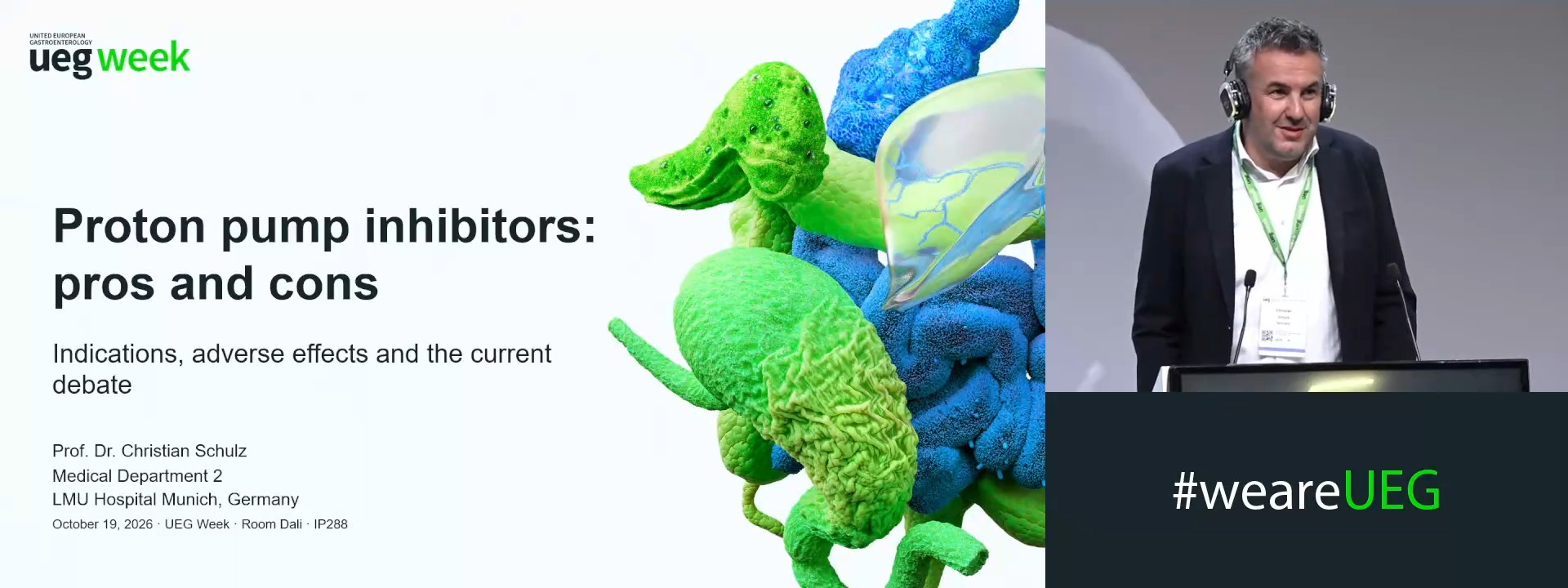
PPIs: Pros and cons evidence-based data
Affiliations
1 Ludwig Maximilian University, Munich, Germany