UEG's content platform for gastroenterology education bringing recordings, courses, guidelines, and more together in one place.
Trending on Gutflix
Rate for better recommendations!
Your feedback helps us show you more of what you like and less of what you dislike!
Log in to continue.
This content is part of Gutflix. Log in with your myUEG account, or create one free, to watch it.
Not sure what you can access? Learn more about account types.
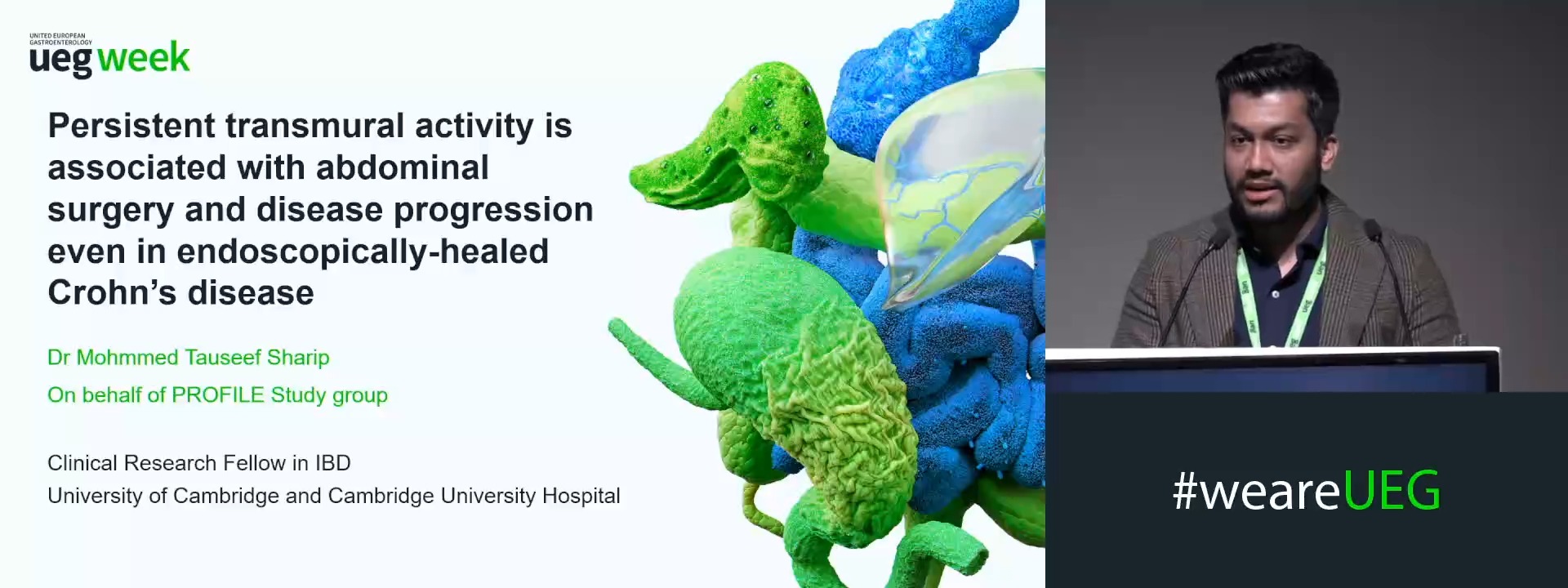
PERSISTENT TRANSMURAL DISEASE ACTIVITY ASSOCIATES WITH ABDOMINAL SURGERY AND DISEASE PROGRESSION EVEN IN ENDOSCOPICALLY-HEALED CROHN’S DISEASE
Mohmmed Tauseef Sharip 1, Nick Kennedy 2, Sara Upponi 3, James C. Lee 4, Miles Parkes 1, Nurulamin Noor 1
Affiliations
1 Cambridge University Hospitals, Cambridge, United Kingdom
2 Royal Devon & Exeter Hospital, Exeter, United Kingdom
3 Barts Health NHS Trust, London, United Kingdom
4 The Francis Crick Institute, London, United Kingdom
Log in to continue.
This content is part of Gutflix. Log in with your myUEG account, or create one free, to watch it.
Not sure what you can access? Learn more about account types.
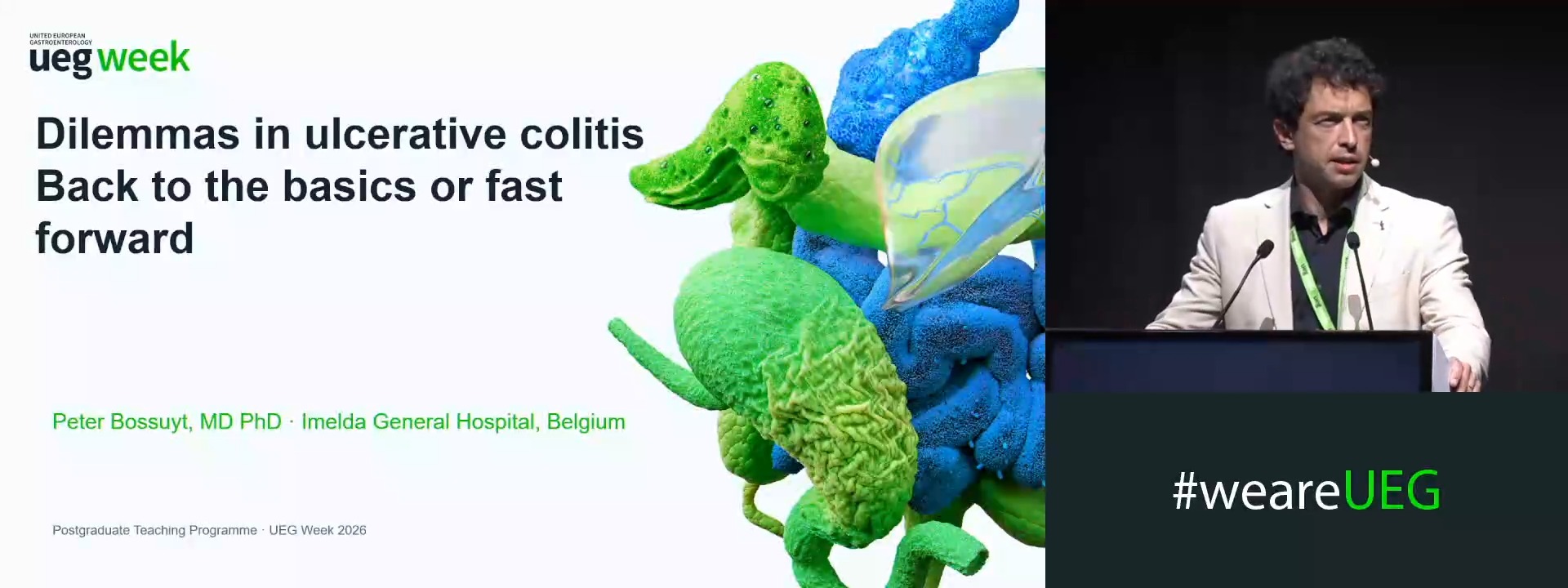
Introduction: Dilemmas in ulcerative colitis: Back to the basics or fast forward
Affiliations
1 Imelda General Hospital, Bonheiden, Belgium
Log in to continue.
This content is part of Gutflix. Log in with your myUEG account, or create one free, to watch it.
Not sure what you can access? Learn more about account types.
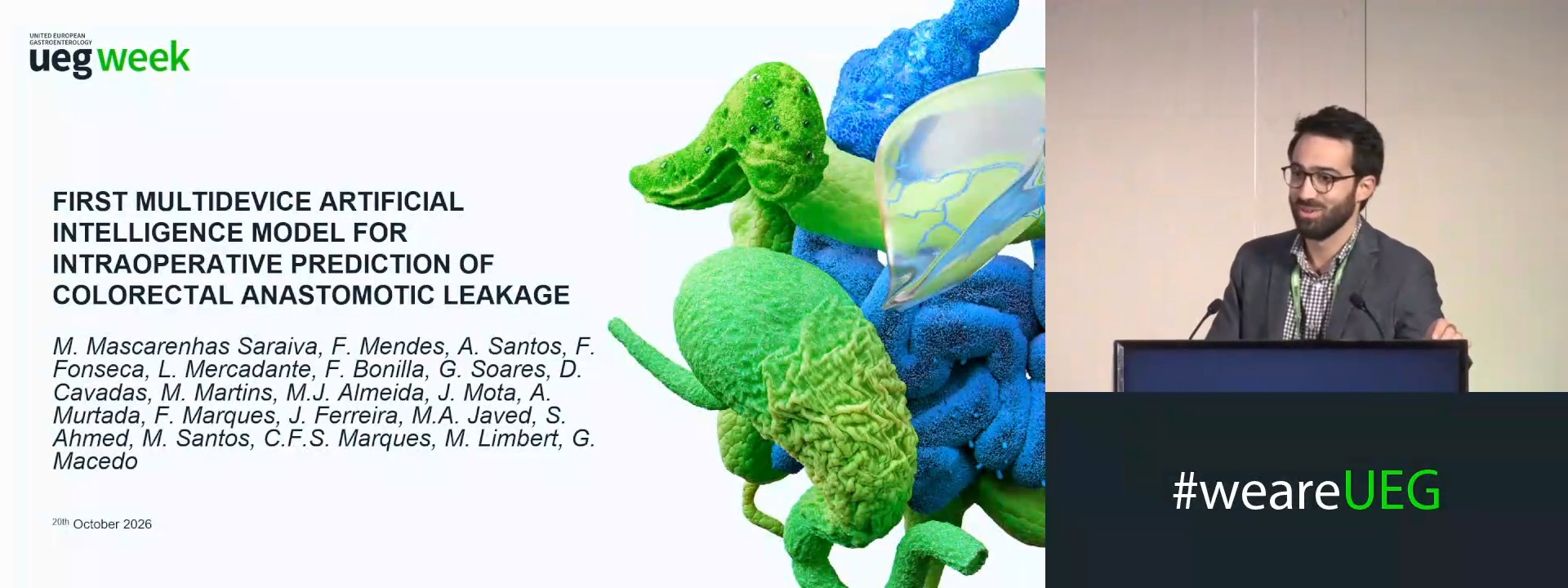
FIRST MULTIDEVICE ARTIFICIAL INTELLIGENCE MODEL FOR INTRAOPERATIVE PREDICTION OF COLORECTAL ANASTOMOTIC LEAKAGE
Miguel Mascarenhas-Saraiva 1, Francisco Mendes 1, André Martins dos Santos 1, Filipa Fonseca 1, Larissa Mercadante de Assis 2, Felix Bonilla 2, Gonçalo Soares 3, Daniela Cavadas 4, Miguel Martins 1, Maria Almeida 1, Joana Mota 1, Ali Murtada 5, Marley Feitosa 6, Matheus Carvalho 2, Filipe Marques 7, João Ferreira 7, Ahsan Javed 5, Shakil Ahmed 5, Maisa Vasconcellos 6, Carlos Frederico Sparapan Marques 2, Manuel Limbert 4, Guilherme Macedo 1
Affiliations
1 Centro Hospitalar São João, Porto, Portugal
2 Hospital das Clínicas da Faculdade de Medicina da USP, São Paulo, Brazil
3 Centro Hospitalar Universitário de Santo António, Porto, Portugal
4 Instituto Português de Oncologia de Lisboa, Lisboa, Portugal
5 Royal Liverpool University Hospital NHS Foundation Trust, Liverpool, United Kingdom
6 Hospital das Clínicas da Faculdade de Medicina da USP de Ribeirão Preto, Ribeirão Preto, Brazil
7 Faculdade de Engenharia da Universidade do Porto, Porto, Portugal
Log in to continue.
This content is part of Gutflix. Log in with your myUEG account, or create one free, to watch it.
Not sure what you can access? Learn more about account types.
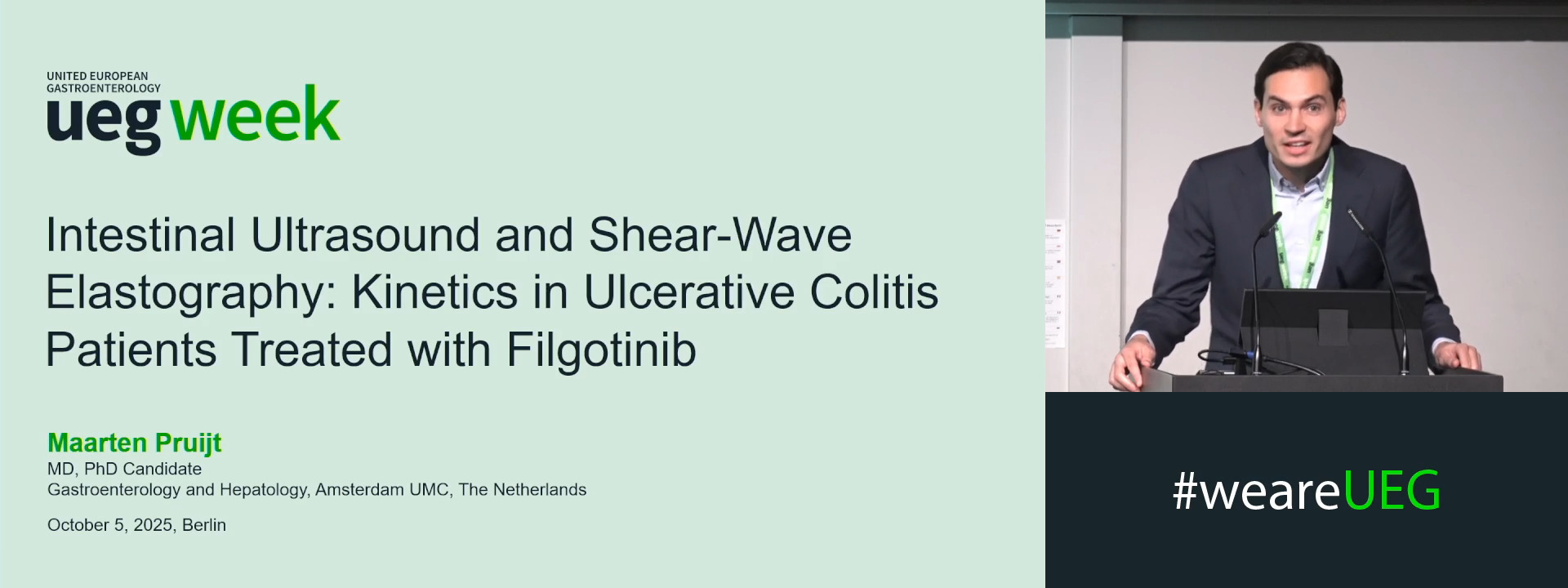
INTESTINAL ULTRASOUND AND SHEAR-WAVE ELASTOGRAPHY: KINETICS IN ULCERATIVE COLITIS PATIENTS TREATED WITH FILGOTINIB
Maarten Pruijt 1, Christoph Teichert 1, Floris de Voogd 1, Reimer Janssen 1, Mark Lowenberg 1, Rogier Goetgebuer 1, Geert R. D'Haens 1, Krisztina Barbara Gecse 1
Affiliations
1 Amsterdam UMC, Amsterdam, Netherlands
Log in to continue.
This content is part of Gutflix. Log in with your myUEG account, or create one free, to watch it.
Not sure what you can access? Learn more about account types.
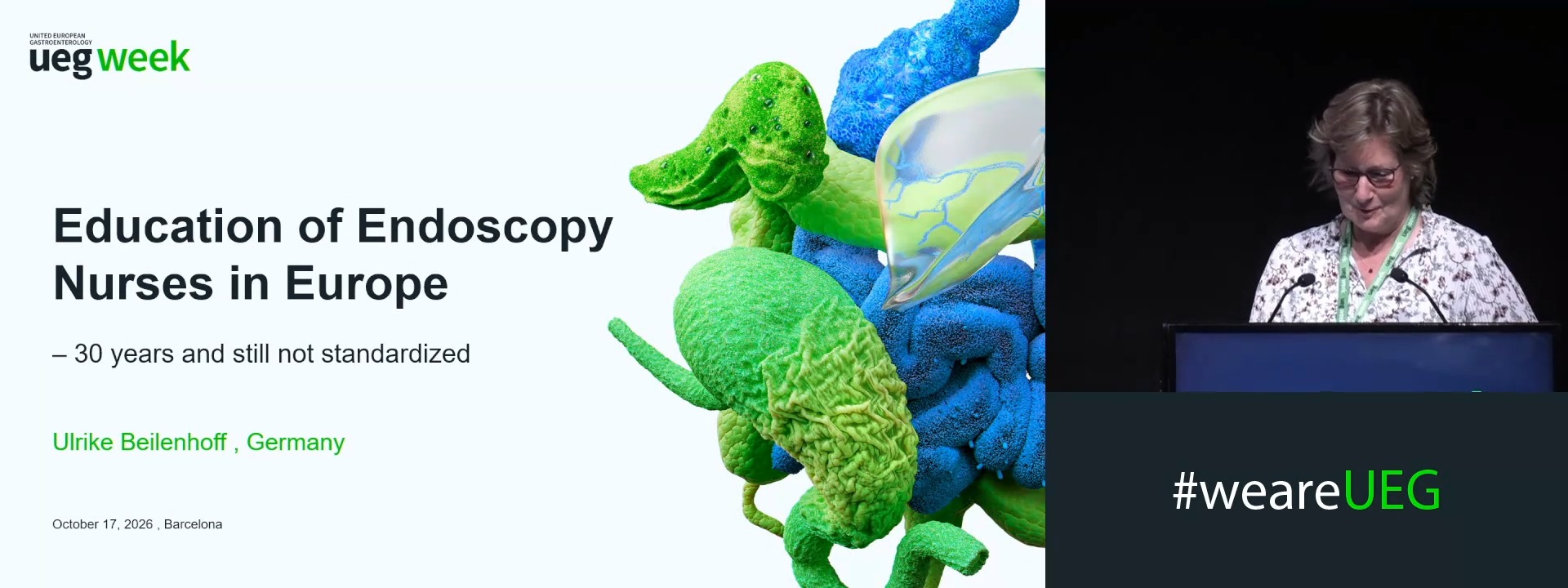
Education of endoscopy nurses in Europe – 30 years and still not standardised
Affiliations
1 ESGENA Scientific Secretary, Ulm, Germany
Log in to continue.
This content is part of Gutflix. Log in with your myUEG account, or create one free, to watch it.
Not sure what you can access? Learn more about account types.
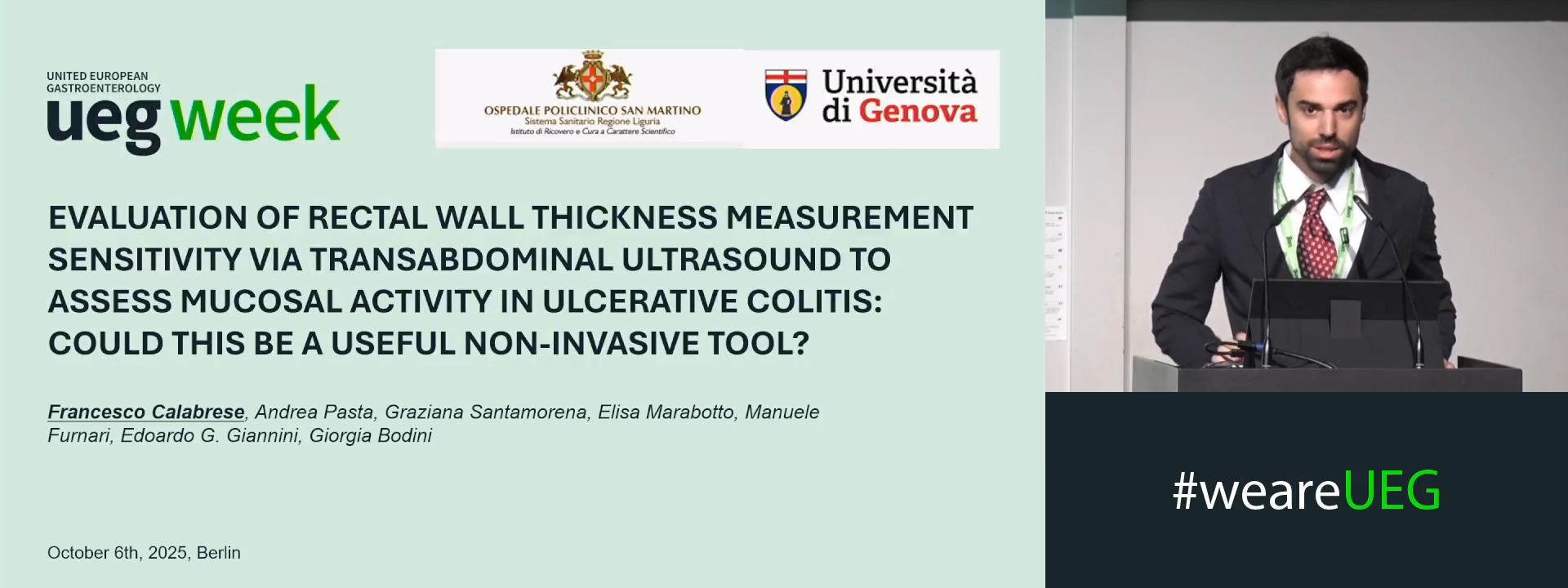
EVALUATION OF RECTAL WALL THICKNESS MEASUREMENT SENSITIVITY VIA TRANSABDOMINAL ULTRASOUND TO ASSESS MUCOSAL ACTIVITY IN ULCERATIVE COLITIS: COULD THIS BE A USEFUL NON-INVASIVE TOOL?
Francesco Calabrese 1, ANDREA PASTA 1, Graziana Santamorena 1, Elisa Marabotto 1, Manuele Furnari 1, Edoardo G. Giannini 1, Giorgia Bodini 1
Affiliations
1 Università Degli Studi Di Genova/irccs Policlinico San Martino, Genova, Italy