UEG's educational platform for gastroenterology education bringing recordings, courses, guidelines, and more together in one place.
Most popular content
Rate for better recommendations!
Your feedback helps us show you more of what you like and less of what you dislike!
Log in to access this content.
Free for all myUEG account holders. Your access level is set automatically based on your occupation. Medical professionals get full access to all content. If you are a non-medical user, you can only access UEG Week content from congresses you attended.
Not sure what you can access? Learn more about account types.

OLGA STAGE II IS A SIGNIFICANT RISK FACTOR FOR GASTRIC CANCER: A SYSTEMATIC REVIEW AND META-ANALYSIS EMPHASISING INTERMEDIATE HISTOLOGICAL STAGES
Juan Frias-Ordoñez 1, Sebastián Fernando Niño Ramirez 2, Hernando Marulanda 3, Juan Camilo Perez 4, Katherine Caita 4, Elder Otero 5, Lina Otero 6, william Otero 6
1 Hospital Internacional de Colombia, Bucaramanga, Colombia|||National University of Colombia, Bogota, Colombia
2 Universidad CES, Medellin, Colombia
3 National University of Colombia, Bogota, Colombia|||Centro de Gastroenterología y Endoscopia, Bogota, Colombia
4 CES University, Medellin, Colombia
5 Centro de Gastroenterología y Endoscopia, Bogota, Colombia
6 Centro de Gastroenterología y Endoscopia, Bogota, Colombia|||National University of Colombia, Bogota, Colombia
Conference
Topics
Submission format
Citation
Published
Log in to access this content.
Free for all myUEG account holders. Your access level is set automatically based on your occupation. Medical professionals get full access to all content. If you are a non-medical user, you can only access UEG Week content from congresses you attended.
Not sure what you can access? Learn more about account types.

EASL Clinical Practice Guidelines on vascular diseases of the liver
Publisher
Guideline
Topics
Citation
Published
Log in to access this content.
Free for all myUEG account holders. Your access level is set automatically based on your occupation. Medical professionals get full access to all content. If you are a non-medical user, you can only access UEG Week content from congresses you attended.
Not sure what you can access? Learn more about account types.
UEG Online Courses x UEG Podcast: Impact of polyp detection in colonoscopy
Topics
Published
Log in to access this content.
Free for all myUEG account holders. Your access level is set automatically based on your occupation. Medical professionals get full access to all content. If you are a non-medical user, you can only access UEG Week content from congresses you attended.
Not sure what you can access? Learn more about account types.
Log in to access this content.
Free for all myUEG account holders. Your access level is set automatically based on your occupation. Medical professionals get full access to all content. If you are a non-medical user, you can only access UEG Week content from congresses you attended.
Not sure what you can access? Learn more about account types.
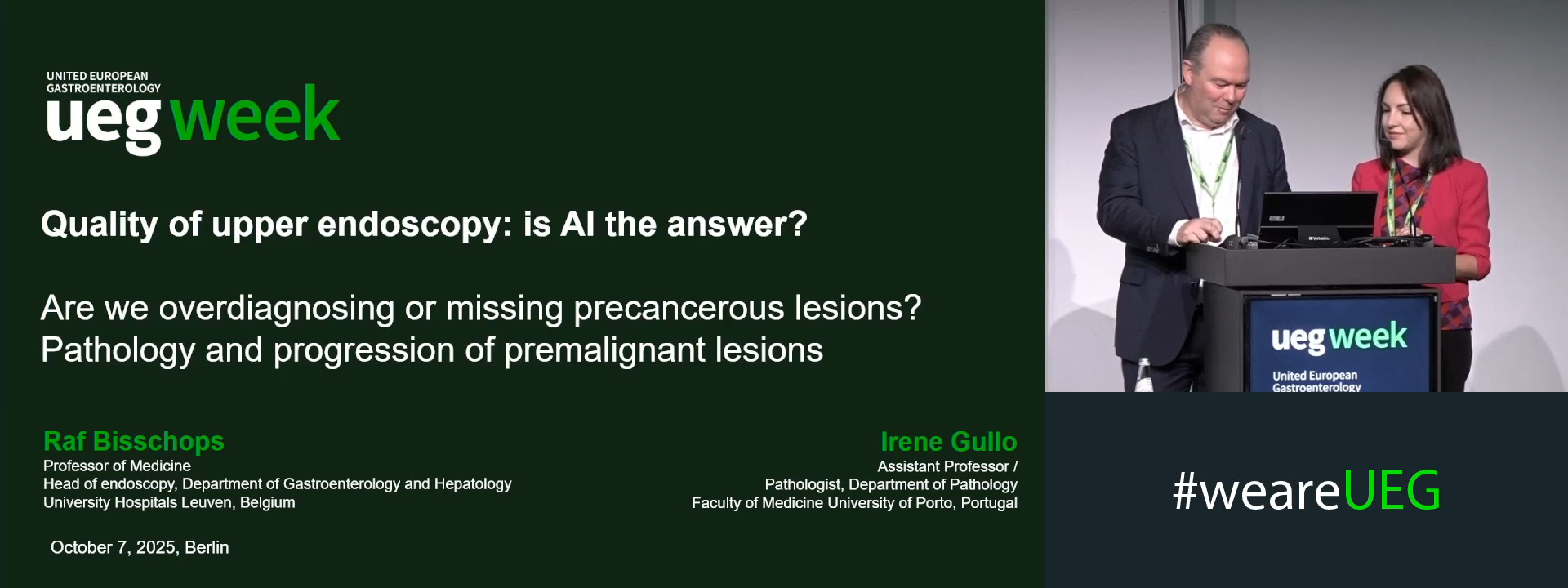
Premalignant gastric lesions: Pathology, progressions, and challenges in diagnosis
1 Katholieke Universiteit Leuven, Leuven, Belgium
2 Faculty of Medicine of the University of Porto, Porto, Portugal
Event
Citation
Published
Log in to access this content.
Free for all myUEG account holders. Your access level is set automatically based on your occupation. Medical professionals get full access to all content. If you are a non-medical user, you can only access UEG Week content from congresses you attended.
Not sure what you can access? Learn more about account types.
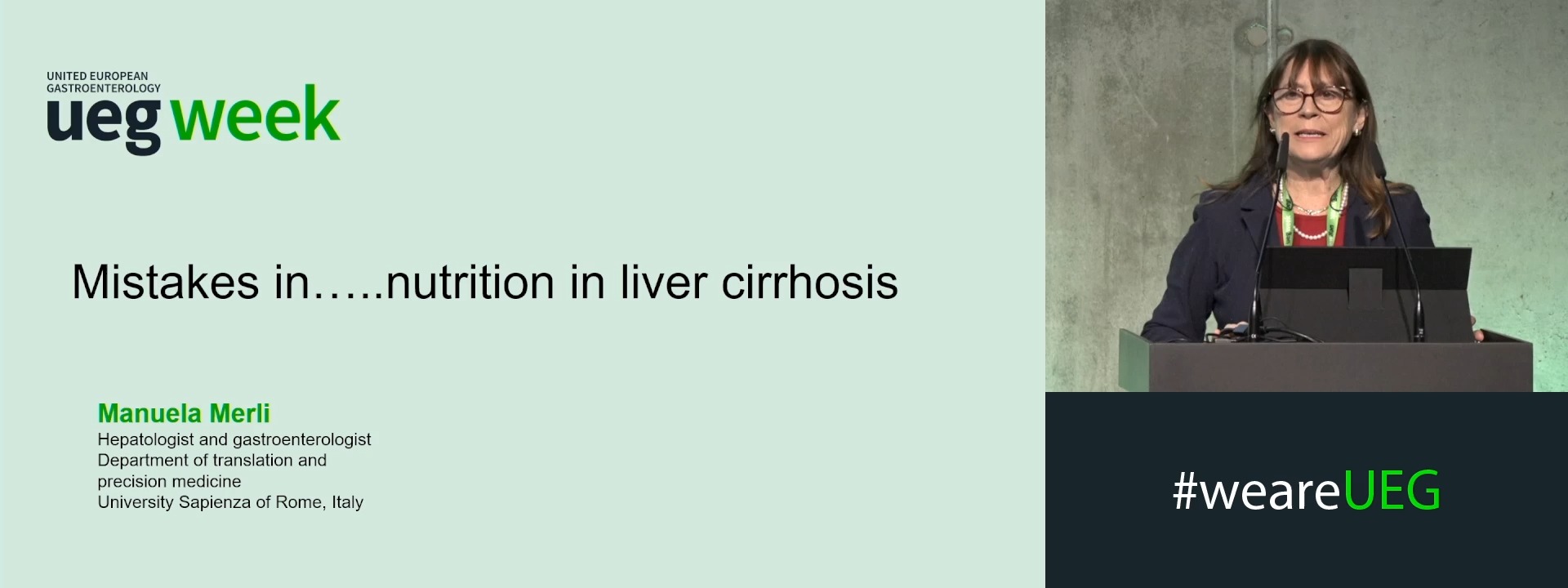
Nutrition in chronic liver disease
1 Sapienza University of Rome, Rome, Italy
Event
Citation
Published
Log in to access this content.
Free for all myUEG account holders. Your access level is set automatically based on your occupation. Medical professionals get full access to all content. If you are a non-medical user, you can only access UEG Week content from congresses you attended.
Not sure what you can access? Learn more about account types.
Early onset life-long impact: Caustic injury/atresia (Complete Session)
Event
Topics