UEG Week Recordings UEG Week Posters Online courses Guidelines Mistakes in... Podcasts Webinars
new
Gut Guide online
Visit ueg.eu Create myUEG account Log In

Filters:

UEG Presentation
Share via Email Share on Facebook Share on X Share on LinkedIn Share on Bluesky
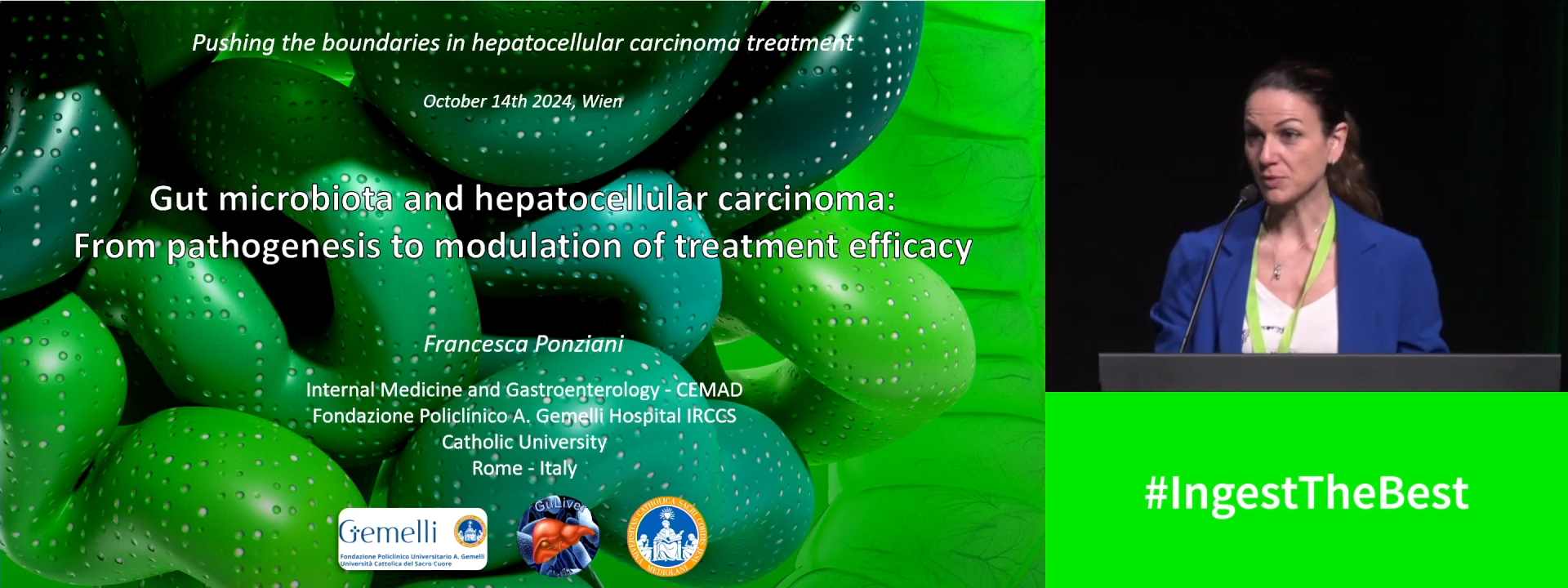
Gut microbiota and hepatocellular carcinoma: From pathogenesis to modulation of treatment efficacy

Log in to access this content.

Free for all myUEG account holders. Your access level is set automatically based on your occupation. Medical professionals get full access to all content. If you are a non-medical user, you can only access UEG Week content from congresses you attended.

Log In Create a free account

Not sure what you can access? Learn more about account types.

Gut microbiota and hepatocellular carcinoma: From pathogenesis to modulation of treatment efficacy

Francesca Romana Ponziani 1

1 Agostino Gemelli Hospital, Rome, Italy

Event

UEG Week Vienna 2024

Topics

Digestive Oncology Gut Microbiota Hepatobiliary Radiology & Imaging Surgery

Session

Pushing the boundaries in hepatocellular carcinoma treatment

Citation

United European Gastroenterology Journal 2024; 12 (Supplement 8)

Published

2024
UEG Presentation
Share via Email Share on Facebook Share on X Share on LinkedIn Share on Bluesky
The metabolic nature of inflammatory bowel diseases: From mechanistic insights to precision nutrition

Log in to access this content.

Free for all myUEG account holders. Your access level is set automatically based on your occupation. Medical professionals get full access to all content. If you are a non-medical user, you can only access UEG Week content from congresses you attended.

Log In Create a free account

Not sure what you can access? Learn more about account types.

The metabolic nature of inflammatory bowel diseases: From mechanistic insights to precision nutrition

Timon Adolph 1

1 Univ.-Klinik für Innere Medizin / Univ.-Klinik für Innere Medizin I, Innsbruck, Austria

Event

UEG Week Copenhagen 2023

Topics

IBD Mechanisms & Personalised Medicine

Session

Prediction of response in IBD

Published

2023
UEG Presentation
Share via Email Share on Facebook Share on X Share on LinkedIn Share on Bluesky
Bringing light into new treatment targets: the role of histology and molecular healing in UC (Eli Lilly and Company) (Complete Session)

Log in to access this content.

Free for all myUEG account holders. Your access level is set automatically based on your occupation. Medical professionals get full access to all content. If you are a non-medical user, you can only access UEG Week content from congresses you attended.

Log In Create a free account

Not sure what you can access? Learn more about account types.

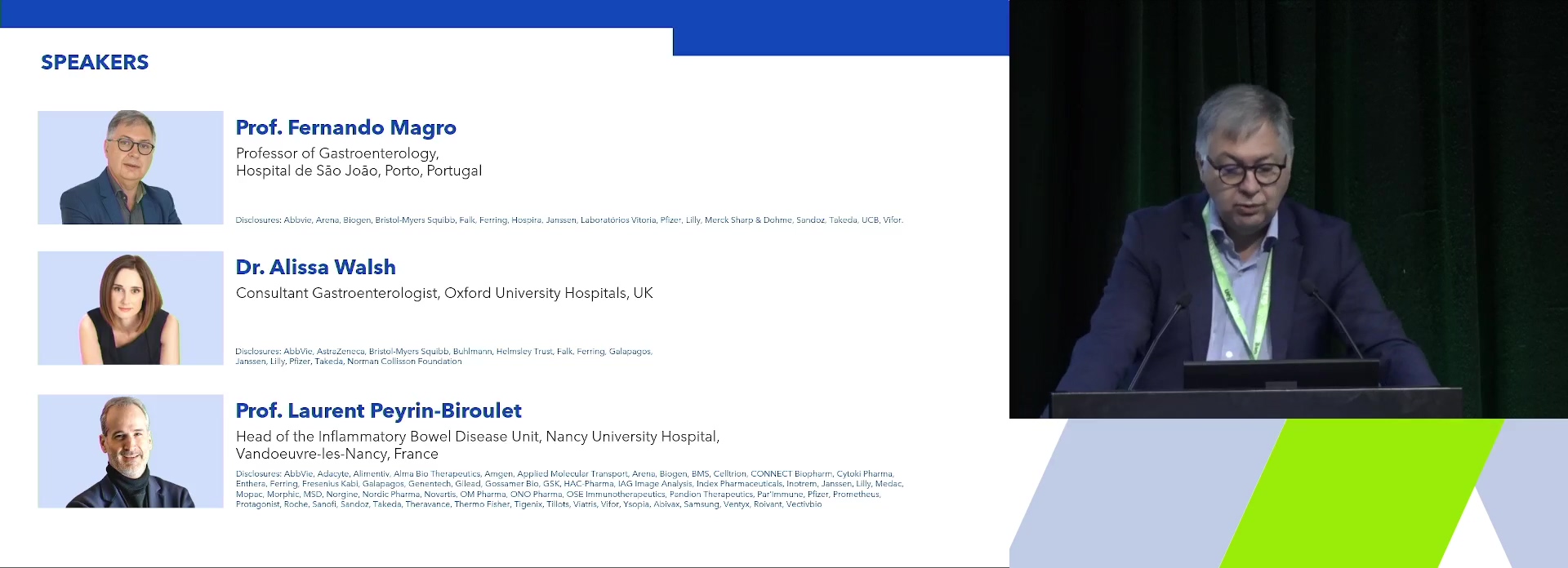
Bringing light into new treatment targets: the role of histology and molecular healing in UC (Eli Lilly and Company) (Complete Session)

Fernando Magro 1, Laurent Peyrin-Biroulet 2, Alissa Walsh 3

1 Centro Hospitalar São João, Amadora, Portugal

2 Inserm U1256, Nancy University Hospital, Vandoeuvre-les-Nancy, France

3 Oxford University Hospitals, Oxford, United Kingdom

Publisher

Eli Lilly logo
Eli Lilly

Event

UEG Week Copenhagen 2023

Session

Bringing light into new treatment targets: the role of histology and molecular healing in UC (Eli Lilly and Company)

Published

2023
UEG Poster
Standard Poster
Share via Email Share on Facebook Share on X Share on LinkedIn Share on Bluesky

Log in to access this content.

Free for all myUEG account holders. Your access level is set automatically based on your occupation. Medical professionals get full access to all content. If you are a non-medical user, you can only access UEG Week content from congresses you attended.

Log In Create a free account

Not sure what you can access? Learn more about account types.

Clinical Case Summary

27-year-old male with penetrating Crohn's disease (CD; A1, L2, pB3), diagnosed at the age of 9, with multiple hospitalizations. The patient was treated with infliximab + azathioprine for three years. Colonoscopy at 16 years showed pancolitis and was complicated with perforation, being submitted to total colectomy with rectal preservation and ileostomy. Therapy was switched to adalimumab+methotrexate, with partial clinical response. After seven years, due to severe complex fistulizing perianal disease, adalimumab was switched to ustekinumab. After 2 years of Ustekinumab monotherapy, he presented disabling symptoms and developed an enterocutaneous fistula peri-ileostomy. Combination therapy with ustekinumab+vedolizumab was started. The patient still maintained discharge from the enterocutaneous and perianal fistulas. After 1 year, a painful circumferential penile ulcer with swelling and seropurulent discharge was noted. Other causes, namely infections were excluded. Biopsies were performed and revealed non-caseous granulomatous inflammation with lymphocytic and eosinophilic infiltrates, compatible with CD. Topical therapy with tacrolimus ointment was applied, with no response. Ustekinumab+vedolizumab was switched to upadacitinib. There was a substantial improvement of the penile lesion, the enterocutaneous fistula discharge reduced, and perianal symptoms resolved on maintenance therapy with Upadacitinib.
Genital metastatic CD is uncommon and mainly occurs in the setting of colonic involvement and perianal disease. Treatment options for MCD remain underwhelming due to the limited available evidence and varying responses of reported therapeutic methods. Optimization of biologic therapy is mandatory.

References

For this case we'll include:
- Pictures ​of the penile ulcers before and during maintenance therapy with upadacitinib
- Endoscopic evaluation during follow-up
- Histological specimen of colectomy and from multiple endoscopic evaluations performed
- Radiological evidence of perianal and peri-ileostomy enterocutaneous fistula

A CHALLENGING CASE OF PENETRATING AND GENITAL CROHN’S DISEASE

A CHALLENGING CASE OF PENETRATING AND GENITAL CROHN’S DISEASE

Francisco Vara-Luiz 1, Ivo Mendes 1, Carolina Palma 1, Margarida André 2, António Magarreiro Silva 2, Sofia Antunes 2, Eduardo Fernandes 2, Marta Patita 2, Irina Mocanu 2, Ana Isabel Vieira 2, Unknown Unknown 2

1 Hospital Garcia de Orta, Almada, Portugal|||Egas Moniz Center for Interdisciplinary Research (CiiEM), Egas Moniz School of Health and Science, Almada, Portugal

2 Hospital Garcia de Orta, Almada, Portugal

Conference

UEG Week Berlin 2025

Topics

IBD

Submission format

Clinical Case

Session

CLINICAL CASES (Posters)

Published

2025
UEG Presentation
Share via Email Share on Facebook Share on X Share on LinkedIn Share on Bluesky
Green endoscopy: Step by step to a paper free endoscopy unit

Log in to access this content.

Free for all myUEG account holders. Your access level is set automatically based on your occupation. Medical professionals get full access to all content. If you are a non-medical user, you can only access UEG Week content from congresses you attended.

Log In Create a free account

Not sure what you can access? Learn more about account types.

Green endoscopy: Step by step to a paper free endoscopy unit

Konstantinos Triantafyllou 1

1 Attikon University General Hospital, Athens, Greece

Event

UEG Week Berlin 2025

Topics

Nurses

Session

Green endoscopy: What makes sense?

Citation

United European Gastroenterology Journal 2025; 13 (Supplement 8)

Published

2025
UEG Presentation
Share via Email Share on Facebook Share on X Share on LinkedIn Share on Bluesky
OBEFAZIMOD IN PATIENTS WITH MODERATE-TO-SEVERE ULCERATIVE COLITIS: EFFICACY AND SAFETY ANALYSIS FROM THE 96-WEEK OPEN-LABEL MAINTENANCE PHASE 2B STUDY

Log in to access this content.

Free for all myUEG account holders. Your access level is set automatically based on your occupation. Medical professionals get full access to all content. If you are a non-medical user, you can only access UEG Week content from congresses you attended.

Log In Create a free account

Not sure what you can access? Learn more about account types.

Introduction

Obefazimod is an oral small molecule that modulates inflammation by upregulating a specific anti-inflammatory micro-RNA (miR-124). Obefazimod has demonstrated safety and efficacy in patients with moderate-to-severe ulcerative colitis (UC) in the randomized, placebo-controlled, phase 2b induction study (1). This analysis presents data at week 96 after subjects enrolled in the open-label (OL) maintenance study.

Aims & Methods

Patients received placebo or obefazimod 25mg, 50mg or 100mg once daily (od) during the 16-week induction Phase 2b and, irrespective of their clinical response, could enter the optional OL 96-week maintenance study with obefazimod 50mg od. A total of 217 patients were enrolled into this study from January 13, 2020 onwards. Patients were followed monthly for safety and efficacy. Non-responder imputation (NRI) was used for missing efficacy data.

Results

Of 222 patients who completed the phase 2b induction study, 217 (97.7%) were enrolled in the OL maintenance study. 30/217 (13.8%) subjects dropped out prior to week 48, 6 subjects did not qualify the second year of treatment (non-responders) and 17/181 (9.4%) subjects dropped out between week 48 and week 96. All dropouts were considered as treatment failures for this analysis. 164 subjects completed the second year of treatment. Main efficacy results are presented in the Table below.

CriteriaDefinitionAll patients (NRI)
N=217
Clinical remissionMMS : stool frequency sub-score ≤1, RBS = 0 and endoscopic sub-score ≤152.5%
Endoscopic improvementEndoscopic sub-score ≤159.0%
Endoscopic remissionEndoscopic sub-score = 035.9%
Clinical responseDecrease from baseline in the MMS ≥ 2 points and ≥30% from baseline, plus a decrease in RBS ≥ 1 or an absolute RBS ≤ 170.5%


MMS: Modified Mayo score ; NRI: Non-responder imputation ; RBS: rectal bleeding sub-score
Among the 168 patients with no clinical remission after week 16 induction, 81 (48.2 %) achieved de novo clinical remission at week 96 of the OL maintenance study. Among the 49 patients with clinical remission after induction, 33 (67.3 %) maintained remission at week 96.
In total, 149 /217 subjects (68.7 %) reported at least one treatment emergent adverse events (TEAE) over 2 years of treatment. TEAEs leading to study discontinuation were reported in 17 subjects (7.8 %) and serious adverse events (SAEs) were reported in 18 subjects (8.3 %). The most frequent TEAEs (≥ 5 %) were COVID-19 (14.3 %), headache (11.5%), ulcerative colitis (7.8 %) and nasopharyngitis (6.9 %). No new safety risks were identified over these 96 weeks.

Conclusion

Results from this 96-week analysis of the OL maintenance Phase 2b study confirmed long-term efficacy of obefazimod 50 mg od, with durable clinical remission, as well as a favorable long-term safety profile.

References

  1. Vermeire S, Sands B, Tilg H et al. ABX464 (obefazimod) for moderate-to-severe, active ulcerative Colitis: a phase 2b, double-blind, randomised, placebo-controlled induction trial and 48 week, open-label extension. Lancet Gastroenterol Hepatol 2022, 7 (11): 1024-1035

Disclosure

Bruce E Sands reports consulting fees from Abbvie, Alimentiv , Amgen, Arena Pharmaceuticals, Artugen Therapeutics, Astra Zeneca, Boehringer Ingelheim, Boston Pharmaceuticals, Calibr, Celgene, Celltrion, ClostraBio, Equillium, Enthera, Evommune, Fresenius Kabi, Galapagos, Genentech (Roche), Gilead Sciences, GlaxoSmithKline, Gossamer Bio, Index Pharmaceuticals, Innovation Pharmaceuticals, Inotrem, Kaleido, Kallyope, Merck, Morphic Therapeutics, MRM Health, Progenity, Prometheus Biosciences, Prometheus Laboratories, Protagonist Therapeutics, Q32 Bio, Sun Pharma, Surrozen, Target RWE,Teva, TLL Pharmaceutical, Ventyx Biosciences; consulting and speaking fees from Abivax; consulting and speaking fees and other support from Lilly; research grants, consulting and speaking fees and other support from Bristol Myers Squibb, Janssen, Pfizer, Takeda; research grants and consulting fees from Theravance Biopharma; and stock options from Ventyx Biopharma.
Séverine Vermeire has received grants from AbbVie, J&J, Pfizer, Takeda and Galapagos; Séverine Vermeire has received consulting and/or speaking fees from: AbbVie, Abivax, AbolerIS Pharma, AgomAb, Alimentiv, Arena Pharmaceuticals, AstraZeneca, Avaxia, BMS, Boehringer Ingelheim, Celgene, CVasThera, Cytoki Pharma, Dr Falk Pharma, Ferring, Galapagos, Genentech-Roche, Gilead, GSK, Hospira, Imidomics, Janssen, J&J, Lilly, Materia Prima, MiroBio, Morphic, MrMHealth, Mundipharma, MSD, Pfizer, Prodigest, Progenity, Prometheus, Robarts Clinical Trials, Second Genome, Shire, Surrozen, Takeda, Theravance, Tillots Pharma AG, Zealand Pharma.

OBEFAZIMOD IN PATIENTS WITH MODERATE-TO-SEVERE ULCERATIVE COLITIS: EFFICACY AND SAFETY ANALYSIS FROM THE 96-WEEK OPEN-LABEL MAINTENANCE PHASE 2B STUDY

Severine Vermeire 1, Josianne Nitcheu 2, Paul GINESTE 2, Sheldon Sloan 2, Hartmut Ehrlich 2, Bruce E. Sands 3

1 University Hospitals Leuven, Leuven, Belgium

2 Abivax, Paris, France

3 Icahn School of Medicine at Mount Sinai, New York, United States

Event

UEG Week Copenhagen 2023

Topics

Endoscopy Histopathology IBD

Submission format

Abstract

Session

The new kids on the block for IBD: Part 1

Citation

United European Gastroenterology Journal 2023; 11 (Supplement 8)

Published

2023
UEG Poster
Standard Poster
Share via Email Share on Facebook Share on X Share on LinkedIn Share on Bluesky

Log in to access this content.

Free for all myUEG account holders. Your access level is set automatically based on your occupation. Medical professionals get full access to all content. If you are a non-medical user, you can only access UEG Week content from congresses you attended.

Log In Create a free account

Not sure what you can access? Learn more about account types.

Introduction

Vedolizumab (VDZ), a monoclonal antibody therapy approved for moderate-to-severe ulcerative colitis (UC) and Crohn’s disease (CD) in China in 20201 has a unique, gut-selective, anti-lymphocyte trafficking (GSALT) mechanism of action.2 However, there is limited data on VDZ's real-world effectiveness and safety in Chinese IBD patients.3 Interim results from the VALUE study that enrolled patients with UC have been published 3,4 and final results are reported here.

Aims & Methods

VALUE (NCT04872491), a multicenter, single-arm, prospective, observational study evaluated the safety and effectiveness of VDZ in adult Chinese patients with IBD (N = 500) over 72 weeks. Clinical response, clinical remission, and endoscopic remission were assessed at Weeks 14, 30, and 54. Partial Mayo and Mayo endoscopic subscores at baseline and Weeks 14, 30, and 54 were calculated. Clinical response was defined as ≥2-point reduction in Partial Mayo Clinic score and ≥25% decrease from baseline score accompanied with ≥1-point decrease in the rectal bleeding or absolute rectal bleeding subscore ≤1. Clinical remission was defined as Partial Mayo Clinic score ≤2 with no subscore >1, endoscopic remission as Mayo endoscopic subscore ≤1, and complete endoscopic remission as Mayo endoscopic subscore 0. Safety results and CD patients’ data are presented in separate VALUE abstracts (IDs: AS-UEG-2025-01329 and AS-UEG-2025-01324).

Results

Among 409 UC patients enrolled in the final analysis, 91.9% (376/409) were included in the effectiveness analysis set. Mean age (±standard deviation [SD]) of patients was 46.3 (±15.1) years, and 59.4% (n=243) were male. At baseline, 30.8% (126/409) of patients had moderate UC, and 29.8% (122/409) had severe UC. The median duration of UC was 2.5 years, concomitant steroids were prescribed in 18.9% (71/376). Mean (±SD) partial Mayo score was 5.1 (2.1) at baseline, which declined to 1.7 (1.7), 1.5 (1.7) and 1.3 (1.5) by Weeks 14, 30 and 54, respectively, post-VDZ treatment. Patients achieving clinical response, clinical remission, endoscopic remission, and complete endoscopic remission were 76.9% (220/286), 71.1% (207/291), 63.6% (35/55), and 21.8% (12/55) at Week 14; 78.1% (193/247), 76.3% (190/249), 63.6% (28/44), and 27.3% (12/44) at Week 30; and 80.3% (155/193), 83.3% (165/198), 71.4% (20/28), and 50.0% (14/28) at Week 54, respectively. Patients with moderate and severe UC; biologic naïve patients and patients with prior exposure to biologics at baseline also achieved clinical response, clinical remission, and endoscopic remission (Table). Compared with baseline, mean (±SD) reduction of C-reactive protein (mg/L) at Weeks 14, 30, and 54 were 7.8 (20.2), 6.5 (22.2), and 3.4 (24.8), respectively; mean (±SD) reduction of fecal calprotectin (mu g/g) was 42.7 (150.7) at Week 14 and 212.6 (480.1) at Week 30. The proportion of patients achieving clinical remission without steroid use by Week 14 was 37.7% (23/61), which increased to 60.6% (20/33) by Week 54.

Data are presented as % (n/N).
N, number of patients having clinical response/remission/endoscopic remission data.
n, number of patients achieving clinical response/remission and endoscopic remission data.

Moderate UC
Severe UC

Clinical response
Clinical remission
Endoscopic remission
Clinical response
Clinical remission
Endoscopic remission
Week 14
89.8 (79/88)
65.9 (58/88)
57.1 (12/21)
90.0 (72/80)
63.8 (51/80)
56.3 (9/16)
Week 3087.7 (64/73)
69.9 (51/73)
30.8 (4/13)
91.2 (62/68)
66.2 (45/68)
90.9 (10/11)
Week 5492.2 (59/64)
81.3 (52/64)
62.5 (5/8)88.5 (46/52)
73.1 (38/52)
60.0 (3/5)

Biologic-exposed UC: 10.9% (41/376)
Biologic-naïve UC: 89.1% (335/376)
Week 1469.0 (20/29)
66.7 (20/30)
16.7 (1/6)
77.8 (200/257)
71.7 (187/261)
69.4 (34/49)
Week 3074.2 (23/31)
71.0 (22/31)
83.3 (5/6)
78.7 (170/216)
77.1 (168/218)
60.5 (23/38)
Week 5460.0 (15/25)
81.5 (22/27)
83.3 (5/6)
83.3 (140/168)
83.6 (143/171)
68.2 (15/22)

Conclusion

This study indicated that VDZ demonstrated a good effectiveness profile in Chinese UC patients in the real-world setting.

References

  1. Yan J et al., Medicine (Baltimore). 2024; 103: e38759.
  2. Soler D et al. J Pharmacol Exp Ther. 2009; 330: 864-875.
  3. Baili C et al. Am J Gastroenterol. 2023; 118: S213-S214.
  4. Yan C et al. Am J Gastroenterol. 2023; 119: S894-S895.

Disclosure

This study was funded by Takeda (China) International Trading Co. Ltd. Xiuli Zuo, Ye Chen, and Yingchao Li have no conflicts of interest. Lifei Gu and Fang Zhou are Takeda employees and hold Takeda stock options. Minhu Chen received speaker honorariums from Takeda China, AstraZeneca China, Xian Janssen, and Eisai China.
Medical writing support for the development of this abstract under the direction of the authors was provided by Vibhuti Singh, Ph.D., of Cactus Life Sciences (part of Cactus Communications), funded by Takeda (China) International Trading Co., Ltd.

CLINICAL EFFECTIVENESS OF VEDOLIZUMAB IN CHINESE PATIENTS WITH ULCERATIVE COLITIS: FINAL RESULTS FROM THE VALUE, A MULTICENTER PROSPECTIVE STUDY

CLINICAL EFFECTIVENESS OF VEDOLIZUMAB IN CHINESE PATIENTS WITH ULCERATIVE COLITIS: FINAL RESULTS FROM THE VALUE, A MULTICENTER PROSPECTIVE STUDY

XIULI ZUO 1, Ye Chen 2, Yingchao Li 3, Lifei Gu 4, Fang Zhou 4, Minhu Chen 5

1 Qilu Hospital of Shandong University, Jinan, China

2 Integrated Clinical Microecology Center, Shenzhen Hospital, Southern Medical University, Shenzhen, China

3 The First Affiliated Hospital of Xi'an Jiaotong University, Xi'an, China

4 Takeda Pharmaceutical Company, Shanghai, China

5 The First Affiliated Hospital, Sun Yat-sen University, Guangzhou, China

Conference

UEG Week Berlin 2025

Topics

IBD

Submission format

Abstract

Session

IBD (Posters)

Citation

United European Gastroenterology Journal 2025; 13 (Supplement 8)

Published

2025

The global reference point for the digestive health community

Platform Publisher

United European Gastroenterology

Wickenburggasse 1 1080 Vienna, Austria

Contact us

support@ueg.eu

ueg.eu

T: +43 1 997 1639

Legal

Terms & Conditions

Imprint

Privacy Policy

Explore

My Bookmarks

My recommendations

My fields of interest

© 2026 United European Gastroenterology

Change fields of interest

These fields are selected based on the interests in your myUEG profile.
Click the item to unselect it. You can select multiple items.