UEG's content platform for gastroenterology education bringing recordings, courses, guidelines, and more together in one place.
Trending on Gutflix
Rate for better recommendations!
Your feedback helps us show you more of what you like and less of what you dislike!
Log in to continue.
This content is part of Gutflix. Log in with your myUEG account, or create one free, to watch it.
Not sure what you can access? Learn more about account types.
Round table discussion
Log in to continue.
This content is part of Gutflix. Log in with your myUEG account, or create one free, to watch it.
Not sure what you can access? Learn more about account types.
ESGE live endoscopy III (Complete Session)
Log in to continue.
This content is part of Gutflix. Log in with your myUEG account, or create one free, to watch it.
Not sure what you can access? Learn more about account types.
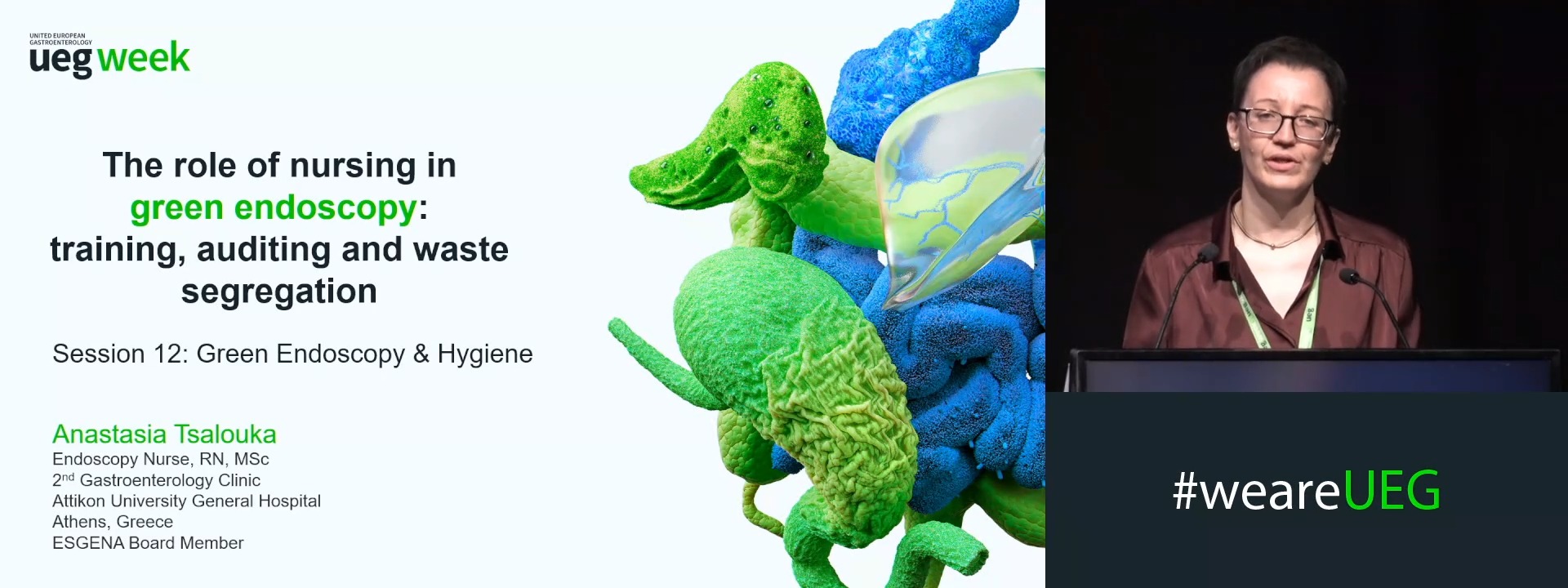
The role of nursing in green endoscopy: Training, auditing and waste segregation
Affiliations
1 University General Hospital Attikon, Athens, Greece
Log in to continue.
This content is part of Gutflix. Log in with your myUEG account, or create one free, to watch it.
Not sure what you can access? Learn more about account types.
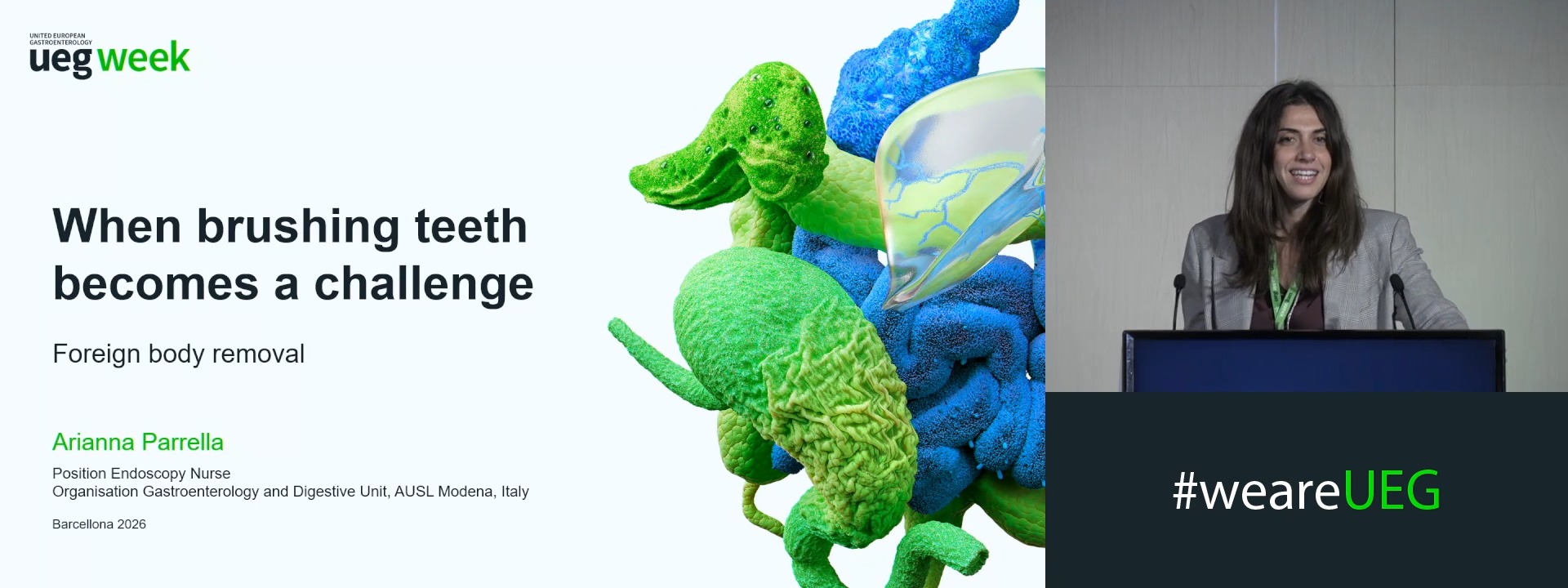
When brushing teeth becomes a challenge: Foreign body removal
Affiliations
1 Ramazzini Hospital, Carpi, Italy
Log in to continue.
This content is part of Gutflix. Log in with your myUEG account, or create one free, to watch it.
Not sure what you can access? Learn more about account types.
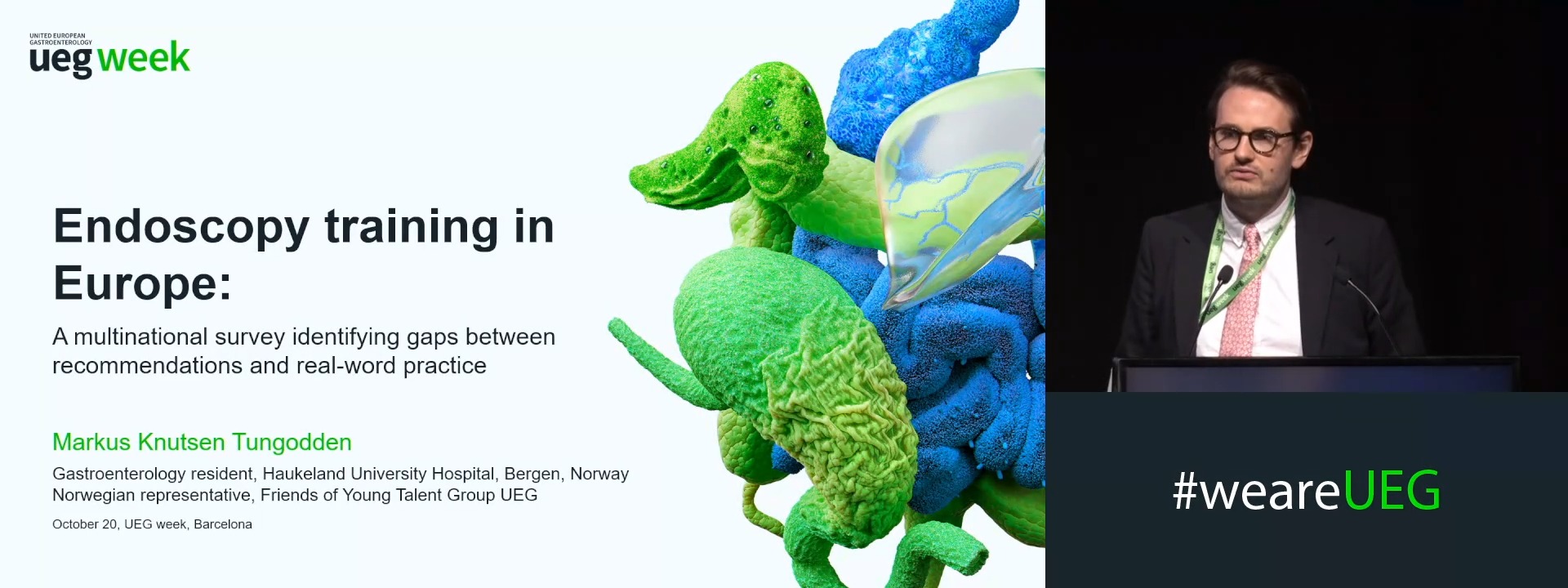
BASIC ENDOSCOPY TRAINING IN EUROPE: A SURVEY ACROSS 40 COUNTRIES IDENTIFYING GAPS BETWEEN ESGE/ESGENA RECOMMENDATIONS AND REAL-WORLD PRACTICE
Affiliations
1 Haukeland University Hospital, Bergen, Norway
2 HUS Helsinki University Hospital and University of Helsinki, Helsinki, Finland
3 Jessenius Faculty of Medicine, Comenius University, Martin, Slovakia
4 Assistance Publique des Hopitaux de Paris, Université Versailles St-Quentin en Yvelines, Paris, France