UEG's content platform for gastroenterology education bringing recordings, courses, guidelines, and more together in one place.
Trending on Gutflix
Rate for better recommendations!
Your feedback helps us show you more of what you like and less of what you dislike!
Log in to continue.
This content is part of Gutflix. Log in with your myUEG account, or create one free, to watch it.
Not sure what you can access? Learn more about account types.
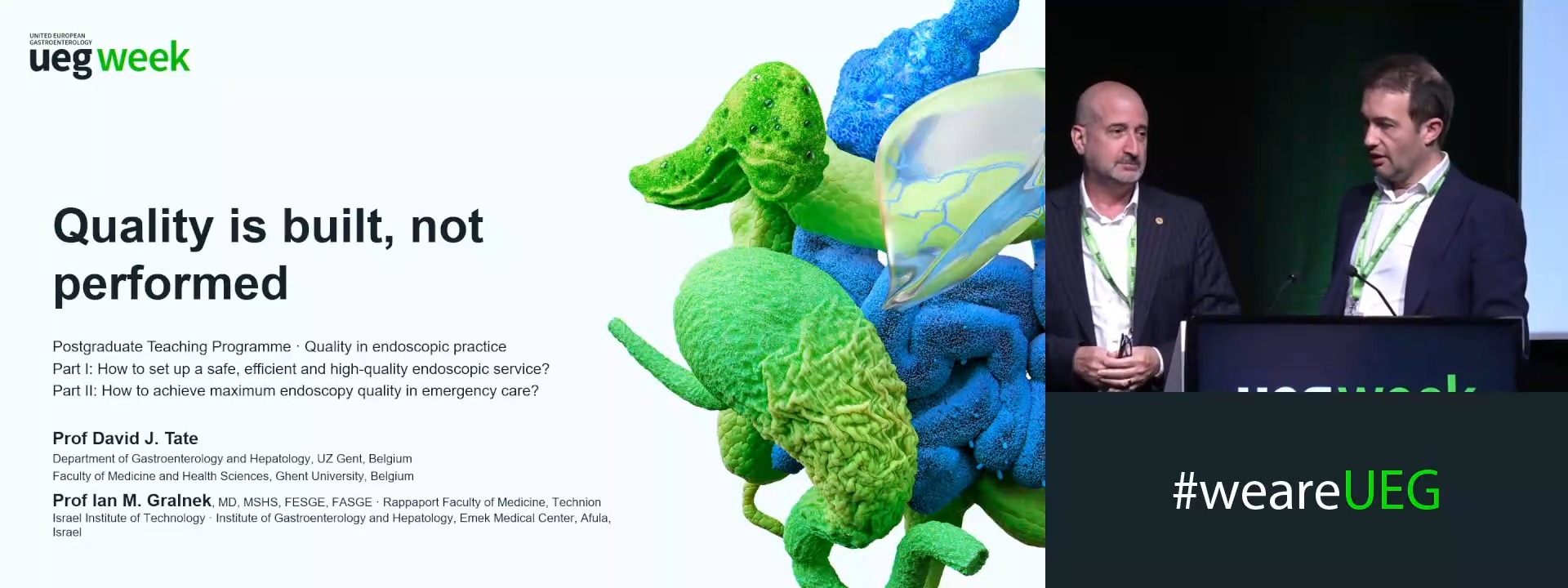
How to set up a safe, efficient and high-quality endoscopic service and achieve maximum endoscopy quality in emergency care?
Affiliations
1 University Hospital Ghent, Gent, Belgium
2 Ha'Emek Medical Center, Haifa, Israel

Log in to continue.
This content is part of Gutflix. Log in with your myUEG account, or create one free, to watch it.
Not sure what you can access? Learn more about account types.
Panel discussion: Monitoring of disease activity in IBD

Log in to continue.
This content is part of Gutflix. Log in with your myUEG account, or create one free, to watch it.
Not sure what you can access? Learn more about account types.
Panel discussion: Eating disorders and unexplained weight loss
Log in to continue.
This content is part of Gutflix. Log in with your myUEG account, or create one free, to watch it.
Not sure what you can access? Learn more about account types.
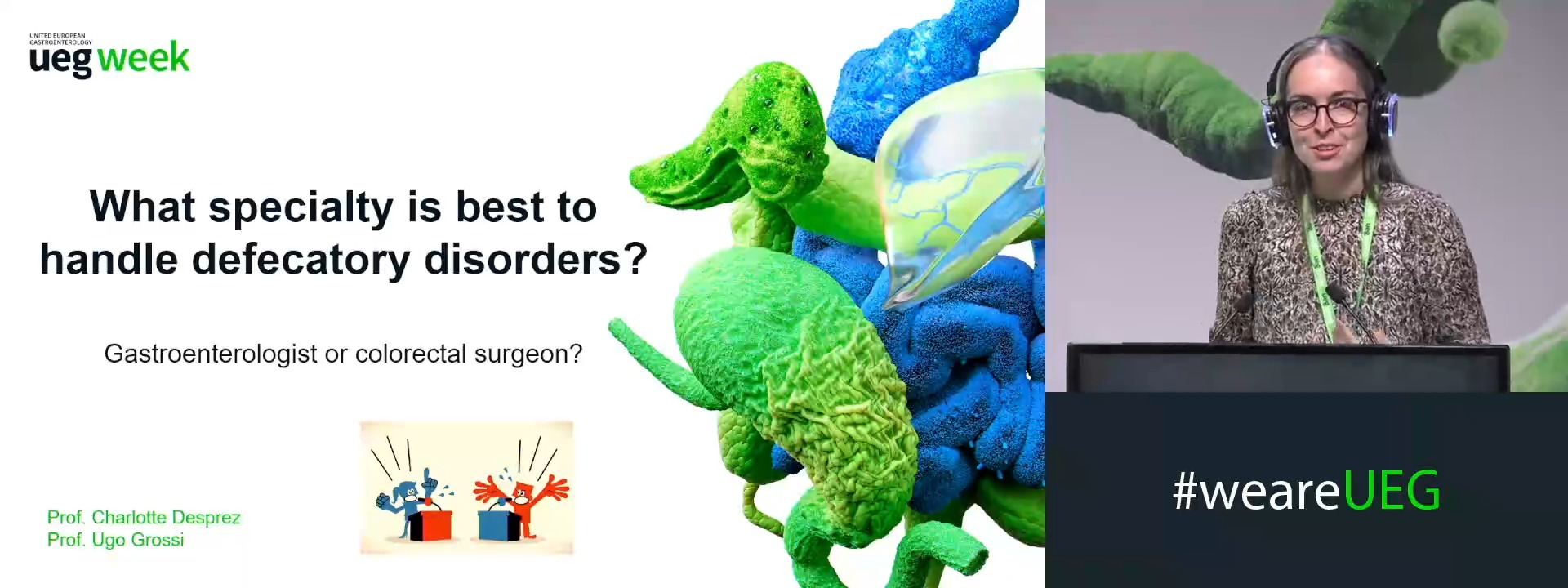
What speciality is best to handle defecatory disorders: The gastroenterologist's vs. the colorectal surgeon's perspective
Affiliations
1 Rouen University Hospital, Rouen, France
2 Humanitas Gavazzeni, Bergamo, Italy
Log in to continue.
This content is part of Gutflix. Log in with your myUEG account, or create one free, to watch it.
Not sure what you can access? Learn more about account types.
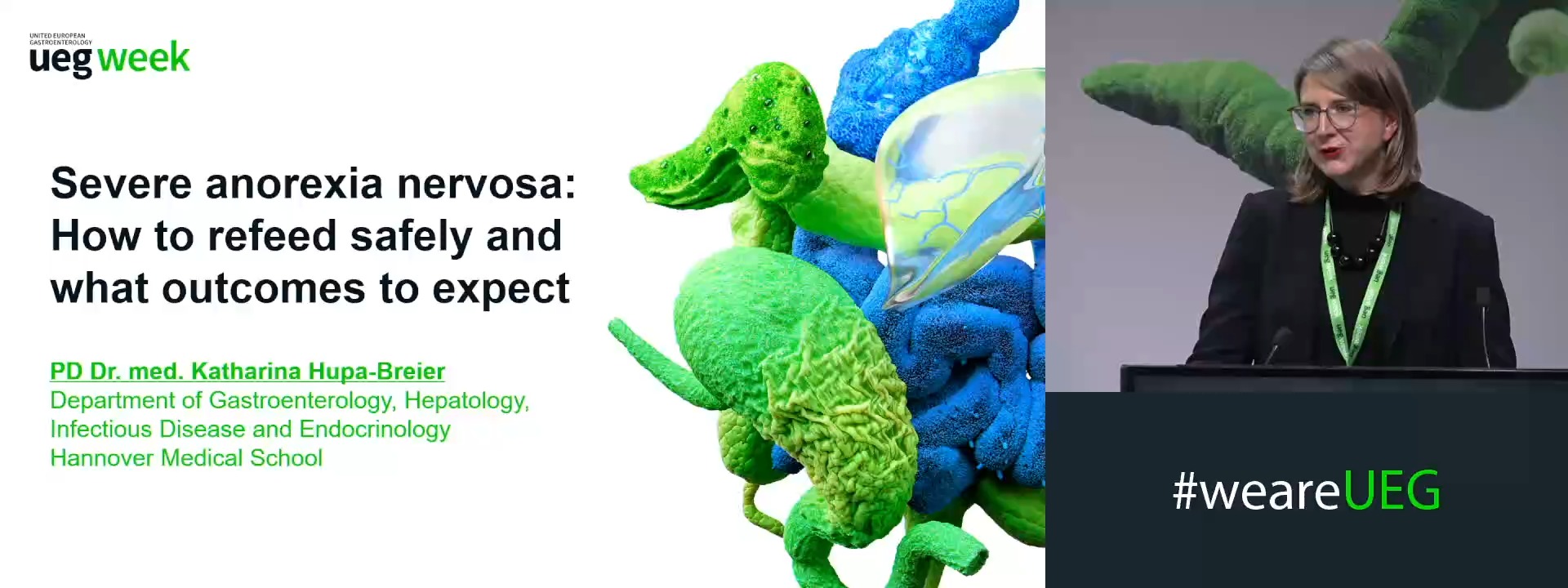
Severe anorexia nervosa: How to refeed safely and what outcomes to expect
Affiliations
1 Medizinischen Hochschule Hannover, Hannover, Germany
Log in to continue.
This content is part of Gutflix. Log in with your myUEG account, or create one free, to watch it.
Not sure what you can access? Learn more about account types.
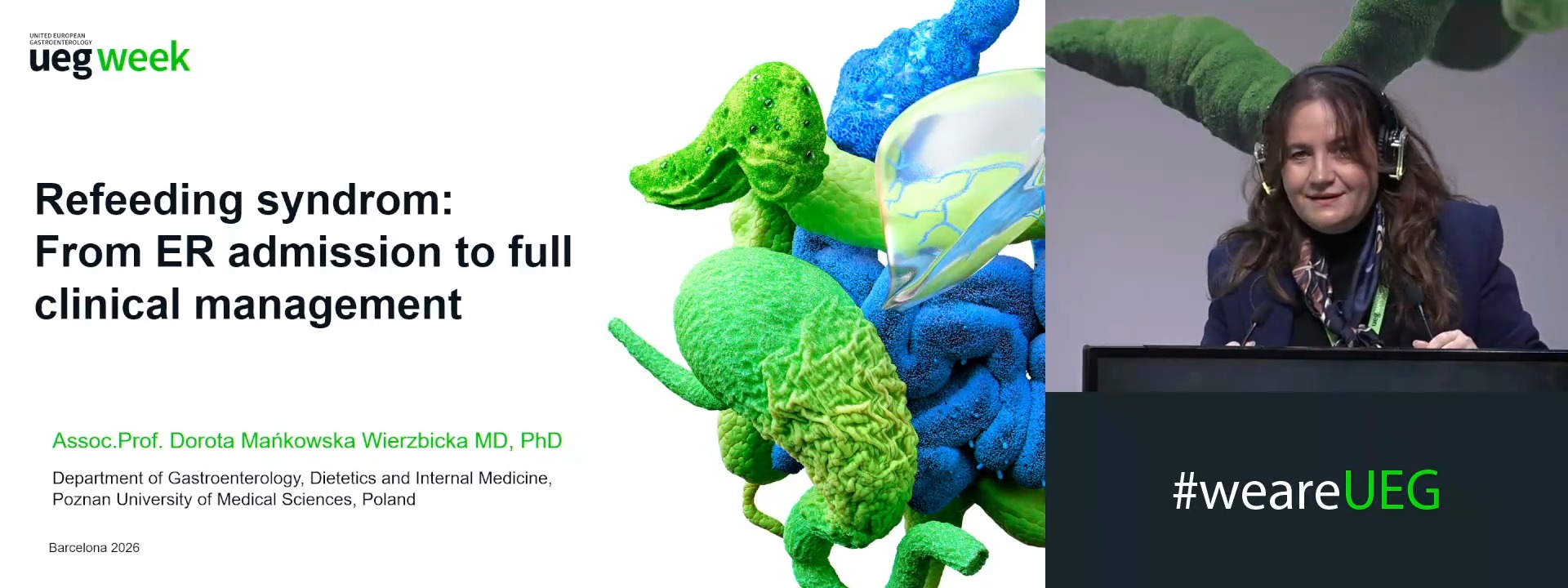
Refeeding syndrome: From ER admission to full clinical management
Affiliations
1 University Clinical Hospital; Poznań University of Medical Science, Poznań, Poland