UEG Week Recordings UEG Week Posters Online courses Guidelines Mistakes in... Podcasts Webinars
Visit ueg.eu Create myUEG account Log In

Filters:

UEG Mistakes In Articles
Share via Email Share on Facebook Share on X Share on LinkedIn Share on Bluesky

Log in to access this content.

Free for all myUEG account holders. Your access level is set automatically based on your occupation. Medical professionals get full access to all content. If you are a non-medical user, you can only access UEG Week content from congresses you attended.

Log In Create a free account

Not sure what you can access? Learn more about account types.
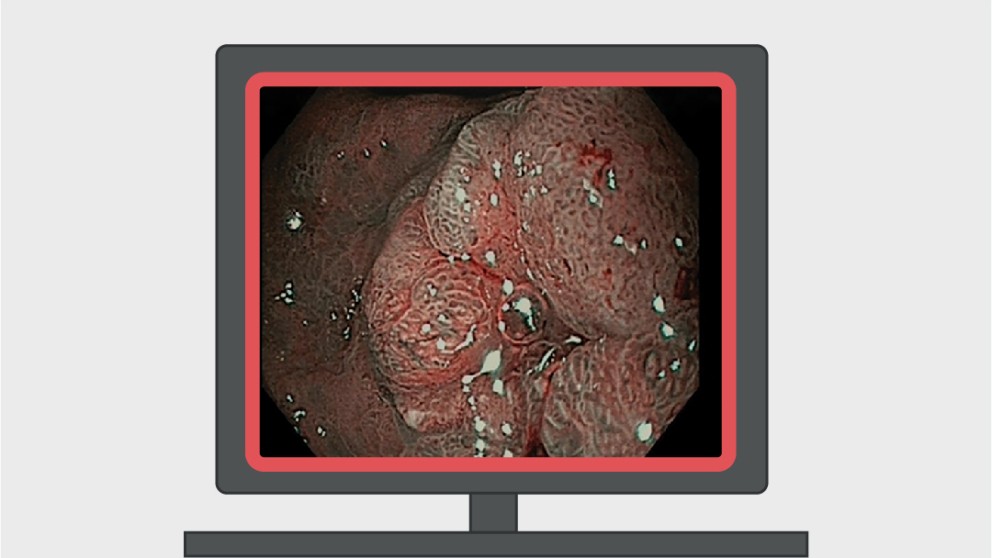
Upper and lower gastrointestinal endoscopy examinations are performed daily as routine diagnostic procedures in a large number of patients with nonspecific indications, such as heartburn, pain, anaemia, bleeding, workup of portal hypertension and so on. Most of the examinations will point to a classic diagnosis (e.g. peptic disease, cancer, variceal management), but sometimes we see patients who've had multiple diagnostic endoscopic procedures in the previous few months with nonconclusive findings. The diagnostic mistakes discussed here are those that sprang to mind based on our endoscopic experience and they are discussed in an evidence-based approach. For therapeutic endoscopic procedures (e.g. ERCP and resections), we present the most important mistakes that are often seen in our practice and have major consequences for the patient. We propose, from our experience, a simple approach to avoid these mistakes.

Mistakes in endoscopy and how to avoid them

Mistakes in endoscopy and how to avoid them

Jacques Deviere, Arnaud Lemmers

Topics

Endoscopy

Published

2024
UEG Podcast Episode
New
UEG Podcast
Share via Email Share on Facebook Share on X Share on LinkedIn Share on Bluesky

Log in to access this content.

Free for all myUEG account holders. Your access level is set automatically based on your occupation. Medical professionals get full access to all content. If you are a non-medical user, you can only access UEG Week content from congresses you attended.

Log In Create a free account

Not sure what you can access? Learn more about account types.

Coeliac disease with David Sanders

David S. Sanders, Pradeep Mundre

Topics

Small Intestine & Nutrition

Published

2026
UEG Podcast Episode
Journal Podcast
Share via Email Share on Facebook Share on X Share on LinkedIn Share on Bluesky

Log in to access this content.

Free for all myUEG account holders. Your access level is set automatically based on your occupation. Medical professionals get full access to all content. If you are a non-medical user, you can only access UEG Week content from congresses you attended.

Log In Create a free account

Not sure what you can access? Learn more about account types.
Episode 6: UEG Journal October Spotlight

Mohsan Subhani, Maria Manuela Estevinho

Topics

Endoscopy Hepatobiliary IBD Pancreas

Published

2025
UEG Mistakes In Articles
Share via Email Share on Facebook Share on X Share on LinkedIn Share on Bluesky

Log in to access this content.

Free for all myUEG account holders. Your access level is set automatically based on your occupation. Medical professionals get full access to all content. If you are a non-medical user, you can only access UEG Week content from congresses you attended.

Log In Create a free account

Not sure what you can access? Learn more about account types.

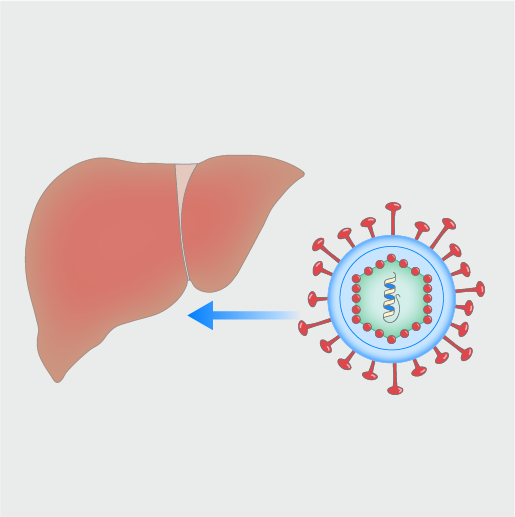
Hepatitis C virus (HCV) infection remains an important global health concern. It is estimated that there are approximately 50 million people infected with HCV globally, with around 1 million new infections each year and about 242,000 deaths annually attributed to HCV-related complications. Most acute HCV infections (55–85%) become chronic due to the virus’s effective evasion strategies, with spontaneous clearance being rare once chronicity is established. This condition often progresses silently, with many individuals unaware of their infection until advanced liver damage has occurred. If left untreated, HCV can lead to severe complications, including liver cirrhosis and hepatocellular carcinoma (HCC). HCV transmission occurs mainly through percutaneous exposure to infected blood. HCV can also spread from mother to infant (vertical transmission) and, less frequently, via sexual contact.1,2 In recent years, the introduction of oral direct-acting antivirals (DAAs), with remarkable safety and effectiveness profiles, has led to a sustained virological response (SVR) in virtually all (>97%) HCV-infected patients, regardless of HCV genotype or disease stage. However, significant barriers remain, such as issues with diagnosis, access to treatment and awareness of the disease.

Here, we discuss some of the misconceptions in HCV management and provide a practical management approach grounded in evidence and clinical experience.

Mistakes in hepatitis C and how to avoid them

Mistakes in hepatitis C and how to avoid them

Ana Catarina Garcia, Gonçalo Alexandrino

Topics

Hepatobiliary

Citation

Garcia A.C and Alexandrino G. Mistakes in hepatits C and how to avoid them. UEG Education 2025; 25: 14-17.

Published

2025
UEG Mistakes In Articles
Share via Email Share on Facebook Share on X Share on LinkedIn Share on Bluesky

Log in to access this content.

Free for all myUEG account holders. Your access level is set automatically based on your occupation. Medical professionals get full access to all content. If you are a non-medical user, you can only access UEG Week content from congresses you attended.

Log In Create a free account

Not sure what you can access? Learn more about account types.

Crohn’s disease (CD) is a chronic inflammatory bowel condition that can present with a wide range of intestinal and extra-intestinal manifestations. This condition can develop at any age and have a significant impact and impairment on quality of life for individuals including on relationships, educational attainment and work productivity. In particular, the time around and after diagnosis often involves the most upheaval for patients, and equally the biggest opportunity for effective intervention. Several recent advances have had a major impact on optimal management of patients with newly diagnosed CD. Here, we discuss the mistakes that are commonly made when managing patients presenting with a new diagnosis of CD. We summarise the evidence base and offer helpful and pragmatic tips for practising clinicians.

Mistakes in newly diagnosed Crohn's disease and how to avoid them

Mistakes in newly diagnosed Crohn's disease and how to avoid them

Joana Roseira, Nurulamin Noor

Topics

IBD

Citation

Roseira J and Noor N. Mistakes in newly diagnosed crohn's disease and how to avoid them. UEG Education 2025; 25: 18-23.

Published

2025
UEG Standards and Guidelines
Consensus
Share via Email Share on Facebook Share on X Share on LinkedIn Share on Bluesky

Log in to access this content.

Free for all myUEG account holders. Your access level is set automatically based on your occupation. Medical professionals get full access to all content. If you are a non-medical user, you can only access UEG Week content from congresses you attended.

Log In Create a free account

Not sure what you can access? Learn more about account types.

Abstract

Background

The incidence and prevalence of inflammatory bowel disease [IBD] have increased significantly in low- and middle-income countries [LMICs] in recent decades. Managing IBD in these settings presents substantial challenges. This consensus aims to describe the epidemiology of IBD in LMICs and to highlight the key challenges in its diagnosis and treatment.

Method

The consensus-defining strategy followed the previous European Crohn’s and Colitis Organisation [ECCO] consensus guidelines [available at www.ecco-ibd.eu]. The authors reviewed the available evidence and formulated statements accordingly. Provisional ECCO statements and supporting text were drafted based on a comprehensive literature review and further refined through two voting rounds, which included external reviewers and national representatives from ECCO’s 36 member countries. The final ECCO statements, representing a consensus of at least 80% agreement among participants, were approved during an online meeting. Consensus statements should be interpreted in context with their accompanying commentary rather than in isolation and should not be used solely to guide patient management. The supporting text was finalized under the guidance of each working group leader [VP, HY, TK, AH] and subsequently integrated by the consensus leader [AE].

Results

Data on IBD epidemiology in LMICs remain limited. Public and healthcare professional awareness and timely access to early diagnostic modalities, advanced medical and surgical therapies, and specialist multidisciplinary care are key gaps in IBD care in LMICs. The complexity and chronic nature of IBD, along with the necessity for a multidisciplinary approach, pose significant challenges to adopting a holistic management strategy in LMICs.

Conclusion

There is a critical need for further studies to assess the specific needs of LMICs. Such research will help guide resource allocation and improve IBD management in these settings.

ECCO Consensus on management of Inflammatory Bowel Disease in low-and middle-income countries

ECCO Consensus on management of Inflammatory Bowel Disease in low-and middle-income countries

Alaa El-Hussuna

Publisher

European Crohn’s and Colitis Organisation logo
European Crohn’s and Colitis Organisation

Guideline

Consensus

Topics

IBD

Citation

Journal of Crohn's and Colitis; 2025

Published

2025
Login to access
UEG Podcast Episode
New
UEG Podcast
Share via Email Share on Facebook Share on X Share on LinkedIn Share on Bluesky

Log in to access this content.

Free for all myUEG account holders. Your access level is set automatically based on your occupation. Medical professionals get full access to all content. If you are a non-medical user, you can only access UEG Week content from congresses you attended.

Log In Create a free account

Not sure what you can access? Learn more about account types.

UEG Online Courses x UEG Podcast: Impact of polyp detection in colonoscopy

Raf Bisschops, Manuele Furnari, Pieter Sinonquel, Veronique Van der Voort

Topics

Endoscopy

Published

2026

The global reference point for the digestive health community

Platform Publisher

United European Gastroenterology

Wickenburggasse 1 1080 Vienna, Austria

Contact us

support@ueg.eu

ueg.eu

T: +43 1 997 1639

Legal

Terms & Conditions

Imprint

Privacy Policy

Explore

My Bookmarks

My recommendations

My fields of interest

© 2026 United European Gastroenterology

Change fields of interest

These fields are selected based on the interests in your myUEG profile.
Click the item to unselect it. You can select multiple items.