UEG's content platform for gastroenterology education bringing recordings, courses, guidelines, and more together in one place.
Trending on Gutflix
Rate for better recommendations!
Your feedback helps us show you more of what you like and less of what you dislike!
Log in to continue.
This content is part of Gutflix. Log in with your myUEG account, or create one free, to watch it.
Not sure what you can access? Learn more about account types.
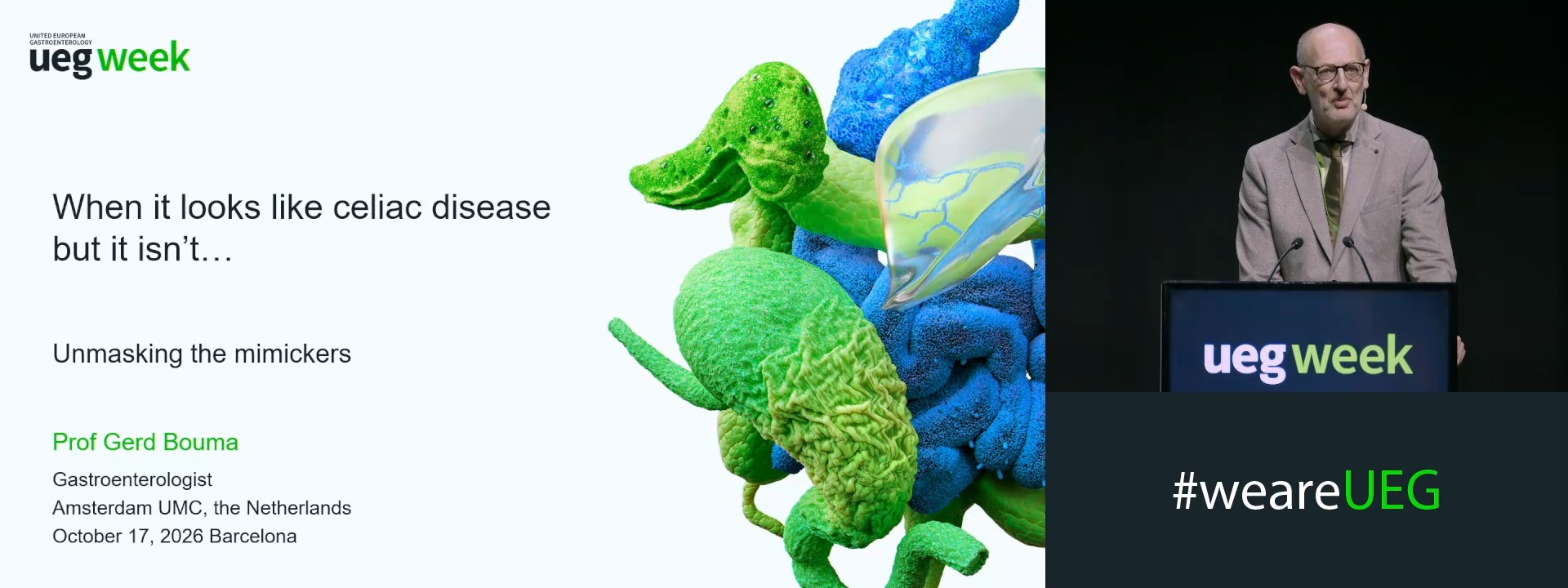
When it looks like coeliac disease but isn’t: Unmasking the mimickers
Affiliations
1 Vrije Universiteit Medical Center, Amsterdam, Netherlands
Log in to continue.
This content is part of Gutflix. Log in with your myUEG account, or create one free, to watch it.
Not sure what you can access? Learn more about account types.
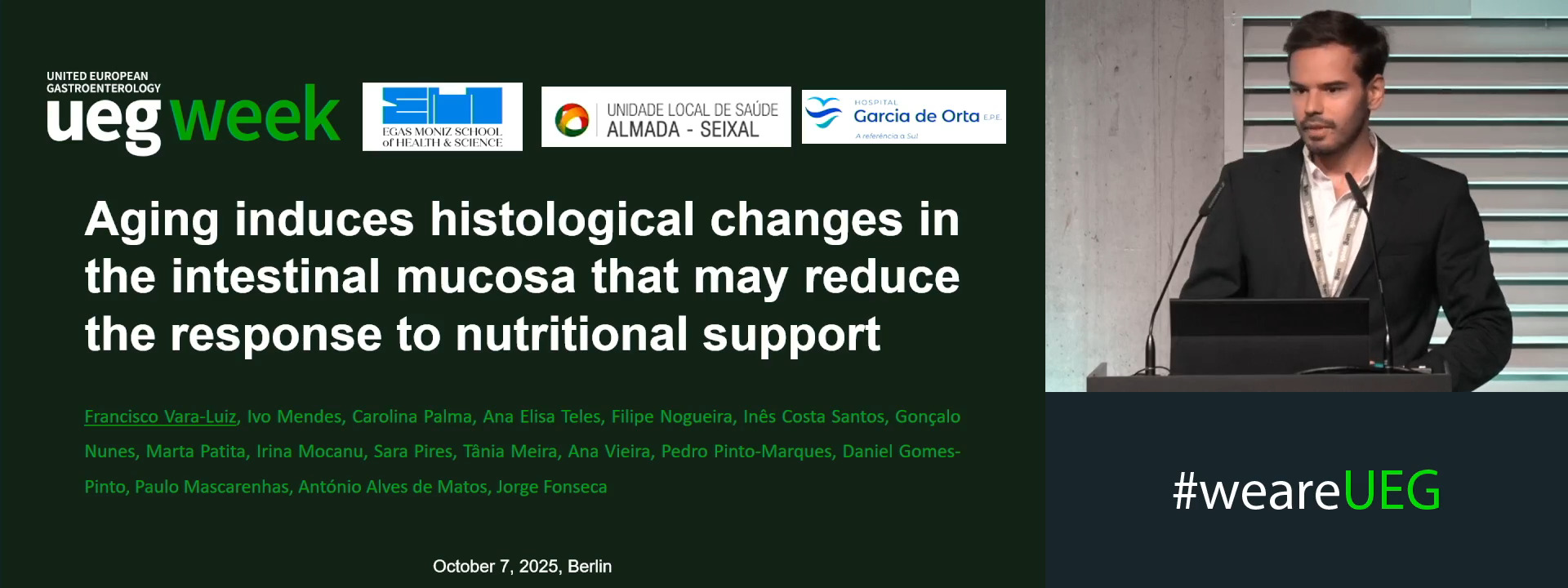
AGING INDUCES HISTOLOGICAL CHANGES IN THE INTESTINAL MUCOSA THAT MAY REDUCE THE RESPONSE TO NUTRITIONAL SUPPORT
Francisco Vara-Luiz 1,2, Ivo Mendes 1,2, Carolina Palma 1,2, Margarida Rajão Saraiva 3, Ana Elisa Teles 1, Filipe Nogueira 1, Inês Costa Santos 1, Gonçalo Nunes 2,1, Marta Patita 1, Irina Mocanu 1, Sara Isabel Ramos Pires 1, Tania Meira 1, Ana Isabel Vieira 1, Unknown Unknown 1, Daniel Gomes-Pinto 1, Paulo Mascarenhas 2, Jorge Fonseca 1,2
Affiliations
1 Hospital Garcia de Orta, Almada, Portugal
2 Egas Moniz Center for Interdisciplinary Research (CiiEM), Egas Moniz School of Health and Science, Almada, Portugal
3 Instituto Português de Oncologia de Lisboa Francisco Gentil, Lisboa, Portugal
Log in to continue.
This content is part of Gutflix. Log in with your myUEG account, or create one free, to watch it.
Not sure what you can access? Learn more about account types.
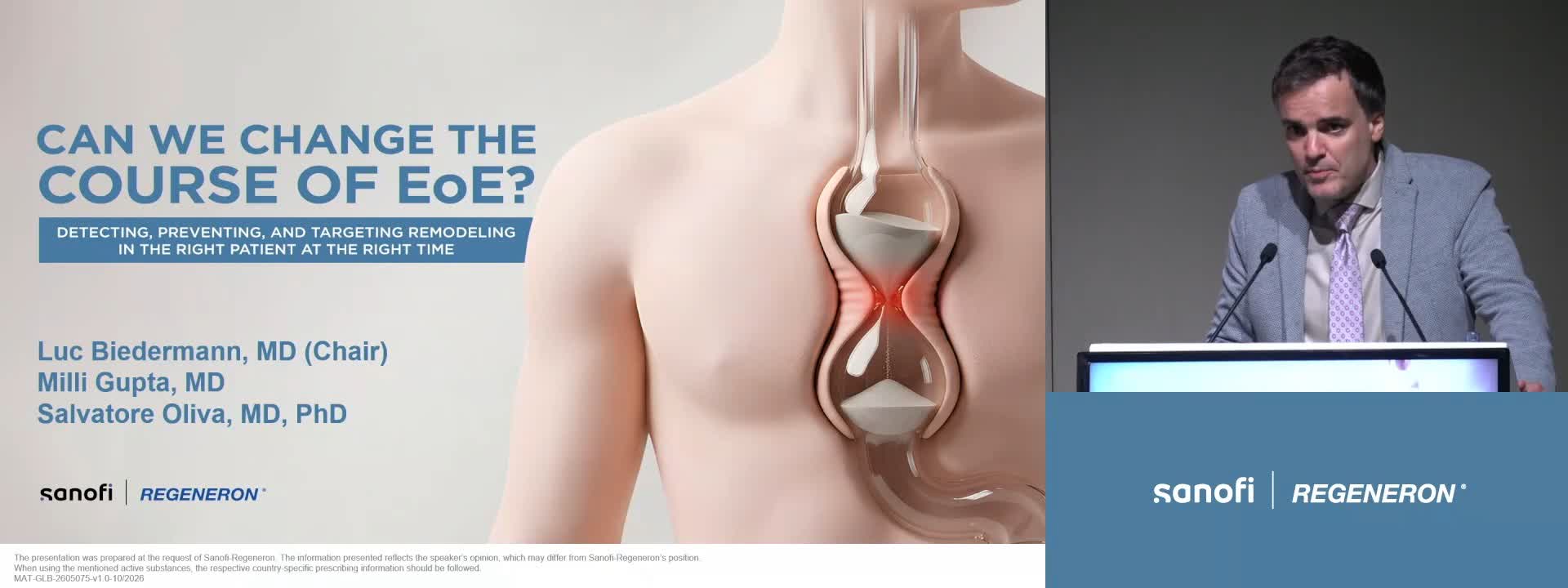
Can We Change the Course of EoE? Detecting, Preventing, and Targeting Remodeling in the Right Patient, at the Right Time (Sanofi Regeneron) (Complete Session)
Affiliations
1 USZ Zürich, Zurich, Switzerland
2 University Hospital Umberto, Sapienza University of Rome, Rome, Italy
3 Associate Clinical Professor of Medicine Division of Gastroenterology and Hepatology, Department of Medicine University of Calgary, None, Canada