UEG Week Recordings UEG Week Posters Online courses Guidelines Mistakes in... Podcasts Webinars
Visit ueg.eu Create myUEG account Log In

Filters:

UEG Presentation
Share via Email Share on Facebook Share on X Share on LinkedIn Share on Bluesky
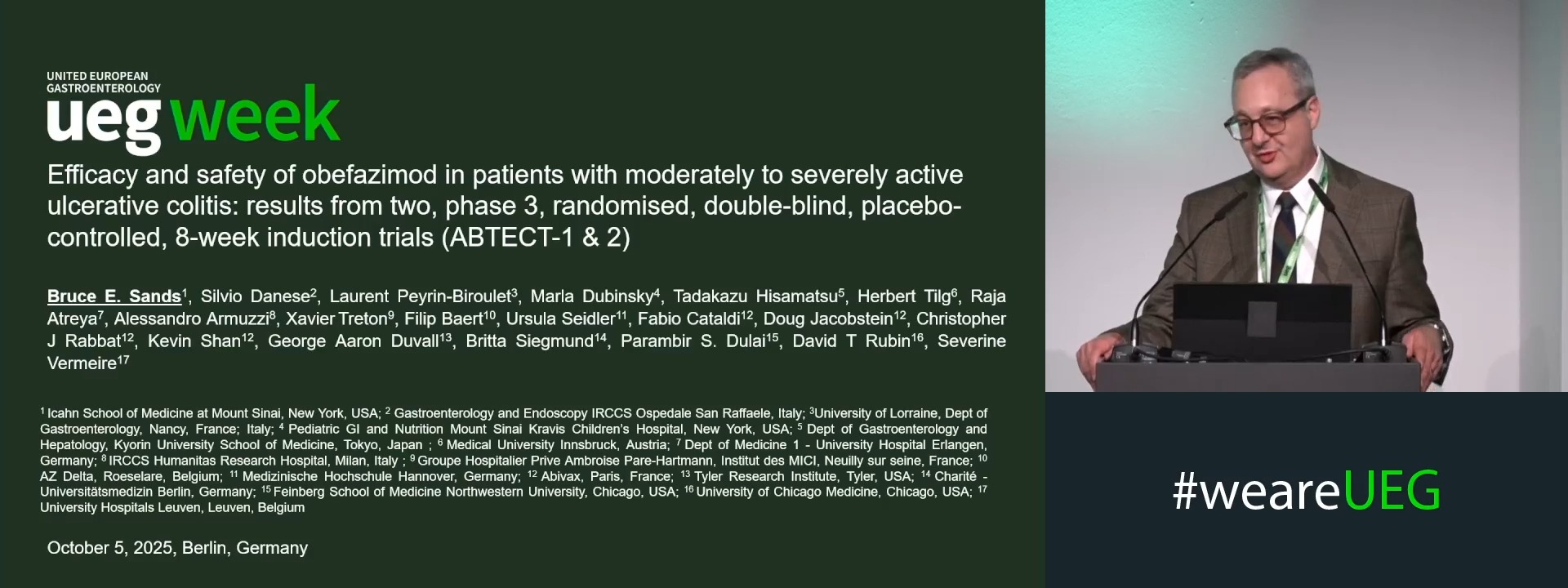
EFFICACY AND SAFETY OF OBEFAZIMOD IN PATIENTS WITH MODERATELY TO SEVERELY ACTIVE ULCERATIVE COLITIS: RESULTS FROM TWO, PHASE 3, RANDOMISED, DOUBLE-BLIND, PLACEBO-CONTROLLED, 8-WEEK INDUCTION TRIALS (ABTECT-1 & 2)

Log in to access this content.

Free for all myUEG account holders. Your access level is set automatically based on your occupation. Medical professionals get full access to all content. If you are a non-medical user, you can only access UEG Week content from congresses you attended.

Log In Create a free account

Not sure what you can access? Learn more about account types.

Introduction

Obefazimod (Obe) is an oral, once-daily (QD), small molecule which enhances expression of microRNA-124 and has been studied in two Phase 2 induction trials and subsequent open-label maintenance studies [1-3] in patients (pts) with moderately to severely active ulcerative colitis (UC). Here we report efficacy and safety of two Phase 3, 8-week, induction trials in adult pts with UC from ABTECT-1 [NCT05507203] and ABTECT-2 [NCT05507216].

Aims & Methods

The multicenter, randomized, double-blind, placebo-controlled ABTECT trials enrolled pts with moderate-to-severe UC (defined as modified Mayo score (MMS)≥ 5, with rectal bleeding sub-score (RBS) ≥ 1 and centrally read endoscopic score >2) who had inadequate response, loss of response, or intolerance to at least one prior therapy (with no upper limit), including corticosteroids, immunosuppressants, biologics, S1P receptor modulators and/or JAK inhibitors. Pts were randomized 2:1:1 to Obe 50 mg QD (Obe-50), Obe 25 mg QD (Obe-25) or placebo (PBO) for 8 weeks. The primary endpoint was clinical remission (per MMS) and secondary endpoints included clinical response, endoscopic improvement, symptomatic remission, and histo-endoscopic mucosal improvement (HEMI).

Results

1272 pts were randomized and treated in ABTECT-1 (636) and ABTECT-2 (636). In both trials, baseline demographics and disease characteristics were similar between groups; 45.3% and 49.3% of pts had inadequate response to 1 or more advanced therapies. A significantly higher proportion of pts receiving Obe-50 (ABTECT-1:21.7%, ABTECT-2: 19.8%) versus PBO (2.5% and 6.3%) achieved clinical remission (Obe-50-PBO difference: ABTECT-1: 19.3%, p<0.0001; ABTECT-2: 13.4%, p=0.0001) and met all key secondary endpoints in both trials. A significantly higher proportion of pts receiving Obe-25 versus PBO achieved clinical remission (Obe-25-PBO difference: 21.4%, p<0.0001) and met all key secondary endpoints in ABTECT-1. In a pooled analysis, both Obe-50 and Obe-25 met all primary and secondary endpoints with nominal significance (p<0.0001) (Table). The overall rate of serious adverse events and treatment emergent adverse events (TEAEs) leading to study drug discontinuation for pts treated with Obe were similar to PBO. Proportions of pts who reported at least one TEAE in ABTECT-1 were 59.4%, 46.9%, and 53.2% for Obe-50, Obe-25, and PBO, respectively. For ABTECT2, TEAEs occurred in 61.0%, 50.9%, and 48.4% for Obe-50, Obe-25, and PBO, respectively. The most frequent TEAE was headache (Obe-50: 20.8-25.8%; Obe-25: 14.5-15.6%; PBO: 5.7). The headaches were mild, transient, short in duration and not a barrier to treat as evidenced by a low discontinuation rate of 0-1.6%. No signal was observed for serious, severe, or opportunistic infections or malignancies.

Table: 8-week induction efficacy of obefazimod in ABTECT-1 and ABTECT-2 Phase 3 studies, and pooled ABTECT-1 and ABTECT-2‡


ABTECT-1ABTECT-2
Pooled ABTECT-1 and ABTECT-2
Efficacy Endpoints at week 8, % (n)
PBO
N= 158
Obe-25
N= 160
Obe-50
N= 318
Between group diff.
Obe-25 vs PBO
Between group diff.
Obe-50 vs PBO
PBO
N= 159
Obe-25
N= 159
Obe-50
N= 318
Between group diff.
Obe-25 vs PBO
Between group diff.
Obe-50 vs PBO
PBO
N= 317
Obe-25
N= 319
Obe-50
N= 636
Between group diff.
Obe-25 vs PBO
Between group diff.
Obe-50 vs PBO
Clinical remission
2.5
(4)
23.8
(38)
21.7
(69)
21.4
p<0.0001
19.3
p<0.0001
6.3
(10)
11.3
(18)
19.8
(63)
5.1
p=0.1034¥
13.4
p=0.0001
4.4
(14)
17.6
(56)
20.8
(132)
13.2a
p<0.0001
16.4a
p<0.0001
Clinical response
28.5
(45)
65.6 (105)
61.0
(194)
37.2
p<0.0001
32.6
p<0.0001
33.3
(53)
53.5
(85)
63.2
(201)
20.1
p=0.0002¥
29.6
p<0.0001
30.9
(98)
59.6
(190)
62.1
(395)
28.6a
p<0.0001
31.2a
p<0.0001
Endoscopic improvement†
5.7
(9)
37.5
(60)
33.3
(106)
32.0
p<0.0001
27.8
p<0.0001
10.1
(16)
22.0
(35)
35.5
(113)
12.0
p=0.0029¥
25.4
p<0.0001
7.9
(25)
29.8
(95)
34.4
(219)
21.9a
p<0.0001
26.6a
p<0.0001
HEMI
3.2
(5)
23.8
(38)
23.0
(73)
20.7
p<0.0001
20.0
p<0.0001
7.5
(12)
13.2
(21)
23.9
(76)
5.7
p=0.0932¥
16.4
p<0.0001
5.4
(17)
18.5
(59)
23.4
(149)
13.2a
p<0.0001
18.2a
p<0.0001
Symptomatic remission*†
17.7
(28)
42.5
(68)
41.2
(131)
24.9
p<0.0001
23.7
p<0.0001
22.0
(35)
33.3
(53)
40.3
(128)
11.4
p=0.0227
18.0
p<0.0001
19.9
(63)
37.9
(121)
40.7
(259)
18.1a
p<0.0001
21.0a
p<0.0001
NRI is used for subjects with missing outcome at Week 8 and subjects reporting any IE prior to Week 8
% Difference is for Obe minus placebo and is based on estimated common risk difference using the Mantel-Haenszel weights adjusting for the randomization stratification factors: inadequate response to advanced therapies (yes/no), baseline oral corticosteroids usage (yes/no), and region (Japan/rest of world) [ABTECT-2 only]. p-values are two sided. a: for pooled analysis, all p-values are nominal
Clinical remission: stool frequency sub-score (SFS) ≤1, rectal bleeding sub-score (RBS) = 0 and endoscopic sub-score ≤1
Clinical response: decrease from baseline in the MMS ≥ 2 points and ≥30% from baseline, plus a decrease in RBS ≥ 1 or an absolute RBS ≤ 1
Endoscopic improvement: endoscopic sub-score ≤1
Symptomatic remission: RBS=0, SFS <1
HEMI: combination of histologic improvement (Geboes histologic score ≤3.1) and endoscopic improvement (endoscopy sub-score ≤1)
* Symptomatic remission was an “other secondary” endpoint, not multiplicity controlled, for the FDA protocol
† Endoscopic improvement/symptomatic remission were co-primary endpoints for the EMA protocol and were met by both doses in both trials
‡ Hierarchical testing strategy was used starting with 50mg for the primary endpoint followed by the key secondary endpoints; the 25mg was subsequently tested for the primary endpoint followed by the key secondary endpoints.
¥ 25mg did not meet the primary endpoint at week 8 in ABTECT-2 in the FDA testing protocol, therefore p-values for key secondary endpoints for the 25mg arm in ABTECT-2 are nominal

Conclusion

In both ABTECT induction trials, primary and secondary endpoints were met; obe treatment led to statistically significant improvements in clinical, endoscopic, symptomatic and combined endoscopic-histologic endpoints at week 8. Obe was well tolerated with no new safety signals identified.

References

  1. Vermeire S, et al. J Crohns Colitis. 2023; 17: 1689-1697
  2. Vermeire S, et al. The Lancet Gastroenterology & Hepatology. 2022; 7: 1024-1035.
  3. Vermeire S, et al. J Crohns Colitis. 2025 ; 19 : jjaf074

Disclosure

Authors reports following potential conflicts of interest:
BES: Abbvie, Abivax, Adiso Therapeutics, Agomab, Alimentiv, Amgen, AnaptysBio, Arena Pharmaceuticals, Artugen Therapeutics, Astra Zeneca, Biolojic Design, Biora Therapeutics, Boehringer Ingelheim, Bristol Myers Squibb, Celltrion, Equillium, Enthera, Enveda Biosciences, Evommune, Ferring, Fzata, Galapagos, Genentech (Roche), Gilead Sciences, GlaxoSmithKline, Gossamer Bio, Imhotex, Index Pharmaceuticals, Innovation Pharmaceuticals, Kaleido, Kallyope, Lilly, Merck & Co., Microba, Microbiotica, Mitsubishi Tanabe, Mobius Care, Morphic Therapeutics, MRM Health, Nexus Therapeutics, Nimbus Discovery, Odyssey Therapeutics, OSE Immunotherapeutics, Janssen, Palisade Bio, Pfizer, Protagonist Therapeutics, Q32 Bio, Rasayana Therapeutics, Recludix Therapeutics, Reistone Biopharma, Sanofi, Sorriso Therapeutics, Spyre Therapeutics, Takeda, Target RWE,Teva, TLL Pharmaceutical, Tr1X, Trex Bio, Union Therapeutics, Ventyx Biosciences.
SV: AbbVie, Abivax, AbolerIS Pharma, AgomAb, Alimentiv, Arena Pharmaceuticals, AstraZeneca, Avaxia, BMS, Boehringer Ingelheim, Celgene, CVasThera, Cytoki Pharma, Dr Falk Pharma, Ferring, Galapagos, Genentech-Roche, Gilead, GSK, Hospira, Imidomics, Janssen, J&J, Lilly, Materia Prima, MiroBio, Morphic, MrMHealth, Mundipharma, MSD, Pfizer, Prodigest, Progenity, Prometheus, Robarts Clinical Trials, Second Genome, Shire, Surrozen, Takeda, Theravance, Tillots Pharma AG, Zealand Pharma.
LPB: Abbvie, Abivax, Adacyte, Alimentiv, Amgen, Applied Molecular Transport, Arena, Banook, Biogen, BMS, Celltrion, Connect Biopharm, Cytoki Pharma, Enthera, Ferring, Fresenius Kabi, Galapagos, Genentech, Gilead, Gossamer Bio, GSK, IAC Image Analysis, Index Pharmaceuticals, Inotrem, Janssen, Lilly, Medac, Mopac, Morphic, MSD, Nordic Pharma, Novartis, Oncodesign Precision Medicine, ONO Pharma, OSE Immunotherapeuthics, Pandion Therapeuthics, Par' Immune, Pfizer, Prometheus, Protagonist, Roche, Samsung, Sandoz, Sanofi, Satisfay, Takeda, Telavant, Theravance, Thermo Fischer, Tigenix, Tillots, Viatris, Vectivbio, Ventyx, Ysopia.
SD: AbbVie, Ferring, Hospira, Johnson & Johnson, Merck, MSD, Takeda, Mundipharma, Pfizer Inc, Tigenix, UCB Pharma, Vifor, Biogen, Celgene, Allergan, Celltrion, Sandoz, Boehringer Ingelheim.
PSD: Abbvie, Abivax, Adiso, Alimentiv, Bristol Meyer Squibb, Celltrion, Genentech, Geneoscopy, Janssen, Pfizer, Takeda.
MD: Abbvie, Abivax, Arena Pharmaceuticals, Astra Zeneca, Boehringer Ingelheim International GmbH, Bristol-Meyer Squibb, Eli Lilly and Company, F. Hoffmann-La Roche Ltd, Genentech Inc, Gilead, Janssen Pharmaceuticals, Merck, Pfizer Inc, Prometheus Biosciences, Takeda Pharmaceuticals.
HT: Abbvie, Abivax, Dr Falk Pharma, ferring, Galapagos, Microbiotica, MSD, Pfizer, Takeda.
BS: AbbVie, Abivax, Boehringer Ingelheim, Bristol Myers Squibb, Dr. Falk Pharma, Eli Lilly, Endpoint Health, Falk, Galapagos, Gilead, Janssen, Landos, Materia Prima, PredictImmune, Pfizer, and Takeda; AlfaSigma, CED Service GmbH, MSD, Ferring, Galapagos, Tr1x bio
TH: Mitsubishi Tanabe Pharma Corporation, EA pharma Co. Ltd., AbbVie GK, JIMRO Co. Ltd., Zeria Pharmaceutical Co. Ltd., Kyorin Pharmaceutical Co. Ltd., Nippon Kayaku Co. Ltd., Takeda Pharmaceutical Co. Ltd., Pfizer Inc., Mochida Pharmaceutical Co. Ltd., Boston Scientific Corporation, Kissei Pharmaceutical Co. Ltd, Janssen Pharmaceutical K.K., Pfizer Inc., Eli Lilly, Gilead Sciences, Bristol Myers Squibb, Abivax.
XT: Celltrion, AbbVie, Johnson & Johnson, Lilly, Takeda, Alpha Sigma, Dr. Falk, Abivax, Biogen, Fresenius Kabi, MSD, Pfizer, Tillotts, and Thabor Therapeutics.
RA: AbbVie, Abivax, AstraZeneca, Bristol-Myers Squibb, Celltrion Healthcare, Galapagos, Johnson&Johnson, Lilly, MSD, Pfizer, and Takeda Pharma
US: AbbVie, Abivax, Amgen, Galapagos, Janssen, Eli Lilly, Boehringer Ingelheim, Bristol Myers Squibb, Celgene, Gilead Sciences, Pfizer, Roche,Takeda Pharmaceuticals
AA: AbbVie, Abivax, AG Pharma, Alfa Sigma, Astra Zeneca, Biogen, Boehringer Ingelheim, Bristol-Myers Squibb, Celltrion, Eli-Lilly, Enthera, Ferring, Galapagos, Gilead, Giuliani, Janssen, Lionhealth, MSD, Nestlé, Novartis, Pfizer, Protagonist Therapeutics, Roche, Samsung Bioepis, Sanofi, Sandoz, Takeda, Teva Pharmaceuticals, Tillots Pharma
FB: AbbVie, Amgen, Eurogenerics, J&J, Arena Pharmaceuticals, Celltrion, Ferring, Galapagos, Janssen, Merck Sharp & Dohme, Pfizer Inc, Takeda, Celgene, Fresenius Kabi, Sandoz
DTR: Abbvie, Abivax SA, Altrubio, Athos Therapeutics, Inc, Bristol-Myers Squibb, Celltrion, Connect BioPharma, Eli Lilly & Co., Genentech (Roche) Inc., Iterative Health, Janssen Pharmaceuticals, Johnson & Johnson, Merck & Co., Odyssey Therapeutics, Pfizer, Sanofi, Spyre, Takeda Pharmaceuticals, Vedanta Biosciences, and Ventyx.

EFFICACY AND SAFETY OF OBEFAZIMOD IN PATIENTS WITH MODERATELY TO SEVERELY ACTIVE ULCERATIVE COLITIS: RESULTS FROM TWO, PHASE 3, RANDOMISED, DOUBLE-BLIND, PLACEBO-CONTROLLED, 8-WEEK INDUCTION TRIALS (ABTECT-1 &AMP; 2)

Bruce E. Sands 1, Silvio Danese 2, Laurent Peyrin-Biroulet 3, Marla C. Dubinsky 4, Tadakazu Hisamatsu 5, Herbert Tilg 6, Raja Atreya 7, Alessandro Armuzzi 8, Xavier Treton 9, Filip Baert 10, Ursula Seidler 11, Fabio Cataldi 12, Douglas Jacobstein 12, Christopher Rabbat 12, Kejia Shan 12, George DuVall 13, Britta Siegmund 14, Parambir Dulai 15, David T. Rubin 16, Severine Vermeire 17

1 Icahn School of Medicine at Mount Sinai, New York, United States

2 Vita-Salute San Raffaele University - IRCCS San Raffaele Scientific Institute, Milan, Italy

3 Nancy University Hospital, Vandoeuvre-les-Nancy, France

4 Mount Sinai Kravis Children’s Hospital, New York City, United States

5 Kyorin University School of Medicine, Tokyo, Japan

6 Innsbruck Medical University - Department of Medicine, Innsbruck Medical University; Innsbruck/AT, Innsbruck, Austria

7 University Erlangen-Nuremberg, Erlangen, Germany

8 IBD Center, IRCCS Humanitas Research Hospital, Rozzano, Milan, Italy

9 Groupe Hospitalier Prive Ambroise Pare – Hartmann - Institut des MICI, Neuilly sur Seine, France

10 Az Delta, Roeselare, Belgium

11 Medizinische Hochschule Klinik f. Gastroenterlogie, Hannover, Germany

12 Abivax, Paris, France

13 Tyler Research Institute, Tyler, United States

14 Charité - Universitätsmedizin Berlin, Berlin, Germany

15 Feinberg School of Medicine Northwestern University, Chicago, United States

16 University of Chicago Medicine, Chicago, United States

17 University Hospital Leuven, Leuven, Belgium
Event

UEG Week Berlin 2025

Topics

Gut Microbiota IBD Immunology Mechanisms & Personalised Medicine

Submission format

Late-Breaking Abstract

Session

Late-breaking trials in IBD

Citation

United European Gastroenterology Journal 2025; 13 (Supplement 8)

Published

2025
UEG Presentation
Share via Email Share on Facebook Share on X Share on LinkedIn Share on Bluesky
Panel discussion: When the alarm bells go off - Approach to acute severe colitis

Log in to access this content.

Free for all myUEG account holders. Your access level is set automatically based on your occupation. Medical professionals get full access to all content. If you are a non-medical user, you can only access UEG Week content from congresses you attended.

Log In Create a free account

Not sure what you can access? Learn more about account types.

Panel discussion: When the alarm bells go off - Approach to acute severe colitis

Event

UEG Postgraduate Teaching Programme Berlin 2025

Topics

IBD Surgery

Session

When the alarm bells go off: Approach to acute severe colitis

Citation

United European Gastroenterology Journal 2025; 13 (Supplement 8)

Published

2025
UEG Presentation
Share via Email Share on Facebook Share on X Share on LinkedIn Share on Bluesky
EVALUATION OF SUBCUTANEOUS INFLIXIMAB FOR PERIANAL FISTULA HEALING IN CROHN’S DISEASE: PRELIMINARY RESULTS FROM THE REMSILAP MULTICENTER OBSERVATIONAL COHORT STUDY

Log in to access this content.

Free for all myUEG account holders. Your access level is set automatically based on your occupation. Medical professionals get full access to all content. If you are a non-medical user, you can only access UEG Week content from congresses you attended.

Log In Create a free account

Not sure what you can access? Learn more about account types.

Introduction

Management of perianal fistulas in Crohn’s disease (CD) is challenging and requires a multidisciplinary approach, combining surgical drainage and biologic therapies, such as infliximab (IFX). Higher IFX trough concentrations have been associated with improved fistula healing rates. The subcutaneous (SC) formulation of IFX achieves 2–3 times higher and more stable trough levels compared to intravenous (IV) formulation. This study hypothesizes that SC IFX could enhance perianal fistula healing rates in CD patients.

Aims & Methods

REMSILAP study is part of the 3TLAP cohort, a French prospective multicenter observational study evaluating optimal therapeutic strategies for achieving clinical and radiological remission of perianal fistulas in CD at 12 months post-surgical drainage. The REMSILAP substudy focuses specifically on patients receiving SC IFX. Patients who received SC IFX after or within six months prior to surgical drainage were included. Baseline was defined as the day of surgical drainage. The primary outcome was the proportion of patients achieving complete clinical remission defined as Perianal Disease Activity Index (PDAI) fistula drainage subscore = 0 associated with PDAI activity restriction subscore <3 and absence of seton, and radiological remission at 12 months. Here, we present preliminary findings from REMSILAP.

Results

Among the 353 patients enrolled in the 3TLAP cohort, 54 were included in REMSILAP. The cohort consisted of 61.1% male patients, with a median age of 36 years and a median disease duration of 4.5 years. Penetrating disease (B3 phenotype) was present in 40.7%, and 33.3% had a history of surgical resection. At baseline, 40.7% of patients had quiescent disease regarding Harvey-Bradshaw index, while 5.6% had severe disease activity. Biologic exposure prior to inclusion was noted in 42.6%. Surgical drainage, with seton placement, was performed in 74.1% of patients. Forty-eight patients (88%) initiated SC IFX treatment after surgical drainage. Of the patients receiving SC IFX, 50% transitioned to SC IFX after less than three IV infusions. Among those on IV IFX at baseline, 20.4% were receiving a 10 mg/kg dose. Forty-three patients (79.6%) received SC IFX in combination with immunomodulators (azathioprine, methotrexate, or 6-mercaptopurine). The median duration of SC IFX treatment was 13.1 months, with treatment maintained for 67.5% of the follow-up period (mean: 19.3 ± 11.3 months). Forty-three patients (79.6%) were treated with a stable dose of 120 mg/14 days and 6 patients (11.1%) had an intensification of SC IFX dosage to 120mg / 7 days. At 12 months, 42 patients were evaluable for clinical outcomes. Complete clinical healing at 12 months was achieved in 11 patients (27.5%) and association of PDAI restriction subscore <3 and drainage subscore = 0 was found in 18 patients (42.9%). Thirteen patients (34.2%) from the 25 patients who had received at least 6 months of SC IFX treatment showed clinical healing at 6 months. Out of the 26 patients treated with at least 12 months of SC IFX treatment, clinical healing was achieved in 16 patients (61.5%) at 12 months. Among the 11 patients with clinical healing at 12 months, 8 (72.2%) were treated with SC IFX treatment following more than three IFX IV infusions. None of the 11 patients with available MRI date showed radiological healing at 12 months.

Conclusion

Subcutaneous infliximab following surgical drainage of Crohn’s disease perianal fistula demonstrates high treatment persistence and promising rates of fistula healing.

Disclosure

This study was funded by Celltrion Healthcare France

EVALUATION OF SUBCUTANEOUS INFLIXIMAB FOR PERIANAL FISTULA HEALING IN CROHN’S DISEASE: PRELIMINARY RESULTS FROM THE REMSILAP MULTICENTER OBSERVATIONAL COHORT STUDY

Manon Haas 1, Laurent Abramowitz 2, Stephanie Hamonic 3, Amandine Landemaine 3, Guillaume Bouguen 3, Anne Laurain 2, Lucine Vuitton 4, Isabelle Etienney 5, Gauthier Pellet 6, Kristell Coat 3, Ronan Garlantezec 3, Laurent Siproudhis 3, Xavier Treton 1

1 Institut des MICI - Clinique Ambroise Paré Hartmann, Neuilly sur Seine, France

2 CHU Bichat, Paris, France

3 CHU Pontchaillou, Rennes, France

4 Besançon university hospital gastroenterology, Courbevoie, France

5 Diaconesses-Croix St Simon Hospital, Paris, France

6 CHU Bordeaux, Bordeaux, France

Event

UEG Week Berlin 2025

Topics

IBD

Submission format

Abstract

Session

Treatment of fistulas in Crohn's disease

Citation

United European Gastroenterology Journal 2025; 13 (Supplement 8)

Published

2025
UEG Presentation
Share via Email Share on Facebook Share on X Share on LinkedIn Share on Bluesky
SPATIALLY DIFFERENTIATED MEASUREMENT OF INFLAMMATORY CELLS WITH DEEP LEARNING REVEALS THE HETEROGENEITY OF CHANGES IN ULCERATIVE COLITIS

Log in to access this content.

Free for all myUEG account holders. Your access level is set automatically based on your occupation. Medical professionals get full access to all content. If you are a non-medical user, you can only access UEG Week content from congresses you attended.

Log In Create a free account

Not sure what you can access? Learn more about account types.

Introduction

Histological assessment in Inflammatory Bowel Disease (IBD) is often required with endoscopic diagnoses to establish disease activity. This is evident in patients where histological healing is a major therapeutic goal and when endoscopic healing can also exhibit microscopic disease. IBD can manifest in numerous landmark features which are structural and inflammatory related. Histological activity is determined through erosion/ulceration, architectural changes in tissue morphology, mucin depletion and presence of varied inflammatory cells the colonic crypts, Muscularis Mucosae (MM) and Lamina Propria (LP). Histological scoring systems vary in complexity and methodology and subject to discrepancies in inter-rater consensus. Our model aims to provide accurate measurements of key histological features in Ulcerative Colitis (UC) used in scoring systems as both a decision support tool for improving pathologist scoring alignment and sensitive quantitative metrics of inflammatory cells to evaluate disease activity.

Aims & Methods

We developed an ensemble of convolutional neural networks to identify cell types, tissue foreground, crypts, MM, and haemorrhage in H&E images of IBD biopsy data. Models were trained with expert-labelled annotations comprising 34,289 image-annotation pairs (80% training, 20% validation) from in-house and publicly available data. Model accuracy was assessed with 6,464 held-out image-annotation pairs from 26 Whole Slide Images (WSIs) from all sites of the large intestine commonly sampled during endoscopic investigation, while ground truth annotations were reviewed by GI-trained pathologists to certify accuracy. We used geospatial methods to derive boundaries of the LP from other predicted domains, associate cells to delineated regions, measure architectural changes and derive spatially differentiated metrics of inflammatory burden in 66 patients with confirmed UC.

Results

The AI model spatially differentiates and segments cell types and tissue compartments. This produces metrics for inflammatory cell counts in regions of interest such as crypts, LP, and MM. Goblet cell segmentation within crypts allows for measurement of mucin depletion. This can be visualized for pathologists where each inflammatory cell type across the WSI is represented as density metrics. Automated quantification of inflammatory cells across AI-identified tissue domains throughout the bowels of UC patients revealed large intra- and inter-patient variability.

Conclusion

Our AI model can measure histological healing by detecting architectural change, inflammatory cell number, goblet cell reduction and erosions and ulceration. This allows for metrics and visual overlays to assist with pathologist reading and quantifying changes in mucosal biopsies in a clinical trial setting which requires extremely sensitive tools only AI can provide.

Disclosure

DW/AM/RL/PA/PW and CL are employees at Perspectum Ltd. EF and RG are consultants for Perspectum Ltd. All other co-authors have no conflicts of interest to declare relevant to this work.

SPATIALLY DIFFERENTIATED MEASUREMENT OF INFLAMMATORY CELLS WITH DEEP LEARNING REVEALS THE HETEROGENEITY OF CHANGES IN ULCERATIVE COLITIS

Dylan Windell 1, Alastair Magness 1, Rongqi Li 1, Paul Aljabar 1, Eve Fryer 2, Robert D. Goldin 3, Phil Wakefield 1, Caitlin Langford 4, Jonathan Landy 5

1 Perspectum Ltd., Oxford, United Kingdom

2 John Radcliffe Hospital, Oxford, United Kingdom

3 Centre for Pathology, London, United Kingdom

4 Perspectum, Cambridge, United States

5 London North West University Healthcare NHS Trust, London, United Kingdom

Event

UEG Week Berlin 2025

Topics

IBD

Submission format

Abstract

Session

Artificial intelligence in IBD

Citation

United European Gastroenterology Journal 2025; 13 (Supplement 8)

Published

2025
UEG Presentation
Share via Email Share on Facebook Share on X Share on LinkedIn Share on Bluesky
Appendectomy? The solution for ulcerative colitis

Log in to access this content.

Free for all myUEG account holders. Your access level is set automatically based on your occupation. Medical professionals get full access to all content. If you are a non-medical user, you can only access UEG Week content from congresses you attended.

Log In Create a free account

Not sure what you can access? Learn more about account types.

Appendectomy? The solution for ulcerative colitis

Eva Visser 1

1 Amsterdam University Medical Centre, Amsterdam, Netherlands

Event

UEG Week Berlin 2025

Topics

IBD Mechanisms & Personalised Medicine Paediatrics Surgery

Session

What's new in ulcerative colitis 2025?

Citation

United European Gastroenterology Journal 2025; 13 (Supplement 8)

Published

2025
UEG Presentation
Share via Email Share on Facebook Share on X Share on LinkedIn Share on Bluesky
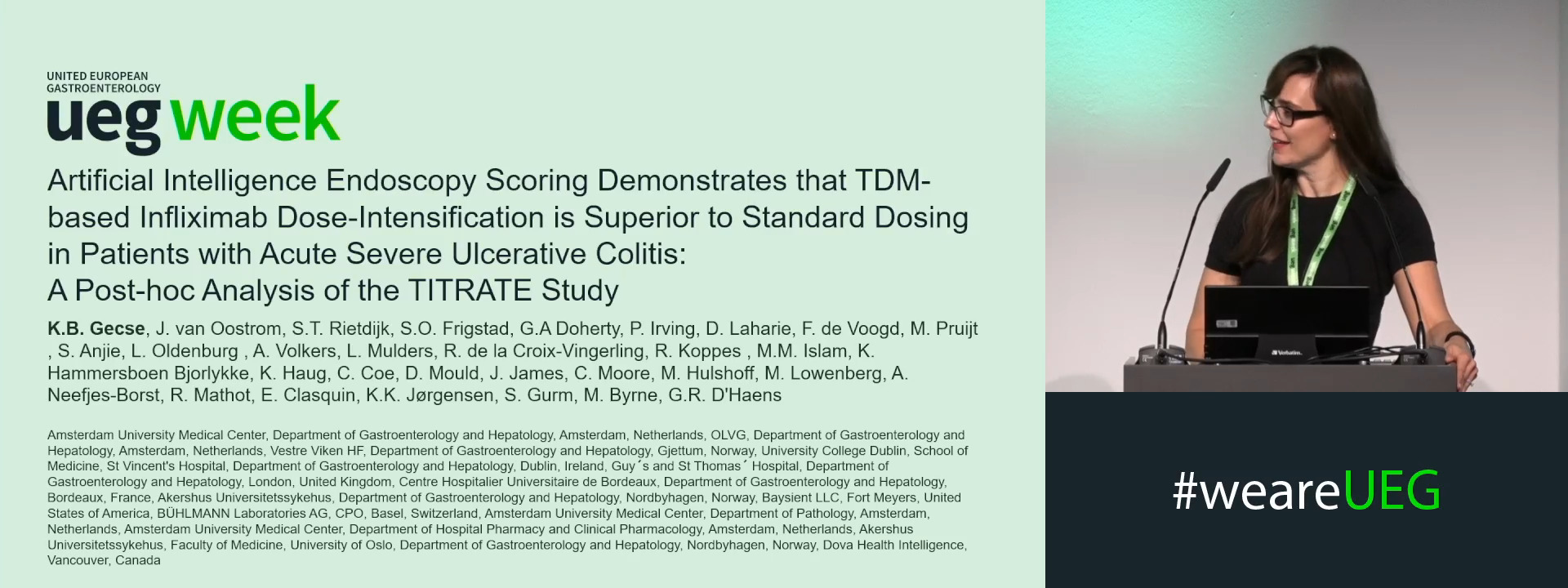
ARTIFICIAL INTELLIGENCE ENDOSCOPY SCORING DEMONSTRATES THAT TDM-BASED INFLIXIMAB DOSE-INTENSIFICATION IS SUPERIOR TO STANDARD DOSING IN PATIENTS WITH ACUTE SEVERE ULCERATIVE COLITIS: A POST-HOC ANALYSIS OF THE TITRATE STUDY

Log in to access this content.

Free for all myUEG account holders. Your access level is set automatically based on your occupation. Medical professionals get full access to all content. If you are a non-medical user, you can only access UEG Week content from congresses you attended.

Log In Create a free account

Not sure what you can access? Learn more about account types.

Introduction

Up to 40% of patients with acute severe ulcerative colitis (ASUC) do not respond to infliximab (IFX)(1) presumably due to insufficient drug exposure (1, 2). We investigated whether personalised IFX induction using predefined serum concentrations was superior to standard dosing.

Aims & Methods

In this prospective, multi-centre trial, adult IFX-naive steroid-refractory ASUC patients were randomised 1:1 to standard (SD) or personalised IFX dosing (PD). After an initial 5 mg/kg IFX infusion, SD was 5 mg/kg IFX at week 2 and 6. In PD, additional 5 mg/kg IFX infusions were administered guided by a Bayesian pharmacokinetic algorithm (iDose™) aiming at IFX serum concentrations >28 ug/mL day 0-28 and >15 ug/mL day 29-42 (3). The primary composite endpoint was clinical and endoscopic response at day 42 (Lichtiger score <10 and ≥3 points drop and UCEIS ≥2 points drop from baseline). Video-endoscopies were performed at baseline, day 42 and 182 and scored by 2 expert readers (XR) with adjudication by a third XR and post hoc also by the DovaVision UC AI tool (AI-R)(4). Key secondary endpoints were day 42 clinical response, day 42 endoscopic response, day 182 clinical remission (Lichtiger ≤3), day 182 endoscopic remission (UCEIS ≤1 on all components), and safety.

Results

48 patients were randomised (23 PD/25 SD) and 31 completed the 26-week study (19 PD/12 SD). Patient characteristics were comparable. Median cumulative IFX dose until day 42 was 18.41 mg/kg [1.77, 20.27] for PD vs 13.79 mg/kg [10.38, 14.82] for SD. The primary composite endpoint at day 42 was not met with XR (57% in PD vs 44% in SD; p=0.564). However, AI-R showed a significantly higher composite response rate in PD (74% in PD vs 32% in SD; p=0.0047). PD showed higher day 42 clinical response vs SD (91% vs 64%; p=0.039). Day 42 endoscopic response was observed in 57% in PD vs 44% in SD (p=0.564) with XR and 74% in PD vs 32% in SD with AI-R (p=0.0047). The proportion of patients in clinical and endoscopic remission at day 182 was higher in PD than in SD (65% vs 36%; p=0.082). Day 182 endoscopic remission with AI-R was higher in PD (52% in PD and 20% in SD; p=0.0337). SAEs occurred in 9% of patients on PD vs 20% of patients on SD. Following an interim analysis, the trial was discontinued based on futility.

Table 1. Baseline characteristics


Personalised treatment (n=23)Standard treatment (n=25)
Gender = Male (%)
11 (47.8)
15 (60.0)
Age (year) (median [IQR])
37.00 [24.50, 57.50]
42.00 [30.00, 56.00]
Disease duration (years) (median [IQR])
1.75 [0.62, 5.30]
6.16 [2.61, 17.21]
Naive to advanced therapy (%)
18 (78.3)
21 (84.0)
Lichtiger score (median [IQR])
14 [13, 16]
14 [12, 15]
Total Mayo score (median [IQR])
11 [11, 11]
11 [10, 11]
UCEIS (median [IQR])
6 [5, 7]
6 [5, 7]
CRP (mg/L) (median [IQR])
49.00 [35.70, 70.30]
51.00 [17.00, 105.00]
Albumin (g/L) (median [IQR])
26.00 [23.00, 30.50]
31.00 [23.00, 34.00]
Advanced therapy was defined as treatment with any biologics, JAK inhibitor or S1P modulator. IQR = interquartile range; UCEIS = Ulcerative Colitis Endoscopic Index of Severity, CRP = C-reactive protein.

Conclusion

Personalised IFX dosing was superior to standard dosing in ASUC when endoscopies were read by AI. This is the first IBD study where the primary endpoint, missed by expert assessment, was overturned and met by AI assessment instead. This demonstrates the potential of AI to fundamentally improve clinical trial methodology.

References

1. Seow CH, Newman A, Irwin SP, Steinhart AH, Silverberg MS, Greenberg GR. Trough serum infliximab: a predictive factor of clinical outcome for infliximab treatment in acute ulcerative colitis. Gut. 2010;59(1):49-54.
2. Papamichael K, Van Stappen T, Vande Casteele N, Gils A, Billiet T, Tops S, et al. Infliximab Concentration Thresholds During Induction Therapy Are Associated With Short-term Mucosal Healing in Patients With Ulcerative Colitis. Clin Gastroenterol Hepatol. 2016;14(4):543-9.
3. Ungar B, Mazor Y, Weisshof R, Yanai H, Ron Y, Goren I, et al. Induction infliximab levels among patients with acute severe ulcerative colitis compared with patients with moderately severe ulcerative colitis. Aliment Pharmacol Ther. 2016;43(12):1293-9.
4. Byrne M, Requa J, Panaccione R, Panes J, Bressler B, East JE, et al. Development and Validation of a novel AI-based computer vision solution for Ulcerative Colitis severity scoring on video for real world using high-volume expert-annotated video frames. United European Gastroenterol J. 2025 Oct.

Disclosure

This project received grant support from Pfizer Inc. and research support from Baysient LLC, Buhlmann Laboratories and Dova Health Intelligence.

ARTIFICIAL INTELLIGENCE ENDOSCOPY SCORING DEMONSTRATES THAT TDM-BASED INFLIXIMAB DOSE-INTENSIFICATION IS SUPERIOR TO STANDARD DOSING IN PATIENTS WITH ACUTE SEVERE ULCERATIVE COLITIS: A POST-HOC ANALYSIS OF THE TITRATE STUDY

Krisztina Barbara Gecse 1, Joep van Oostrom 1, Svend T. Rietdijk 2, Svein Oskar Frigstad 3, Glen A Doherty 4, Peter Irving 5, David Laharie 6, Floris de Voogd 1, Maarten Pruijt 1, Suzanne Anjie 1, Lotte Oldenburg 1, Adriaan Volkers 1, Lieven Mulders 1, Rossana de la Croix-Vingerling 2, Renza Koppes 2, Md Monirul Islam 3, Kristin Hammersboen Bjorlykke 7, Kine Haug 7, Carolann Coe 4, Diane Mould 8, John James 8, Chris Moore 9, Melanie Hulshoff 1, Mark Lowenberg 1, Andra Neefjes-Borst 1, Ron Mathôt 1, Esmé Clasquin 1, Kristin Kaasen Jørgensen 10, Sunny Gurm 11, Michael Byrne 11, Geert R. D'Haens 1

1 Amsterdam University Medical Center, Amsterdam, Netherlands

2 Onze Lieven Vrouwen Gasthuis, Amsterdam, Netherlands

3 Vestre Viken HF, Gjettum, Norway

4 University College Dublin, School of Medicine, St Vincent's Hospital, Dublin, Ireland

5 Guy´s and St Thomas´ Hospital, London, United Kingdom

6 Centre Hospitalier Universitaire de Bordeaux, Bordeaux, France

7 Akershus Universitetssykehus, Nordbyhagen, Norway

8 Baysient LLC, Fort Meyers, United States

9 BÜHLMANN Laboratories AG, Basel, Switzerland

10 Akershus Universitetssykehus, Faculty of Medicine, University of Oslo, Nordbyhagen, Norway

11 Dova Health Intelligence, Vancouver, Canada

Event

UEG Week Berlin 2025

Topics

Endoscopy IBD Mechanisms & Personalised Medicine

Submission format

Late-Breaking Abstract

Session

Hot off the press: IBD treatment

Citation

United European Gastroenterology Journal 2025; 13 (Supplement 8)

Published

2025
UEG Poster
Standard Poster
Share via Email Share on Facebook Share on X Share on LinkedIn Share on Bluesky

Log in to access this content.

Free for all myUEG account holders. Your access level is set automatically based on your occupation. Medical professionals get full access to all content. If you are a non-medical user, you can only access UEG Week content from congresses you attended.

Log In Create a free account

Not sure what you can access? Learn more about account types.

Introduction

In the United Kingdom (UK), the Royal College of Obstetricians and Gynaecology (RCOG) recommend that women who have sustained an obstetric anal sphincter injury (OASI) should undergo anorectal physiology testing (ARPT) to inform mode of delivery (MOD), where services are available [1]. ARPT is comprised of endoanal ultrasound (EAUS) which is considered the gold standard for assessing anal sphincter integrity [2,3], and high-resolution anorectal manometry (HR-ARM) for assessing motor and sensory function. However access to such services in the UK are limited, with 12.5% and 3.8% of women offered EAUS and ARM studies, respectively [2,4].

Aims & Methods

The prospective service evaluation assessed the impact of OASIs on anal sphincter anatomy and function, and reviewed the value of ARPT in MOD decision making.
Patients referred for MOD decision making underwent EAUS with the BK medical 3000 system with a 3D anorectal transducer (20R3' 6–16 MHz 360°) and HR-ARM with the Laborie water-perfused system. HR-ARM was performed in accordance with a limited version of the international anorectal physiology working group standardized testing protocol [5], and subsequently analysed in accordance with the London Classification of Anorectal Disorders [5]. Following discussion at a multi-disciplinary team meeting, patients were counselled with the ARPT results by their obstetrician in line with published guidance [6]. Postal feedback surveys were sent post-partum to assess patient experience and the impact of ARPT results on their delivery.

Results

24 pregnant patients with a previous OASI attended for ARPT during a 15 month period. Abnormalities which would encourage counselling for a C-section were identified in 12 patients. 7/12 patients had an external anal sphincter (EAS) defect >30°, 4 of which also had disruption to the internal anal sphincter (IAS). All 7 patients had normal anal contractility on HR-ARM. 1/7 patients had a hypotensive anal canal, disrupted IAS and reported faecal incontinence despite a normal stool consistency. 5/12 patients had anal hypocontractility on HR-ARM; 4 of whom had faecal urgency.
13 patients reported bowel symptoms, with the majority reporting faecal urgency (n=10) and 1 patient reporting Irritable Bowel Syndrome. Of the 13 symptomatic patients, EAUS identified significant defects in 15%, and HR-ARM identified abnormal tone or contractility in 31%. No symptomatic patients were identified to have a major or minor disorder of rectal sensation. 2 urgency patients reported loose stool.
6/18 (33%) patients completed feedback surveys after their delivery. All patients reported that counselling with ARPT results influenced their MOD decision, with 20% changing their intended MOD following ARPT. All patients were satisfied with their MOD choice.

Conclusion

HR-ARM identified 5 patients for C-section counselling, in addition to 7 patients identified by EAUS. There appeared to be poor agreement between EAUS defects and impaired manometric function. EAUS and HR-ARM identified significant anal sphincter impairment in 15% and 31% of symptomatic patients, respectively. This suggests that EAUS may lack sensitivity for identifying symptomatic cohorts, and that HR-ARM abnormality may be a more sensitive indicator of symptomology. This highlights the need to increase HR-ARM provision in perineal services.
Whilst the RCOG recommends counselling with the option of a C-section in all of the patients in this cohort [1], these findings suggest HR-ARM in addition to EAUS may offer a more individualised and collaborative approach to MOD delivery decision making.

References

  1. The Management of Third-and Fourth-Degree Perineal Tears Green-top Guideline No. 29. 2015. Available from: https://www.rcog.org.uk/media/5jeb5hzu/gtg-29.pdf. Accessed 24/04/2025.
  2. Badri H, et al. The role of anal manometry in the follow-up of women with obstetric anal sphincter injuries (OASI) . Int Urogynecol J. 2023;34:399–404.
  3. Santoro GA, et al. State of the art: an integrated approach to pelvic floor ultrasonography. Ultrasound Obstet Gynecol. 2011;37(4):381–96.
  4. Ismail SIMF. The management of obstetric anal sphincter injuries (OASIS): A national postal questionnaire survey in hospitals in the UK. J Obstet Gynaecol. 2015;35(3):229–34.
  5. Carrington EV, et al. The international anorectal physiology working group (IAPWG) recommendations: Standardized testing protocol and the London classification for disorders of anorectal function. Neurogastroenterology and motility. 2020;32(1): e13679.
  6. Jordan PA, et al. Effect of subsequent vaginal delivery on bowel symptoms and anorectal function in women who sustained a previous obstetric anal sphincter injury. International Urogynaecology Journal. 2018;29(11):579-1588.
HIGH RESOLUTION ANORECTAL MANOMETRY MAY BE CONSIDERED AN ESSENTIAL INVESTIGATION TO INFORM MODE OF DELIVERY DECISION MAKING IN PREGNANT PATIENTS WITH A PREVIOUS OASI; A PROSPECTIVE SERVICE EVALUATION

HIGH RESOLUTION ANORECTAL MANOMETRY MAY BE CONSIDERED AN ESSENTIAL INVESTIGATION TO INFORM MODE OF DELIVERY DECISION MAKING IN PREGNANT PATIENTS WITH A PREVIOUS OASI; A PROSPECTIVE SERVICE EVALUATION

Jade Devenney 1, Grace Fairlamb 1, Catherine Sykes 1, James Blake 1, Natalie Page 1, Mark Fox 2, Helen Parker 1

1 Newcastle upon Tyne Hospitals NHS Foundation Trust, Newcastle upon Tyne, United Kingdom|||County Durham and Darlington NHS Foundation Trust, Durham, United Kingdom

2 University Hospital Zurich, Zürich, Switzerland|||Klinik Arlesheim & Zürich University, Arlesheim, Switzerland

Conference

UEG Week Berlin 2025

Topics

Colorectal

Submission format

Abstract

Session

Constipation and defaecatory disorders (Posters)

Citation

United European Gastroenterology Journal 2025; 13 (Supplement 8)

Published

2025

The global reference point for the digestive health community

Platform Publisher

United European Gastroenterology

Wickenburggasse 1 1080 Vienna, Austria

Contact us

support@ueg.eu

ueg.eu

T: +43 1 997 1639

Legal

Terms & Conditions

Imprint

Privacy Policy

Explore

My Bookmarks

My recommendations

My fields of interest

© 2026 United European Gastroenterology

Change fields of interest

These fields are selected based on the interests in your myUEG profile.
Click the item to unselect it. You can select multiple items.