UEG Week Recordings UEG Week Posters Online courses Guidelines Mistakes in... Podcasts Webinars
new
Gut Guide online
Visit ueg.eu Create myUEG account Log In

Filters:

UEG Presentation
Share via Email Share on Facebook Share on X Share on LinkedIn Share on Bluesky
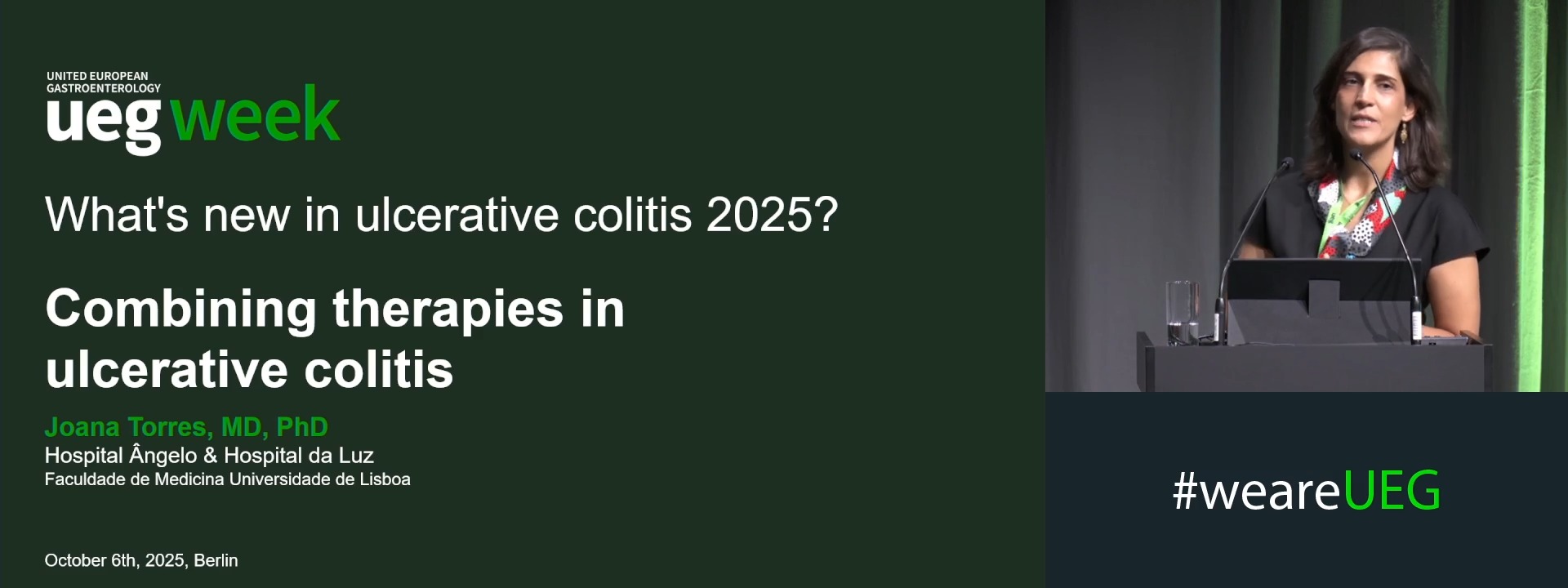
Combining therapies in ulcerative colitis

Log in to continue.

This content is part of Gutflix. Log in with your myUEG account, or create one free, to watch it.

Log In Create a free account

Not sure what you can access? Learn more about account types.

Combining therapies in ulcerative colitis

Joana Torres 1

Affiliations

1 Division of Gastroenterology, Hospital Beatriz Ângelo, Loures, Portugal
Summary

AI Generated

Advanced combination therapy (ACT) in ulcerative colitis—combining two biologics or a biologic with a small molecule—shows promise for refractory disease and extra-intestinal manifestations, with no major safety signals in early studies, though the approach remains off-label and largely empirical.

  • The speaker reported that current monotherapies achieve clinical remission at one year in under 50% of advanced-therapy-naive patients and even lower rates in bio-exposed patients, according to data from Mount Sinai.
  • The Vega trial randomised patients to golimumab monotherapy, guselkumab monotherapy, or combination; the speaker stated that combination was numerically better than guselkumab and significantly better than golimumab for the primary endpoint of clinical response at week 12, and outperformed monotherapy for stricter endpoints like endoscopic improvement.
  • Real-world evidence from retrospective studies shows roughly 60% clinical remission and 30% endoscopic remission with ACT, with infections reported but serious infections not occurring at higher rates than with monotherapy, the speaker stated.
  • The speaker noted that ACT has been used mostly for refractory disease or concomitant extra-intestinal manifestations, with ustekinumab, IL-23 inhibitors, or vedolizumab as common backbones, and that recycling previously failed agents is attempted with reasonable success.
  • The speaker suggested that ACT could be considered for patients with partial responses to achieve deeper remission, for high-risk patients via co-induction strategies, and potentially earlier to prevent therapeutic resistance, though this should be done in centres with adequate monitoring and safety resources.
  • The speaker stated that ACT remains off-label and largely empirical, as validated biomarkers to guide combination therapy do not exist, and emphasised the need for appropriately powered randomised controlled trials and large observational studies to assess long-term safety including malignancy risk.
Download PDF

Was this helpful?

Thanks for your feedback.

This summary was generated by an AI large language model based on the content transcript. It is for informational purposes only and should not be considered a substitute for clinical judgment. Always rely on your professional expertise and the full clinical context when making clinical decisions.

Abstract

Event

UEG Week Berlin 2025

Topics

IBD Mechanisms & Personalised Medicine Paediatrics Surgery

Session

What's new in ulcerative colitis 2025?

Citation

United European Gastroenterology Journal 2025; 13 (Supplement 8)

Published

2025

More Like This:

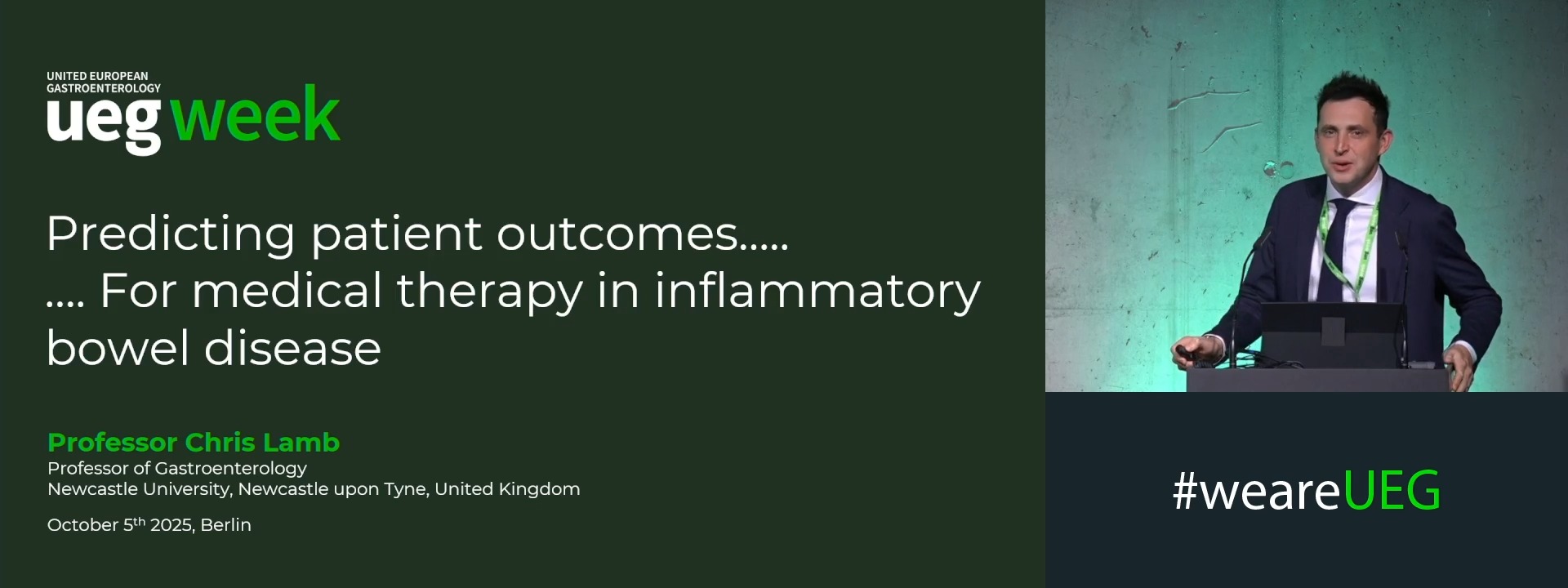
... for medical therapy in inflammatory bowel diseases

... for medical therapy in inflammatory bowel diseases

Chris Lamb Chris Lamb

Early diet and the risk of coeliac disease. An update 2024 position paper by the ESPGHAN special interest group on coeliac disease

Early diet and the risk of coeliac disease. An update 2024 position paper by the ESPGHAN special interest group on coeliac disease

Hania Szajewska Hania Szajewska

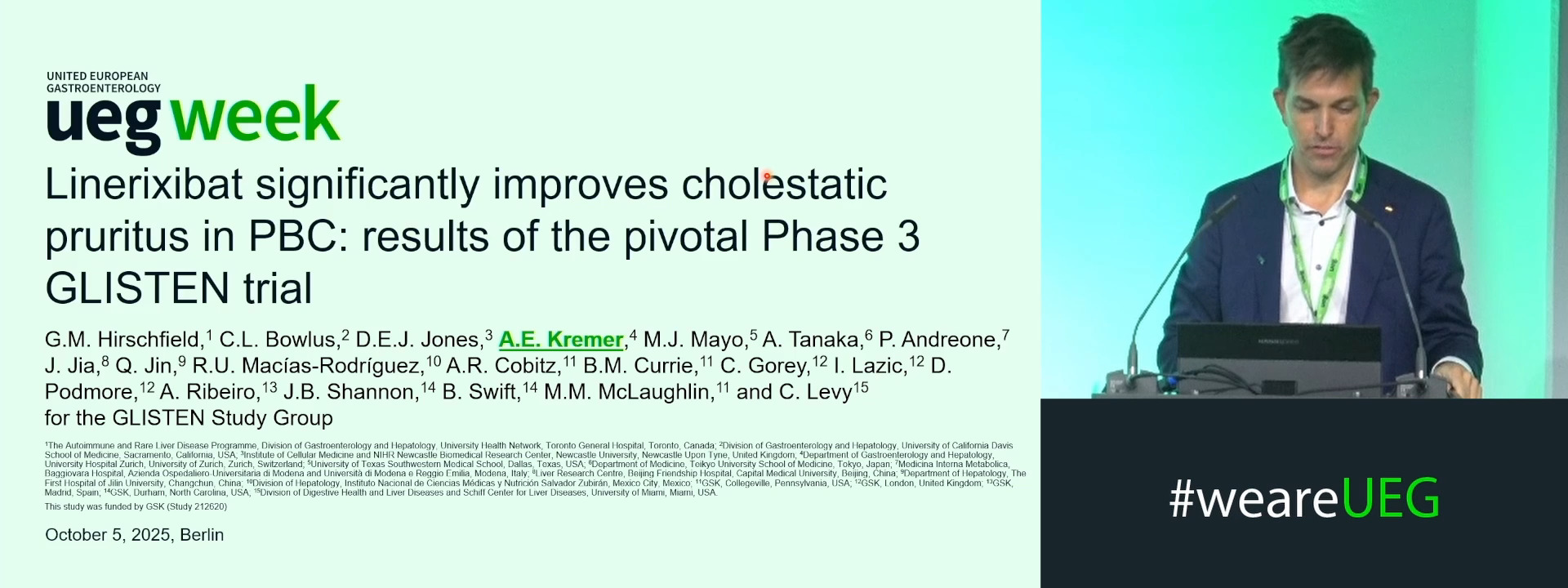
LINERIXIBAT SIGNIFICANTLY IMPROVES CHOLESTATIC PRURITUS IN PRIMARY BILIARY CHOLANGITIS: RESULTS OF THE PIVOTAL PHASE 3 GLISTEN TRIAL

LINERIXIBAT SIGNIFICANTLY IMPROVES CHOLESTATIC PRURITUS IN PRIMARY BILIARY CHOLANGITIS: RESULTS OF THE PIVOTAL PHASE 3 GLISTEN TRIAL

Cynthia Levy Cynthia Levy, Megan M. McLaughlin, Brandon Swift, Jennifer B. Shannon, Andrea Ribiero, Danielle J. Podmore, Ivana Lazic, Ciara Gorey, Brooke M. Currie, Alexander R. Cobitz, Ricardo Macias-Rodriguez, Qinglong Jin, Jidong Jia, Pietro Andreone, Atsushi Tanaka, Marlyn J. Mayo, Andreas E. Kremer, David Jones, Christopher L. Bowlus, Gideon M. Hirschfield

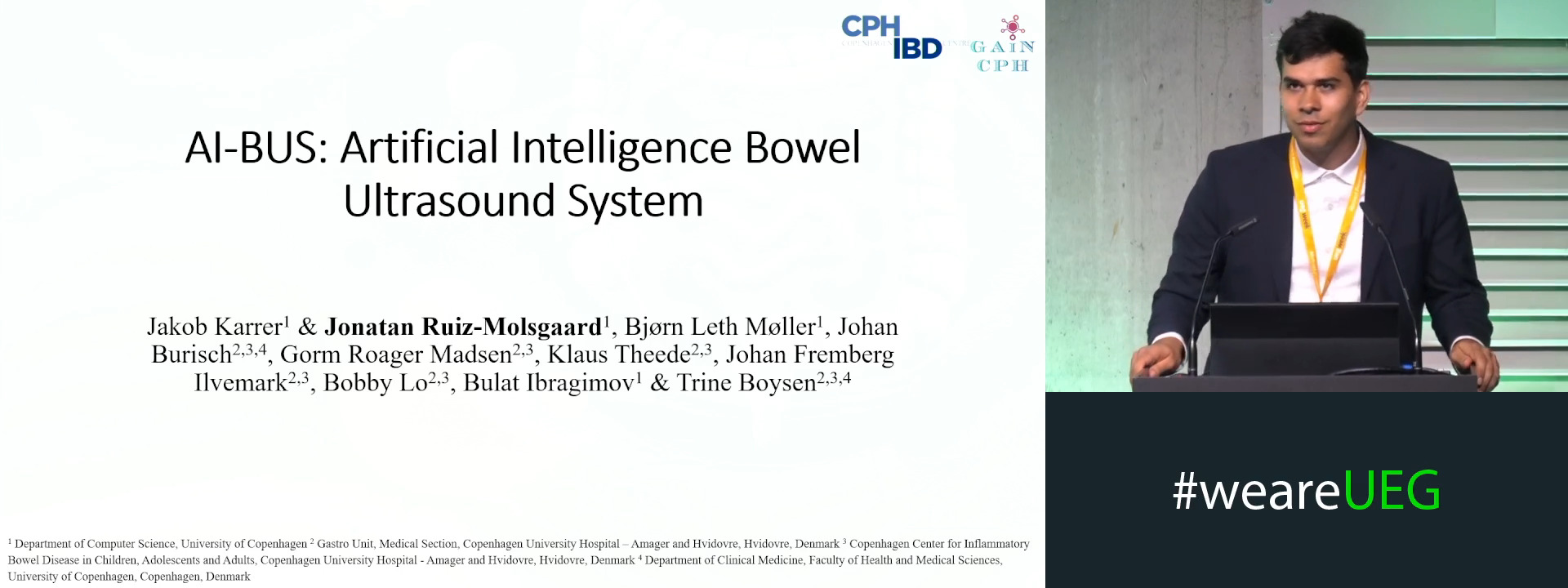
AI-BUS: ARTIFICIAL INTELLIGENCE BOWEL ULTRASOUND SYSTEM

AI-BUS: ARTIFICIAL INTELLIGENCE BOWEL ULTRASOUND SYSTEM

Trine Boysen Trine Boysen, Bulat Ibragimov, Johan Burisch, Klaus Theede, Johan Fremberg Ilvemark, Gorm Roager Madsen, Bjørn Leth Møller, Bobby Lo, Jakob Karrer, Jonatan Ruiz-Molsgaard

How to handle the frail

How to handle the frail

Jonas Halfvarson Jonas Halfvarson

Nutritional management of small intestinal enteropathies

Nutritional management of small intestinal enteropathies

Francisca Joly Francisca Joly

UEG Presentation
Share via Email Share on Facebook Share on X Share on LinkedIn Share on Bluesky
... for medical therapy in inflammatory bowel diseases

Log in to continue.

This content is part of Gutflix. Log in with your myUEG account, or create one free, to watch it.

Log In Create a free account

Not sure what you can access? Learn more about account types.

... for medical therapy in inflammatory bowel diseases

Chris Lamb 1

Affiliations

1 Newcastle Hospitals NHS Foundation Trust, Newcastle, United Kingdom
Summary

AI Generated

Summary is not available for this content yet.

Download PDF

Was this helpful?

Thanks for your feedback.

This summary was generated by an AI large language model based on the content transcript. It is for informational purposes only and should not be considered a substitute for clinical judgment. Always rely on your professional expertise and the full clinical context when making clinical decisions.

Abstract

Event

UEG Week Berlin 2025

Topics

Colorectal IBD Surgery

Session

Predicting patient outcomes...

Citation

United European Gastroenterology Journal 2025; 13 (Supplement 8)

Published

2025

More Like This:

... for medical therapy in inflammatory bowel diseases

... for medical therapy in inflammatory bowel diseases

Chris Lamb Chris Lamb

Early diet and the risk of coeliac disease. An update 2024 position paper by the ESPGHAN special interest group on coeliac disease

Early diet and the risk of coeliac disease. An update 2024 position paper by the ESPGHAN special interest group on coeliac disease

Hania Szajewska Hania Szajewska

LINERIXIBAT SIGNIFICANTLY IMPROVES CHOLESTATIC PRURITUS IN PRIMARY BILIARY CHOLANGITIS: RESULTS OF THE PIVOTAL PHASE 3 GLISTEN TRIAL

LINERIXIBAT SIGNIFICANTLY IMPROVES CHOLESTATIC PRURITUS IN PRIMARY BILIARY CHOLANGITIS: RESULTS OF THE PIVOTAL PHASE 3 GLISTEN TRIAL

Cynthia Levy Cynthia Levy, Megan M. McLaughlin, Brandon Swift, Jennifer B. Shannon, Andrea Ribiero, Danielle J. Podmore, Ivana Lazic, Ciara Gorey, Brooke M. Currie, Alexander R. Cobitz, Ricardo Macias-Rodriguez, Qinglong Jin, Jidong Jia, Pietro Andreone, Atsushi Tanaka, Marlyn J. Mayo, Andreas E. Kremer, David Jones, Christopher L. Bowlus, Gideon M. Hirschfield

AI-BUS: ARTIFICIAL INTELLIGENCE BOWEL ULTRASOUND SYSTEM

AI-BUS: ARTIFICIAL INTELLIGENCE BOWEL ULTRASOUND SYSTEM

Trine Boysen Trine Boysen, Bulat Ibragimov, Johan Burisch, Klaus Theede, Johan Fremberg Ilvemark, Gorm Roager Madsen, Bjørn Leth Møller, Bobby Lo, Jakob Karrer, Jonatan Ruiz-Molsgaard

How to handle the frail

How to handle the frail

Jonas Halfvarson Jonas Halfvarson

Nutritional management of small intestinal enteropathies

Nutritional management of small intestinal enteropathies

Francisca Joly Francisca Joly

UEG Standards and Guidelines
Position Paper
Share via Email Share on Facebook Share on X Share on LinkedIn Share on Bluesky

Log in to continue.

This content is part of Gutflix. Log in with your myUEG account, or create one free, to watch it.

Log In Create a free account

Not sure what you can access? Learn more about account types.

Early diet and the risk of coeliac disease. An update 2024 position paper by the ESPGHAN special interest group on coeliac disease

Hania Szajewska

Summary

AI Generated

Summary is not available for this content yet.

Download PDF

Was this helpful?

Thanks for your feedback.

This summary was generated by an AI large language model based on the content transcript. It is for informational purposes only and should not be considered a substitute for clinical judgment. Always rely on your professional expertise and the full clinical context when making clinical decisions.

Guideline

Abstract

This position paper by the European Society for Paediatric Gastroenterology, Hepatology and Nutrition (ESPGHAN) Special Interest Group on Coeliac Disease (SIG-CD) presents an update to the 2016 recommendations concerning early diet and the risk of coeliac disease (CD). This update adheres to the policy that mandates reviewing guidelines every 5 years, particularly when new data emerge. The 2024 statements and recommendations are essentially similar to the 2016 recommendations. Breastfeeding, whether any amount, exclusive, or of any duration, does not reduce the risk of developing CD. Introducing gluten into an infant's diet at any time between completed 4 months (≥17 weeks) and 12 months of age does not affect the cumulative incidence of CD, although earlier introduction may lead to earlier seroconversion and CD. In observational studies involving cohorts with a known risk for CD, consuming a high amount of gluten compared to a low amount during weaning and in the subsequent childhood years—specifically the first 2–3 years, and even up to 5 years in some studies—was associated with an increased risk for CD. However, the specific optimal amounts of gluten consumption remain undetermined due to insufficient evidence on safe thresholds, and the impact of restricting gluten in the diet of healthy children of unknown risk for CD is unknown. Thus, any recommendation on the gluten amount is currently unjustifiable for the general population and infants with known HLA risk types. There is no specific guidance on the type of gluten-containing foods to be introduced at weaning.

Publisher

European Society for Paediatric Gastroenterology, Hepatology and Nutrition logo
European Society for Paediatric Gastroenterology, Hepatology and Nutrition

Guideline

Position Paper

Topics

Immunology Paediatrics Small Intestine & Nutrition

Citation

J Pediatr Gastroenterol Nutr. 2024;79:438–445

Published

2024

More Like This:

... for medical therapy in inflammatory bowel diseases

... for medical therapy in inflammatory bowel diseases

Chris Lamb Chris Lamb

Early diet and the risk of coeliac disease. An update 2024 position paper by the ESPGHAN special interest group on coeliac disease

Early diet and the risk of coeliac disease. An update 2024 position paper by the ESPGHAN special interest group on coeliac disease

Hania Szajewska Hania Szajewska

LINERIXIBAT SIGNIFICANTLY IMPROVES CHOLESTATIC PRURITUS IN PRIMARY BILIARY CHOLANGITIS: RESULTS OF THE PIVOTAL PHASE 3 GLISTEN TRIAL

LINERIXIBAT SIGNIFICANTLY IMPROVES CHOLESTATIC PRURITUS IN PRIMARY BILIARY CHOLANGITIS: RESULTS OF THE PIVOTAL PHASE 3 GLISTEN TRIAL

Cynthia Levy Cynthia Levy, Megan M. McLaughlin, Brandon Swift, Jennifer B. Shannon, Andrea Ribiero, Danielle J. Podmore, Ivana Lazic, Ciara Gorey, Brooke M. Currie, Alexander R. Cobitz, Ricardo Macias-Rodriguez, Qinglong Jin, Jidong Jia, Pietro Andreone, Atsushi Tanaka, Marlyn J. Mayo, Andreas E. Kremer, David Jones, Christopher L. Bowlus, Gideon M. Hirschfield

AI-BUS: ARTIFICIAL INTELLIGENCE BOWEL ULTRASOUND SYSTEM

AI-BUS: ARTIFICIAL INTELLIGENCE BOWEL ULTRASOUND SYSTEM

Trine Boysen Trine Boysen, Bulat Ibragimov, Johan Burisch, Klaus Theede, Johan Fremberg Ilvemark, Gorm Roager Madsen, Bjørn Leth Møller, Bobby Lo, Jakob Karrer, Jonatan Ruiz-Molsgaard

How to handle the frail

How to handle the frail

Jonas Halfvarson Jonas Halfvarson

Nutritional management of small intestinal enteropathies

Nutritional management of small intestinal enteropathies

Francisca Joly Francisca Joly

UEG Presentation
Share via Email Share on Facebook Share on X Share on LinkedIn Share on Bluesky
LINERIXIBAT SIGNIFICANTLY IMPROVES CHOLESTATIC PRURITUS IN PRIMARY BILIARY CHOLANGITIS: RESULTS OF THE PIVOTAL PHASE 3 GLISTEN TRIAL

Log in to continue.

This content is part of Gutflix. Log in with your myUEG account, or create one free, to watch it.

Log In Create a free account

Not sure what you can access? Learn more about account types.

LINERIXIBAT SIGNIFICANTLY IMPROVES CHOLESTATIC PRURITUS IN PRIMARY BILIARY CHOLANGITIS: RESULTS OF THE PIVOTAL PHASE 3 GLISTEN TRIAL

Gideon M. Hirschfield 1, Christopher L. Bowlus 2, David Jones 3, Andreas E. Kremer 4, Marlyn J. Mayo 5, Atsushi Tanaka 6, Pietro Andreone 7, Jidong Jia 8, Qinglong Jin 9, Ricardo Macias-Rodriguez 10, Alexander R. Cobitz 11, Brooke M. Currie 11, Ciara Gorey 12, Ivana Lazic 12, Danielle J. Podmore 12, Andrea Ribiero 13, Jennifer B. Shannon 14, Brandon Swift 14, Megan M. McLaughlin 11, Cynthia Levy 15

Affiliations

1 Toronto General Hospital, Toronto, Canada

2 University of California Davis School of Medicine, Sacramento, United States

3 Newcastle University, Newcastle Upon Tyne, United Kingdom

4 University Hospital Zurich, Zurich, Switzerland

5 University of Texas Southwestern Medical School, Dallas, United States

6 Teikyo University School of Medicine, Tokyo, Japan

7 Azienda Ospedaliero-Universitaria di Modena and Università di Modena e Reggio Emilia, Modena, Italy

8 Capital Medical University, Beijing, China

9 The First Hospital of Jilin University, Changchun, China

10 Instituto Nacional de Ciencias Médicas y Nutrición Salvador Zubirán, Mexico City, Mexico

11 GSK, Collegeville, United States

12 GSK, London, United Kingdom

13 GSK, Madrid, Spain

14 GSK, Durham, United States

15 University of Miami, Miami, United States
Summary

AI Generated

Summary is not available for this content yet.

Download PDF

Was this helpful?

Thanks for your feedback.

This summary was generated by an AI large language model based on the content transcript. It is for informational purposes only and should not be considered a substitute for clinical judgment. Always rely on your professional expertise and the full clinical context when making clinical decisions.

Abstract

Introduction

Cholestatic pruritus is common, debilitating and undertreated in patients with primary biliary cholangitis (PBC). Here, we describe the results of GLISTEN (NCT04950127), a Phase 3 study investigating the efficacy and safety of the ileal bile acid transporter inhibitor linerixibat for pruritus in PBC.

Aims & Methods

In this double-blind, randomised, placebo-controlled study, patients with PBC and moderate-to-severe pruritus received oral linerixibat 40 mg or placebo twice daily. Pruritus severity and pruritus-related sleep interference were assessed using a 0–10 numerical rating scale. The primary endpoint was change from baseline in worst itch over 24 weeks. Secondary endpoints included: at Week 2, change in worst itch; over 24 weeks, change in sleep interference; at Week 24, proportion of responders (≥ 2-, ≥ 3-, ≥ 4-point reduction in worst itch) and analysis of responses to 2 patient global impression items (itch severity and change). Safety endpoints included adverse event (AE) reporting.

Results

238 patients were randomised; 95% were female, itch severity was mean (standard deviation [SD]) 7.34 (1.54), 52% had alkaline phosphatase < 1.67 times upper limit of normal, and 47% were receiving stable therapy for pruritus. Pruritus improvement over 24 weeks was significantly greater with linerixibat than placebo: least-squares (LS) mean change -2.86 versus -2.15, adjusted mean difference -0.72; p = 0.001. At Week 24, the observed mean (SD) difference from baseline in pruritus was -3.66 (2.50) with linerixibat and -2.82 (2.32) with placebo. The effect of linerixibat was rapid and superior to placebo at Week 2: LS mean change -1.78 versus -1.07, adjusted mean difference -0.71; p < 0.001. Linerixibat also significantly improved pruritus-related sleep interference over 24 weeks versus placebo: LS mean change ‑2.77 versus -2.24, adjusted mean difference -0.53; p = 0.024. At Week 24, more patients on linerixibat than placebo achieved a ≥ 2-point (68% vs 64%), ≥ 3-point (56% vs 43%) or ≥ 4-point (41% vs 29%) reduction in pruritus and a higher proportion of linerixibat than placebo-treated patients reported their pruritus was very much improved (55% vs 37%) or absent (21% vs 9%). AEs reported more frequently with linerixibat than placebo were predominantly gastrointestinal (GI), including diarrhoea (61% vs 18% of patients) and abdominal pain (18% vs 3% of patients); 4% of patients in the linerixibat group discontinued treatment due to diarrhoea.

Conclusion

In patients with PBC and moderate-to-severe pruritus, linerixibat rapidly and significantly improved pruritus and pruritus-related sleep interference versus placebo. While GI AEs were more common with linerixibat than placebo, they rarely led to treatment discontinuation.

Disclosure

Funded by GSK. Various authors declare conflicts of interest as consultants, employee, recipients of grants and stockholders. These will be reported in full during the presentation.

Event

UEG Week Berlin 2025

Topics

Hepatobiliary Immunology Mechanisms & Personalised Medicine

Submission format

Abstract

Session

Advances in management of immune-mediated biliary disease

Citation

United European Gastroenterology Journal 2025; 13 (Supplement 8)

Published

2025

More Like This:

... for medical therapy in inflammatory bowel diseases

... for medical therapy in inflammatory bowel diseases

Chris Lamb Chris Lamb

Early diet and the risk of coeliac disease. An update 2024 position paper by the ESPGHAN special interest group on coeliac disease

Early diet and the risk of coeliac disease. An update 2024 position paper by the ESPGHAN special interest group on coeliac disease

Hania Szajewska Hania Szajewska

LINERIXIBAT SIGNIFICANTLY IMPROVES CHOLESTATIC PRURITUS IN PRIMARY BILIARY CHOLANGITIS: RESULTS OF THE PIVOTAL PHASE 3 GLISTEN TRIAL

LINERIXIBAT SIGNIFICANTLY IMPROVES CHOLESTATIC PRURITUS IN PRIMARY BILIARY CHOLANGITIS: RESULTS OF THE PIVOTAL PHASE 3 GLISTEN TRIAL

Cynthia Levy Cynthia Levy, Megan M. McLaughlin, Brandon Swift, Jennifer B. Shannon, Andrea Ribiero, Danielle J. Podmore, Ivana Lazic, Ciara Gorey, Brooke M. Currie, Alexander R. Cobitz, Ricardo Macias-Rodriguez, Qinglong Jin, Jidong Jia, Pietro Andreone, Atsushi Tanaka, Marlyn J. Mayo, Andreas E. Kremer, David Jones, Christopher L. Bowlus, Gideon M. Hirschfield

AI-BUS: ARTIFICIAL INTELLIGENCE BOWEL ULTRASOUND SYSTEM

AI-BUS: ARTIFICIAL INTELLIGENCE BOWEL ULTRASOUND SYSTEM

Trine Boysen Trine Boysen, Bulat Ibragimov, Johan Burisch, Klaus Theede, Johan Fremberg Ilvemark, Gorm Roager Madsen, Bjørn Leth Møller, Bobby Lo, Jakob Karrer, Jonatan Ruiz-Molsgaard

How to handle the frail

How to handle the frail

Jonas Halfvarson Jonas Halfvarson

Nutritional management of small intestinal enteropathies

Nutritional management of small intestinal enteropathies

Francisca Joly Francisca Joly

UEG Presentation
Share via Email Share on Facebook Share on X Share on LinkedIn Share on Bluesky
AI-BUS: ARTIFICIAL INTELLIGENCE BOWEL ULTRASOUND SYSTEM

Log in to continue.

This content is part of Gutflix. Log in with your myUEG account, or create one free, to watch it.

Log In Create a free account

Not sure what you can access? Learn more about account types.

AI-BUS: ARTIFICIAL INTELLIGENCE BOWEL ULTRASOUND SYSTEM

Jonatan Ruiz-Molsgaard 1,2, Jakob Karrer 1,2, Bobby Lo 2, Bjørn Leth Møller 1, Gorm Roager Madsen 2, Johan Fremberg Ilvemark 3, Klaus Theede 2, Johan Burisch 2, Bulat Ibragimov 1, Trine Boysen 2

Affiliations

1 University of copenhagen, Copenhagen, Denmark

2 Hvidovre Hospital, Hvidovre, Denmark

3 Herlev University Hospital, Hvidovre, Denmark
Summary

AI Generated

Summary is not available for this content yet.

Download PDF

Was this helpful?

Thanks for your feedback.

This summary was generated by an AI large language model based on the content transcript. It is for informational purposes only and should not be considered a substitute for clinical judgment. Always rely on your professional expertise and the full clinical context when making clinical decisions.

Abstract

Introduction

Inflammatory Bowel Disease (IBD)1,2 requires close monitoring to detect flare ups early and guide treatment. While endoscopy is the gold standard, it is invasive, costly, and uncomfortable1,2. Intestinal Ultrasound (IUS) is a non-invasive alternative with strong correlation to endoscopic findings—especially bowel wall thickness (BWT), a marker of disease activity3. Nevertheless, IUS remains limited due to operator dependence and a steep learning curve4.
AI has improved consistency in other domains, e.g. endoscopic evaluation, but its application to IUS in IBD remains underexplored. Prior models lack interpretability and require manual image cropping, or are trained on ideal, selected data, limiting clinical use5,6.

Aims & Methods

We aim to develop a deep-learning model that automatically identifies and paints the bowel wall and measures BWT directly from raw clinical IUS images.
A training dataset of 570 images from 144 IUS videos and a testing dataset of 55 images from 55 separate exams were created. All images were extracted from previously performed IUS examinations reflecting real-world variation, including e.g. unclear boundaries and artefacts.
All images were annotated by International Bowel Ultrasound Group (IBUS) certified experts, including outline-paintings of the inner and outer bowel wall and two BWT measurements.
The AI consists of a combination of Convolutional neural networks and other image processing algorithms.
Evaluation included BWT error against the expert mean, classification accuracy using the standard IBUS 3 mm threshold3, and a leave-one-out comparison with individual doctors.

Results

The model produced predictions on 54 of 55 test images.
The model deviated from the gold standard mean by 0.98 mm (SD 1.1 mm) per image on the regression task. The average distance to expert-defined bounds was 0.44 mm (SD 0.89 mm), with 59% of predictions inside this range.
For classification (using a 3 mm threshold), the model reached an accuracy of 0.77, sensitivity of 0.69, specificity of 0.94, and Cohen’s Kappa of 0.56.
In the leave-one-out analysis, expert performance ranged from 0.89–0.93 accuracy and 0.79–0.83 Kappa. Depending on which expert was excluded from the gold standard, the model achieved 0.74–0.80 accuracy and 0.49–0.60 Kappa. Experts stayed within expert-defined bounds in 72–81% of cases, while the model did so in 46–55%.

Conclusion

Clinically, the model performed well. An error of 0.5–1 mm is negligible in practice and matches typical variation in manual measurements. Many real-world test images had BWT values near the 3 mm threshold, so small deviations led to misclassifications. In practice, a 2.5 mm reading could still raise concerns based on symptoms3.
While the system alone cannot provide expert-level BWT measurements, it could provide assistance to experts as well as non-expert and junior doctors, especially in locating the bowel, which is an essential part of IUS.
The model works on unprocessed clinical data, with the only selection criteria being that there is an identifiable bowel segment, measurable by an IBUS-certified doctor. Allowing the images to reflect realistic conditions
In summary, we developed an AI model that identifies the bowel and measures BWT with acceptable accuracy. We have already started the processes of collecting video data, to extend the AI’s functionality to a fully clinical setting.

References

1. Torres J, Mehandru S, Colombel JF, Peyrin-Biroulet L. Crohn’s disease. The Lancet. 2017;389(10080):1741-1755. doi:10.1016/S0140-6736(16)31711-1
2. Ungaro R, Mehandru S, Allen PB, Peyrin-Biroulet L, Colombel JF. Ulcerative colitis. Lancet. 2017;389(10080):1756-1770. doi:10.1016/S0140-6736(16)32126-2
3. Novak KL, Group I, Nylund K, et al. Expert Consensus on Optimal Acquisition and Development of the International Bowel Ultrasound Segmental Activity Score [IBUS-SAS]: A Reliability and Inter-rater Variability Study on Intestinal Ultrasonography in Crohn’s Disease. J Crohns Colitis. 2021;15(4):609-616. doi:10.1093/ECCO-JCC/JJAA216
4 Bove L, Meyer J, Collins M, Frampas E, Bourreille A, Le Berre C. Understanding the learning curve of intestinal ultrasound in inflammatory bowel disease: A comparative study between novice, regular, and expert. Clin Res Hepatol Gastroenterol. 2025;49(3):102548. doi:10.1016/J.CLINRE.2025.102548
5. Kumaralingam L, Le May K, Dang VB, Alavi J, Huynh HQ, Le LH. Artificial intelligence-assisted approach to assessing bowel wall thickness in pediatric inflammatory bowel disease using intestinal ultrasound images. J Crohns Colitis. 2025;19(4). doi:10.1093/ECCO-JCC/JJAF037
6. Carter D, Albshesh A, Shimon C, et al. Automatized Detection of Crohn’s Disease in Intestinal Ultrasound Using Convolutional Neural Network. Inflamm Bowel Dis. February 2023:1-6. doi:10.1093/IBD/IZAD014


Event

UEG Week Berlin 2025

Topics

IBD

Submission format

Abstract

Session

Artificial intelligence in IBD

Citation

United European Gastroenterology Journal 2025; 13 (Supplement 8)

Published

2025

More Like This:

... for medical therapy in inflammatory bowel diseases

... for medical therapy in inflammatory bowel diseases

Chris Lamb Chris Lamb

Early diet and the risk of coeliac disease. An update 2024 position paper by the ESPGHAN special interest group on coeliac disease

Early diet and the risk of coeliac disease. An update 2024 position paper by the ESPGHAN special interest group on coeliac disease

Hania Szajewska Hania Szajewska

LINERIXIBAT SIGNIFICANTLY IMPROVES CHOLESTATIC PRURITUS IN PRIMARY BILIARY CHOLANGITIS: RESULTS OF THE PIVOTAL PHASE 3 GLISTEN TRIAL

LINERIXIBAT SIGNIFICANTLY IMPROVES CHOLESTATIC PRURITUS IN PRIMARY BILIARY CHOLANGITIS: RESULTS OF THE PIVOTAL PHASE 3 GLISTEN TRIAL

Cynthia Levy Cynthia Levy, Megan M. McLaughlin, Brandon Swift, Jennifer B. Shannon, Andrea Ribiero, Danielle J. Podmore, Ivana Lazic, Ciara Gorey, Brooke M. Currie, Alexander R. Cobitz, Ricardo Macias-Rodriguez, Qinglong Jin, Jidong Jia, Pietro Andreone, Atsushi Tanaka, Marlyn J. Mayo, Andreas E. Kremer, David Jones, Christopher L. Bowlus, Gideon M. Hirschfield

AI-BUS: ARTIFICIAL INTELLIGENCE BOWEL ULTRASOUND SYSTEM

AI-BUS: ARTIFICIAL INTELLIGENCE BOWEL ULTRASOUND SYSTEM

Trine Boysen Trine Boysen, Bulat Ibragimov, Johan Burisch, Klaus Theede, Johan Fremberg Ilvemark, Gorm Roager Madsen, Bjørn Leth Møller, Bobby Lo, Jakob Karrer, Jonatan Ruiz-Molsgaard

How to handle the frail

How to handle the frail

Jonas Halfvarson Jonas Halfvarson

Nutritional management of small intestinal enteropathies

Nutritional management of small intestinal enteropathies

Francisca Joly Francisca Joly

UEG Presentation
Share via Email Share on Facebook Share on X Share on LinkedIn Share on Bluesky
How to handle the frail

Log in to continue.

This content is part of Gutflix. Log in with your myUEG account, or create one free, to watch it.

Log In Create a free account

Not sure what you can access? Learn more about account types.

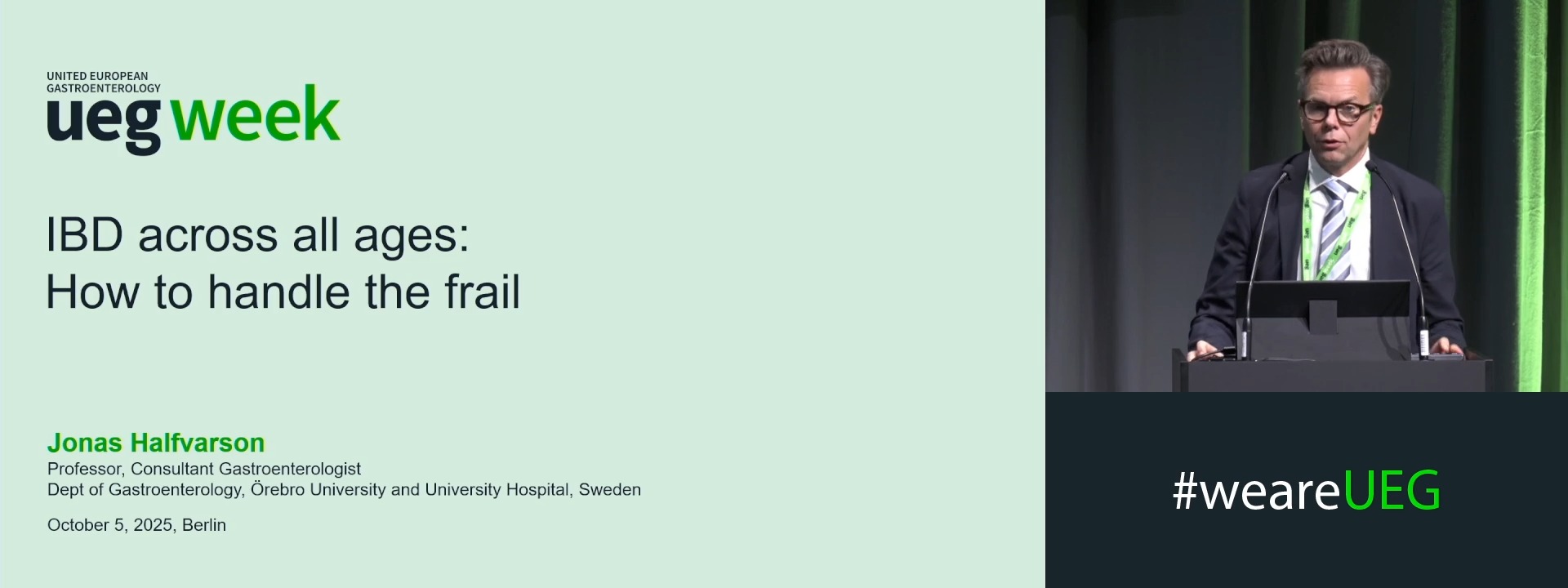
How to handle the frail

Jonas Halfvarson 1

Affiliations

1 Örebro University, Örebro, Sweden
Summary

AI Generated

Summary is not available for this content yet.

Download PDF

Was this helpful?

Thanks for your feedback.

This summary was generated by an AI large language model based on the content transcript. It is for informational purposes only and should not be considered a substitute for clinical judgment. Always rely on your professional expertise and the full clinical context when making clinical decisions.

Abstract

Event

UEG Week Berlin 2025

Topics

IBD Nurses Paediatrics Primary Care

Session

IBD across all ages

Citation

United European Gastroenterology Journal 2025; 13 (Supplement 8)

Published

2025

More Like This:

... for medical therapy in inflammatory bowel diseases

... for medical therapy in inflammatory bowel diseases

Chris Lamb Chris Lamb

Early diet and the risk of coeliac disease. An update 2024 position paper by the ESPGHAN special interest group on coeliac disease

Early diet and the risk of coeliac disease. An update 2024 position paper by the ESPGHAN special interest group on coeliac disease

Hania Szajewska Hania Szajewska

LINERIXIBAT SIGNIFICANTLY IMPROVES CHOLESTATIC PRURITUS IN PRIMARY BILIARY CHOLANGITIS: RESULTS OF THE PIVOTAL PHASE 3 GLISTEN TRIAL

LINERIXIBAT SIGNIFICANTLY IMPROVES CHOLESTATIC PRURITUS IN PRIMARY BILIARY CHOLANGITIS: RESULTS OF THE PIVOTAL PHASE 3 GLISTEN TRIAL

Cynthia Levy Cynthia Levy, Megan M. McLaughlin, Brandon Swift, Jennifer B. Shannon, Andrea Ribiero, Danielle J. Podmore, Ivana Lazic, Ciara Gorey, Brooke M. Currie, Alexander R. Cobitz, Ricardo Macias-Rodriguez, Qinglong Jin, Jidong Jia, Pietro Andreone, Atsushi Tanaka, Marlyn J. Mayo, Andreas E. Kremer, David Jones, Christopher L. Bowlus, Gideon M. Hirschfield

AI-BUS: ARTIFICIAL INTELLIGENCE BOWEL ULTRASOUND SYSTEM

AI-BUS: ARTIFICIAL INTELLIGENCE BOWEL ULTRASOUND SYSTEM

Trine Boysen Trine Boysen, Bulat Ibragimov, Johan Burisch, Klaus Theede, Johan Fremberg Ilvemark, Gorm Roager Madsen, Bjørn Leth Møller, Bobby Lo, Jakob Karrer, Jonatan Ruiz-Molsgaard

How to handle the frail

How to handle the frail

Jonas Halfvarson Jonas Halfvarson

Nutritional management of small intestinal enteropathies

Nutritional management of small intestinal enteropathies

Francisca Joly Francisca Joly

UEG Presentation
Share via Email Share on Facebook Share on X Share on LinkedIn Share on Bluesky
Nutritional management of small intestinal enteropathies

Log in to continue.

This content is part of Gutflix. Log in with your myUEG account, or create one free, to watch it.

Log In Create a free account

Not sure what you can access? Learn more about account types.

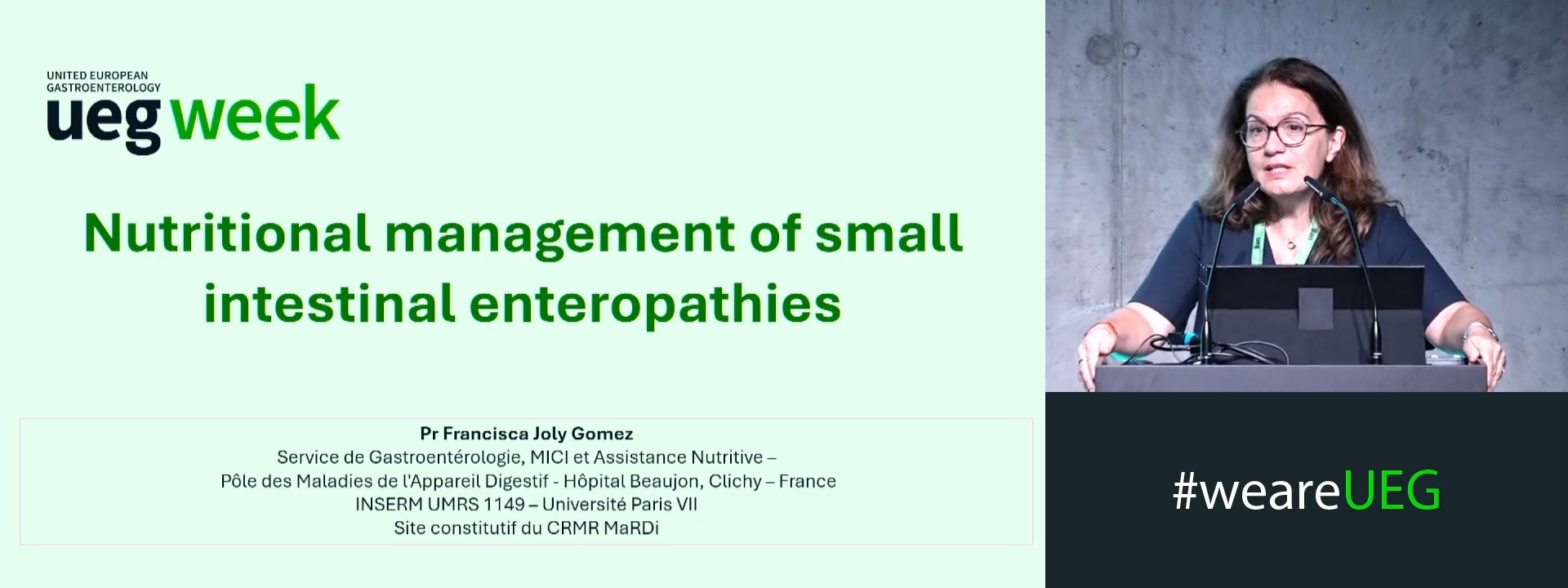
Nutritional management of small intestinal enteropathies

Francisca Joly 1

Affiliations

1 Beaujon Hospital, Assistance Publique-Hôpitaux de Paris, Clichy, France

Summary

AI Generated

Summary is not available for this content yet.

Download PDF

Was this helpful?

Thanks for your feedback.

This summary was generated by an AI large language model based on the content transcript. It is for informational purposes only and should not be considered a substitute for clinical judgment. Always rely on your professional expertise and the full clinical context when making clinical decisions.

Abstract

Event

UEG Week Berlin 2025

Topics

Immunology Small Intestine & Nutrition

Session

Coeliac or non-coeliac enteropathy?

Citation

United European Gastroenterology Journal 2025; 13 (Supplement 8)

Published

2025

More Like This:

... for medical therapy in inflammatory bowel diseases

... for medical therapy in inflammatory bowel diseases

Chris Lamb Chris Lamb

Early diet and the risk of coeliac disease. An update 2024 position paper by the ESPGHAN special interest group on coeliac disease

Early diet and the risk of coeliac disease. An update 2024 position paper by the ESPGHAN special interest group on coeliac disease

Hania Szajewska Hania Szajewska

LINERIXIBAT SIGNIFICANTLY IMPROVES CHOLESTATIC PRURITUS IN PRIMARY BILIARY CHOLANGITIS: RESULTS OF THE PIVOTAL PHASE 3 GLISTEN TRIAL

LINERIXIBAT SIGNIFICANTLY IMPROVES CHOLESTATIC PRURITUS IN PRIMARY BILIARY CHOLANGITIS: RESULTS OF THE PIVOTAL PHASE 3 GLISTEN TRIAL

Cynthia Levy Cynthia Levy, Megan M. McLaughlin, Brandon Swift, Jennifer B. Shannon, Andrea Ribiero, Danielle J. Podmore, Ivana Lazic, Ciara Gorey, Brooke M. Currie, Alexander R. Cobitz, Ricardo Macias-Rodriguez, Qinglong Jin, Jidong Jia, Pietro Andreone, Atsushi Tanaka, Marlyn J. Mayo, Andreas E. Kremer, David Jones, Christopher L. Bowlus, Gideon M. Hirschfield

AI-BUS: ARTIFICIAL INTELLIGENCE BOWEL ULTRASOUND SYSTEM

AI-BUS: ARTIFICIAL INTELLIGENCE BOWEL ULTRASOUND SYSTEM

Trine Boysen Trine Boysen, Bulat Ibragimov, Johan Burisch, Klaus Theede, Johan Fremberg Ilvemark, Gorm Roager Madsen, Bjørn Leth Møller, Bobby Lo, Jakob Karrer, Jonatan Ruiz-Molsgaard

How to handle the frail

How to handle the frail

Jonas Halfvarson Jonas Halfvarson

Nutritional management of small intestinal enteropathies

Nutritional management of small intestinal enteropathies

Francisca Joly Francisca Joly

The global reference point for the digestive health community

Platform Publisher

United European Gastroenterology

Wickenburggasse 1 1080 Vienna, Austria

Contact us

support@ueg.eu

ueg.eu

T: +43 1 997 1639

Legal

Terms & Conditions

Imprint

Privacy Policy

Explore

My Bookmarks

My recommendations

My fields of interest

© 2026 United European Gastroenterology

Change fields of interest

These fields are selected based on the interests in your myUEG profile.
Click the item to unselect it. You can select multiple items.