UEG's educational platform for gastroenterology education bringing recordings, courses, guidelines, and more together in one place.
Most popular content
Rate for better recommendations!
Your feedback helps us show you more of what you like and less of what you dislike!
Log in to access this content.
Free for all myUEG account holders. Your access level is set automatically based on your occupation. Medical professionals get full access to all content. If you are a non-medical user, you can only access UEG Week content from congresses you attended.
Not sure what you can access? Learn more about account types.

ULTRA-PROCESSED FOOD CONSUMPTION IN PATIENTS WITH INFLAMMATORY BOWEL DISEASE
Amanda Spiller 1, Beatriz Gabriela Costa 1, Ryan Nunes Yoshio Yoshihara 1, Enya Zucari Nogueira 2, Natália Salvador Castelhano 1, Giedre Soares Prates Herreira 1, Daniela Salate Biagioni Vulcano 1, Lígia Yukie Sassaki 1
1 São Paulo State University (Unesp), Botucatu, Brazil
2 São Paulo State University, Botucatu, Brazil
Conference
Topics
Submission format
Session
Citation
Published
Log in to access this content.
Free for all myUEG account holders. Your access level is set automatically based on your occupation. Medical professionals get full access to all content. If you are a non-medical user, you can only access UEG Week content from congresses you attended.
Not sure what you can access? Learn more about account types.
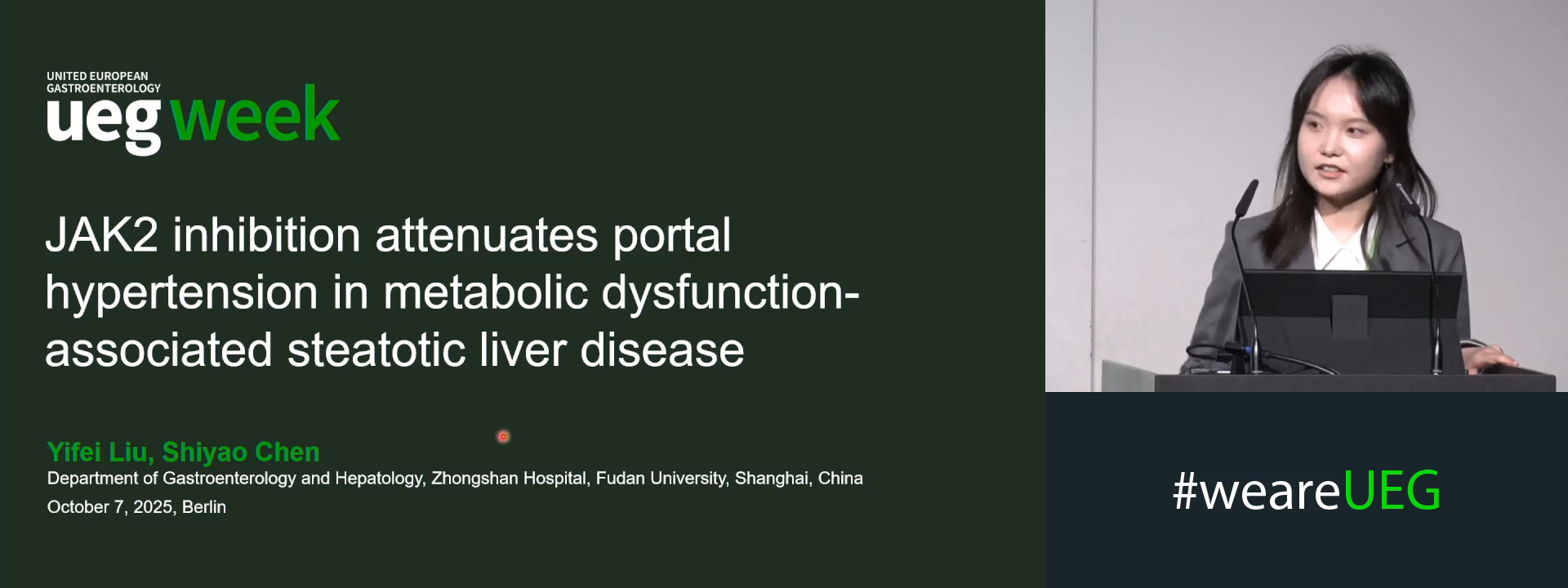
JAK2 INHIBITION ATTENUATES PORTAL HYPERTENSION IN METABOLIC DYSFUNCTION-ASSOCIATED LIVER
1 Zhongshan Hospital, Fudan University, Shanghai, China
Event
Submission format
Session
Citation
Published
Log in to access this content.
Free for all myUEG account holders. Your access level is set automatically based on your occupation. Medical professionals get full access to all content. If you are a non-medical user, you can only access UEG Week content from congresses you attended.
Not sure what you can access? Learn more about account types.
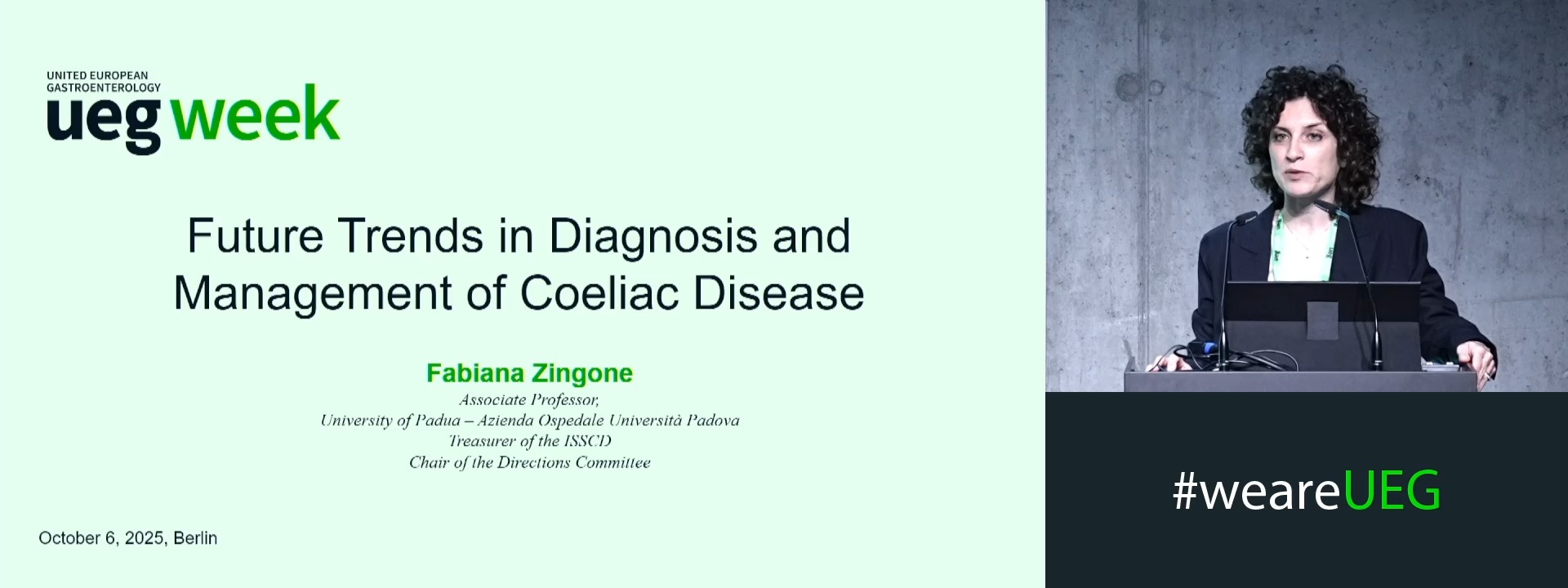
Future trends in diagnosis and management of coeliac disease
1 University of Padua, Padua, Italy
Event
Citation
Published
Log in to access this content.
Free for all myUEG account holders. Your access level is set automatically based on your occupation. Medical professionals get full access to all content. If you are a non-medical user, you can only access UEG Week content from congresses you attended.
Not sure what you can access? Learn more about account types.
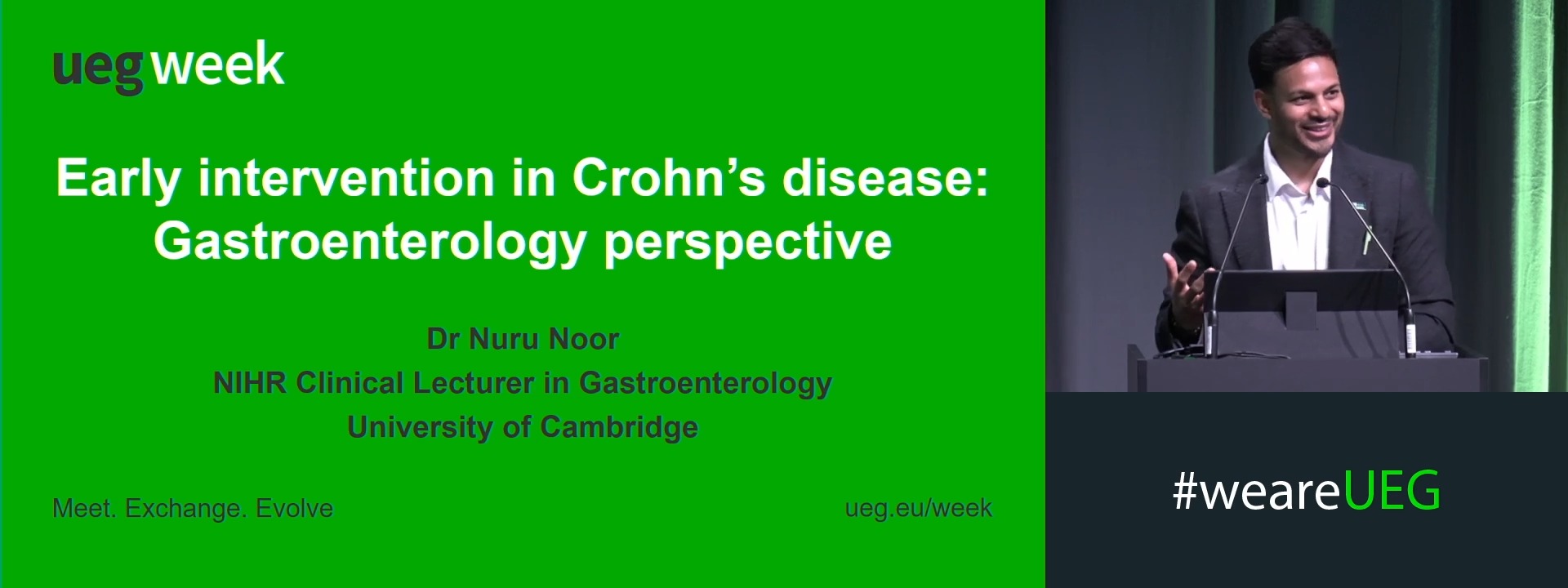
Getting out of the block early in Crohn´s disease: Gastroenterologist vs surgeon perspective
1 Haaglanden Medical Center, The Hague, Netherlands
2 Cambridge University Hospitals NHS Foundation Trust, Cambridge, United Kingdom
Event
Session
Citation
Published
Log in to access this content.
Free for all myUEG account holders. Your access level is set automatically based on your occupation. Medical professionals get full access to all content. If you are a non-medical user, you can only access UEG Week content from congresses you attended.
Not sure what you can access? Learn more about account types.
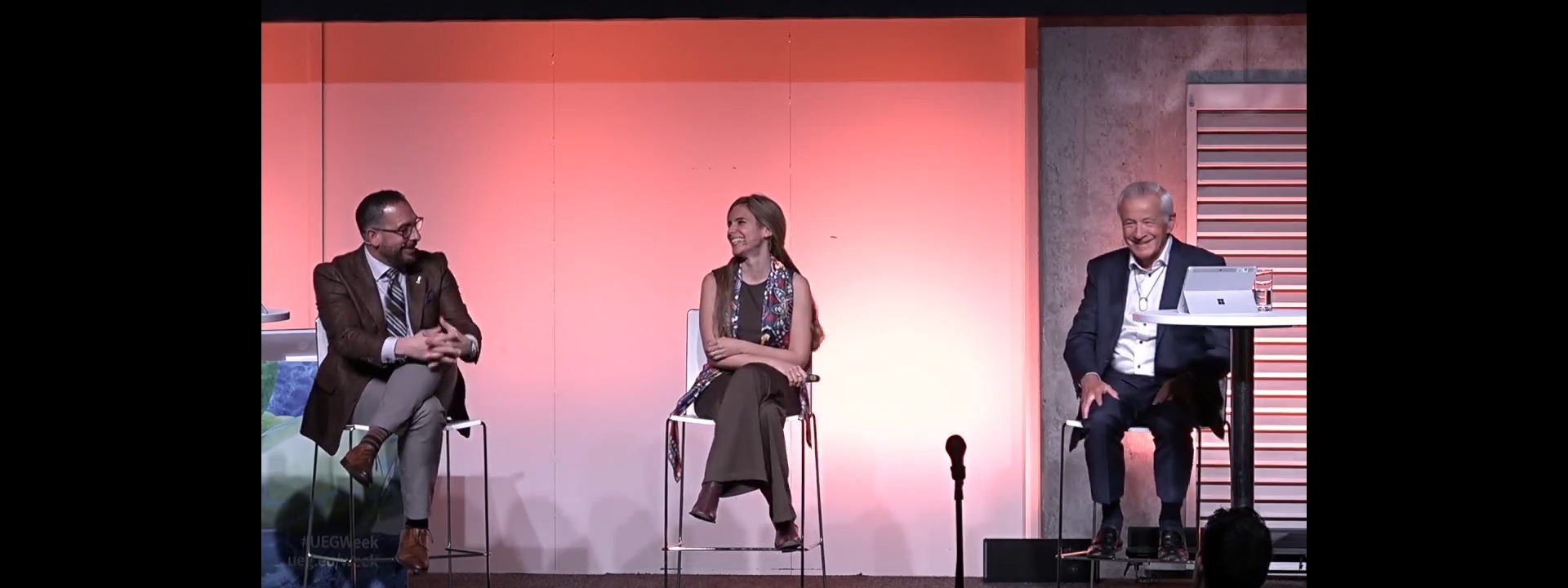
Innovations in IBD Therapy: The Story of TL1A - from Discovery to Potential Future Care (F. Hoffmann-La Roche Ltd) (Complete Session)
1 Icahn School of Medicine at Mount Sinai, USA, United States of America
2 Hospital Universitario Reina Sofia, Cordoba, Spain
3 University of Calgary, Calgary, Canada
Publisher
Event
Citation
Published
Log in to access this content.
Free for all myUEG account holders. Your access level is set automatically based on your occupation. Medical professionals get full access to all content. If you are a non-medical user, you can only access UEG Week content from congresses you attended.
Not sure what you can access? Learn more about account types.
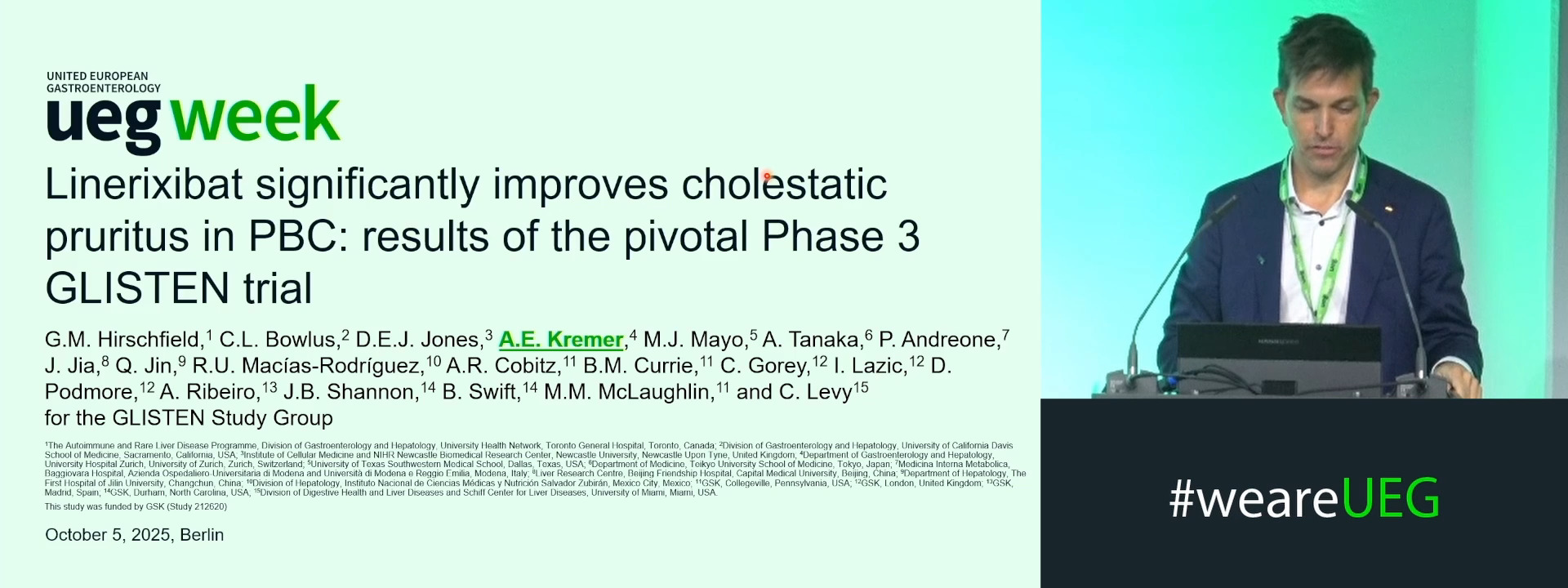
LINERIXIBAT SIGNIFICANTLY IMPROVES CHOLESTATIC PRURITUS IN PRIMARY BILIARY CHOLANGITIS: RESULTS OF THE PIVOTAL PHASE 3 GLISTEN TRIAL
Gideon M. Hirschfield 1, Christopher L. Bowlus 2, David Jones 3, Andreas E. Kremer 4, Marlyn J. Mayo 5, Atsushi Tanaka 6, Pietro Andreone 7, Jidong Jia 8, Qinglong Jin 9, Ricardo Macias-Rodriguez 10, Alexander R. Cobitz 11, Brooke M. Currie 11, Ciara Gorey 12, Ivana Lazic 12, Danielle J. Podmore 12, Andrea Ribiero 13, Jennifer B. Shannon 14, Brandon Swift 14, Megan M. McLaughlin 11, Cynthia Levy 15
1 Toronto General Hospital, Toronto, Canada
2 University of California Davis School of Medicine, Sacramento, United States
3 Newcastle University, Newcastle Upon Tyne, United Kingdom
4 University Hospital Zurich, Zurich, Switzerland
5 University of Texas Southwestern Medical School, Dallas, United States
6 Teikyo University School of Medicine, Tokyo, Japan
7 Azienda Ospedaliero-Universitaria di Modena and Università di Modena e Reggio Emilia, Modena, Italy
8 Capital Medical University, Beijing, China
9 The First Hospital of Jilin University, Changchun, China
10 Instituto Nacional de Ciencias Médicas y Nutrición Salvador Zubirán, Mexico City, Mexico
11 GSK, Collegeville, United States
12 GSK, London, United Kingdom
13 GSK, Madrid, Spain
14 GSK, Durham, United States
15 University of Miami, Miami, United States
Event
Submission format
Citation
Published
Log in to access this content.
Free for all myUEG account holders. Your access level is set automatically based on your occupation. Medical professionals get full access to all content. If you are a non-medical user, you can only access UEG Week content from congresses you attended.
Not sure what you can access? Learn more about account types.
DELAYS IN INITIATING ADVANCED THERAPY FOR INFLAMMATORY BOWEL DISEASE: THE IMPACT OF ETHNICITY
Michael Colwill 1, Samantha Baillie 1, Chandni Radia 2, Sarah White 3, Richard Pollok 1, Andrew Poullis 1
1 City St George's, Unviersity of London, London, United Kingdom|||St Georges University Hospitals NHS Foundation Trust, London, United Kingdom
2 King's College Hospital NHS Foundation Trust, London, United Kingdom
3 City St George's, Unviersity of London, London, United Kingdom
Conference
Topics
Submission format
Session