UEG's educational platform for gastroenterology education bringing recordings, courses, guidelines, and more together in one place.
Most popular content
Rate for better recommendations!
Your feedback helps us show you more of what you like and less of what you dislike!
Log in to access this content.
Free for all myUEG account holders. Your access level is set automatically based on your occupation. Medical professionals get full access to all content. If you are a non-medical user, you can only access UEG Week content from congresses you attended.
Not sure what you can access? Learn more about account types.

ISM5411, A NOVEL GUT-RESTRICTIVE PROLYL HYDROXYLASE-2 INHIBITOR FOR INFLAMMATORY BOWEL DISEASE: RANDOMIZED, DOUBLE-BLINDED, PLACEBO-CONTROLLED FIRST-IN-HUMAN PHASE I STUDY TO EVALUATE SAFETY, TOLERABILITY AND PK PROFILES
Hanyang Li 1, Carol Satler 2, Heng Zhao 1, Yunxuan Jiang 1, Yuan Lv 1, Sujata Rao 2, Feng Ren 1, Alex Zhavoronkov 3
1 Insilico Medicine Ltd, Shanghai, China
2 Insilico Medicine US Inc., Boston, Cambridge MA, United States
3 Insilico Medicine AI Limited, Abu Dhabi, United Arab Emirates|||Insilico Medicine Ltd, Shanghai, China
Conference
Topics
Submission format
Citation
Published
Log in to access this content.
Free for all myUEG account holders. Your access level is set automatically based on your occupation. Medical professionals get full access to all content. If you are a non-medical user, you can only access UEG Week content from congresses you attended.
Not sure what you can access? Learn more about account types.
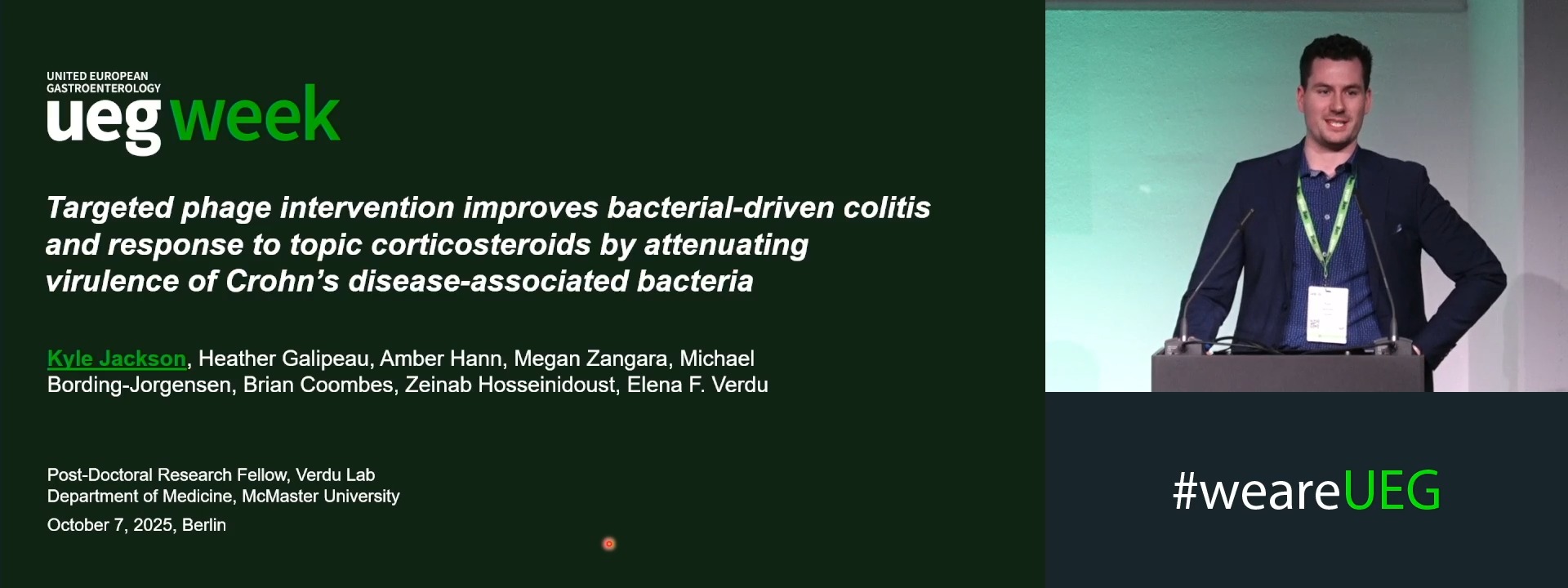
TARGETED PHAGE INTERVENTION IMPROVES BACTERIAL-DRIVEN COLITIS AND RESPONSE TO TOPICAL CORTICOSTEROIDS BY ATTENUATING VIRULENCE OF CROHN’S DISEASE-ASSOCIATED BACTERIA
Kyle Jackson 1, Heather Galipeau 2, Amber Hann 2, Marco Constante 2, Megan Zangara 3, Alexandra Fuentas 2, Chiko Shimbori 2, Premysl Bercik 2, Brian Coombes 3, Zeinab Hosseinidoust 1, Elena Verdu 2
1 McMaster University, Hamilton, Canada|||Farncombe Family Digestive Health Research Institute, Hamilton, Canada
2 Farncombe Family Digestive Health Research Institute, Hamilton, Canada
3 McMaster University, Hamilton, Canada
Event
Topics
Submission format
Citation
Published
Log in to access this content.
Free for all myUEG account holders. Your access level is set automatically based on your occupation. Medical professionals get full access to all content. If you are a non-medical user, you can only access UEG Week content from congresses you attended.
Not sure what you can access? Learn more about account types.
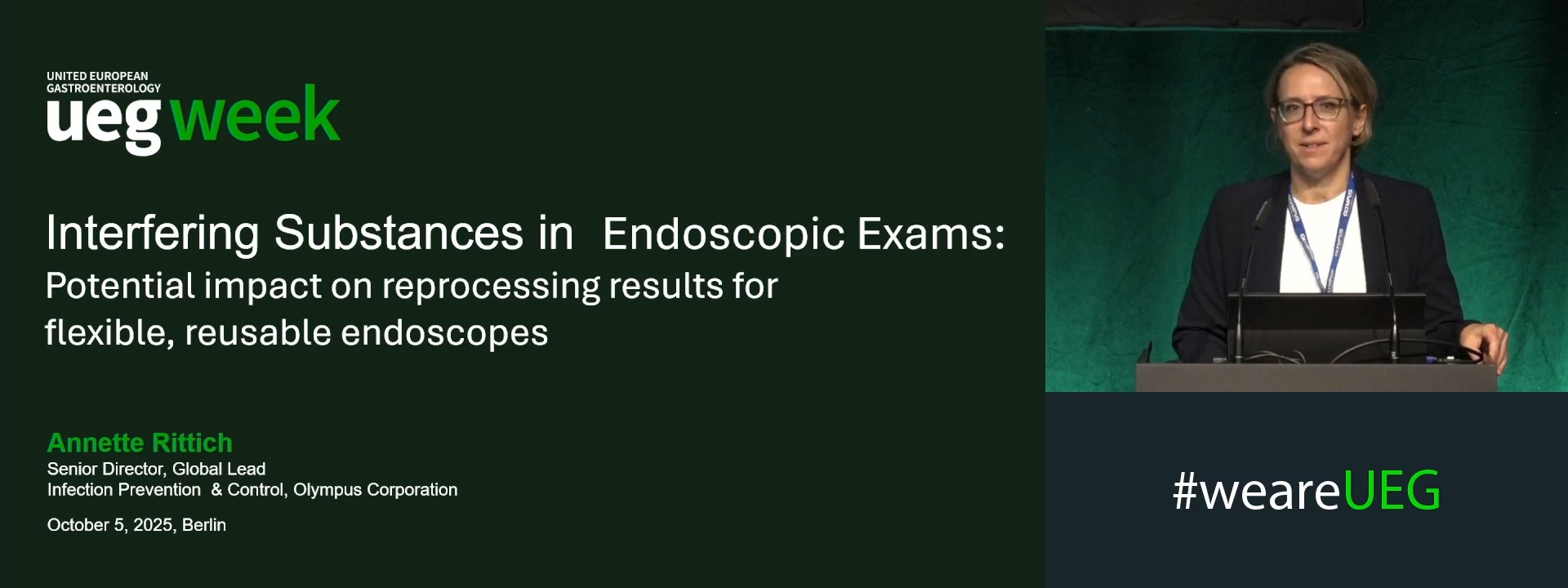
Interfering substances effect endoscope reprocessing
1 None, Hamburg, Germany
Event
Topics
Session
Citation
Published
Log in to access this content.
Free for all myUEG account holders. Your access level is set automatically based on your occupation. Medical professionals get full access to all content. If you are a non-medical user, you can only access UEG Week content from congresses you attended.
Not sure what you can access? Learn more about account types.
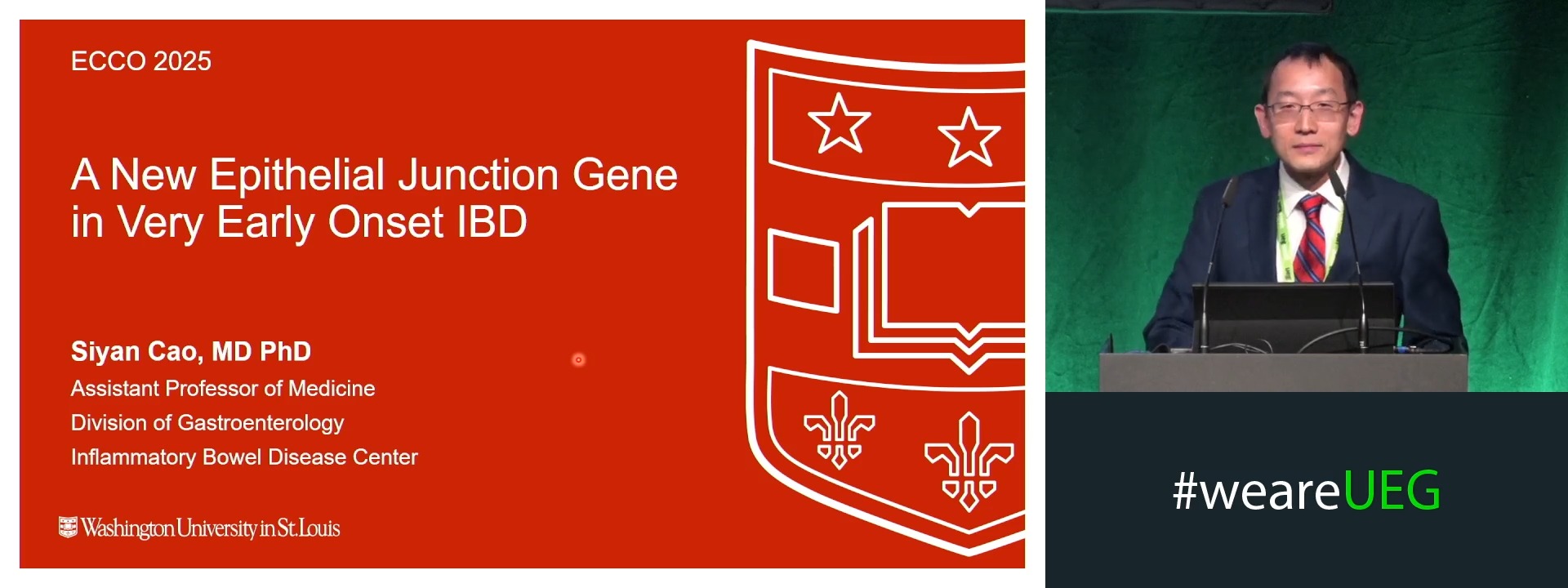
NEW PATHOGENIC MUTATIONS IN AN EPITHELIAL JUNCTION GENE CONTRIBUTING TO VERY EARLY ONSET INFLAMMATORY BOWEL DISEASE
1 Washington University in St. Louis, St. Luis, United States
2 Washington University in St. Louis, St. Louis, United States
3 Matthew Ciorba, MD Professor of Medicine, Director of Inflammatory Bowel Disease Center, Waschington University in Saint Louis, Washington DC, United States
Event
Submission format
Session
Citation
Published
Log in to access this content.
Free for all myUEG account holders. Your access level is set automatically based on your occupation. Medical professionals get full access to all content. If you are a non-medical user, you can only access UEG Week content from congresses you attended.
Not sure what you can access? Learn more about account types.
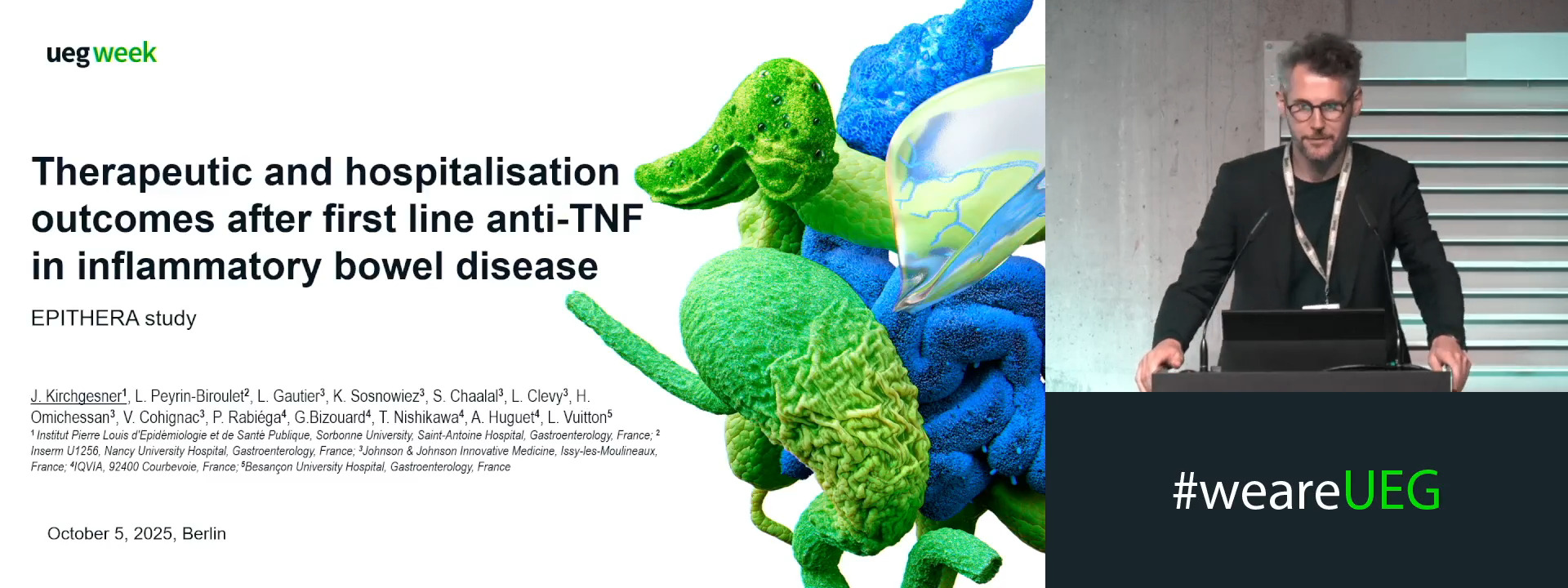
THERAPEUTIC AND HOSPITALISATION OUTCOMES AFTER FIRST-LINE ANTI-TNF IN INFLAMMATORY BOWEL DISEASE: INSIGHTS FROM THE EPITHERA STUDY USING DATA FROM THE FRENCH NATIONAL HEALTH DATA (SNDS)
Julien Kirchgesner 1, Laurent Peyrin-Biroulet 2, Laurène Gautier 3, Katia Sosnowiez 3, Samira Chaalal 3, Lucien Clevy 3, Hanane Omichessan 3, Vanessa Cohignac 3, Pascaline Rabiéga 4, Geoffray Bizouard 4, Tiffany Nishikawa 4, Alice Huguet 4, Lucine Vuitton 5
1 Institut Pierre Louis d'Epidémiologie et de Santé Publique, Sorbonne University, Saint-Antoine Hospital, Paris, France
2 Inserm U1256, Nancy University Hospital, Vandoeuvre-les-Nancy, France
3 Johnson&Johnson Innovative Medicine, Issy-les-Moulineaux, France
4 IQVIA Operations France, Courbevoie, France
5 Besançon university hospital, Besançon, France
Event
Submission format
Session
Citation
Published
Log in to access this content.
Free for all myUEG account holders. Your access level is set automatically based on your occupation. Medical professionals get full access to all content. If you are a non-medical user, you can only access UEG Week content from congresses you attended.
Not sure what you can access? Learn more about account types.
AFIMKIBART (ANTI-TL1A) IS EFFECTIVE IN THE BLOCKADE OF CELLULAR SIGNALING INDUCED BY ACTIVE TL1A
Domagoj Vucic 1, Franklin Fuh 2, Allen Nguyen 1, Eugene Varfolomeev 1, Angela Oh 1, Geil Merana 1, Xiao Tao 1, David Place 1, Karen Lasch 3, Daniela Bojic 4, Pascal Espie 4, Maggie Neighbors 1, Jacqueline McBride 1, Vishnu Mohanan 1
1 Genentech-Roche, South San Francisco, United States
2 Genentech-Roche, South San Francisco, United States|||Genentech-Roche, South San Francisco, United States
3 Roche, South San Francisco, United States
4 F.Hoffman-La Roche Ltd, Basel, Switzerland
Conference
Topics
Submission format
Session
Citation
Published
Log in to access this content.
Free for all myUEG account holders. Your access level is set automatically based on your occupation. Medical professionals get full access to all content. If you are a non-medical user, you can only access UEG Week content from congresses you attended.
Not sure what you can access? Learn more about account types.
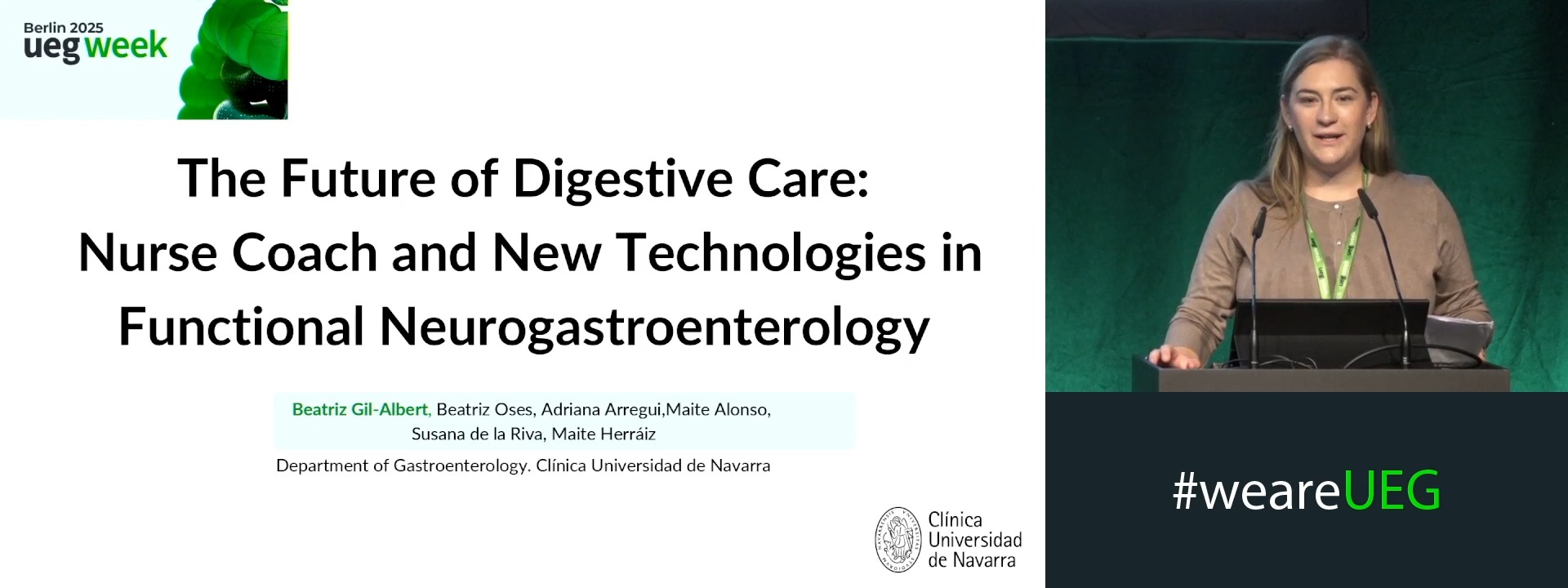
THE FUTURE OF DIGESTIVE CARE: NURSE COACH AND NEW TECHNOLOGIES IN FUNCTIONAL NEUROGASTROENTEROLOGY
Beatriz Oses 1, Adriana Arregui-Azagra 1, Beatriz Gil-Albert Sáenz de Cabezón 2, María Teresa Alonso Sierra 2, Susana de la Riva 1, Maite Herraiz Bayod 1
1 Clinica Universidad de Navarra, Pamplona, Spain
2 Clinica Universidad de Navarra, Madrid, Spain
Event
Topics